Aparna RMC

Tag: Construction

  • How Colored Concrete Can Make Your Projects Look Better

    How Colored Concrete Can Make Your Projects Look Better

    When it comes to elevating the aesthetics of construction, colored concrete is a standout choice. Gone are the days of dull gray slabs; colored concrete has revolutionized design for architects, builders, and homeowners alike. At Aparna RMC, we offer top-quality colored concrete solutions to help you bring your creative visions to life. Whether you’re working on a residential driveway, commercial flooring, or artistic concrete features, colored concrete offers unmatched versatility, durability, and aesthetic appeal.

    What Is Colored Concrete?

    Colored concrete is created by adding pigments to the mix, resulting in a wide range of colors and textures. These pigments can come in various forms, including powdered colorants, liquid dyes, or integral color mixes, allowing for limitless design possibilities and enabling the creation of eye-catching surfaces that complement your project’s aesthetic. 

    Benefits of Colored Concrete

    1. Enhanced Aesthetics 

    Colored concrete provides a vast range of design options. From earthy tones mimicking natural stone to bold, vibrant hues, it allows for breaking away from traditional gray. Matching your project’s color scheme, whether subtle or dramatic, makes colored concrete an attractive option for both modern and classic designs.

    2. Design Flexibility

     Beyond solid colors, colored concrete can be textured, stamped, or polished to replicate the look of materials like slate, granite, or cobblestone. Whether aiming for an industrial aesthetic in a commercial space or a cozy patio in a residential setting, colored concrete’s design flexibility makes achieving your vision easy.

    3. Durability and Low Maintenance 

    Colored concrete not only enhances beauty but is also highly durable, withstanding harsh weather, heavy foot traffic, and daily wear and tear. Proper sealing ensures resistance to fading, chipping, and staining, making it a low-maintenance option for high-traffic areas like driveways and commercial floors.

    4. Increased Property Value 

     Incorporating colored concrete can potentially increase a property’s market value. High-quality, aesthetically pleasing concrete surfaces make a property stand out, enhancing its appeal to prospective buyers or tenants, offering a return both in functionality and financial value.

    5. Cost-Effective Solution

     While the initial cost of colored concrete may be higher, its long-term benefits, such as low maintenance and durability, make it cost-effective. Minimal upkeep ensures your investment in colored concrete lasts for many years without frequent repairs or replacements.
     

    Applications of Colored Concrete

    1. Driveways and Walkways

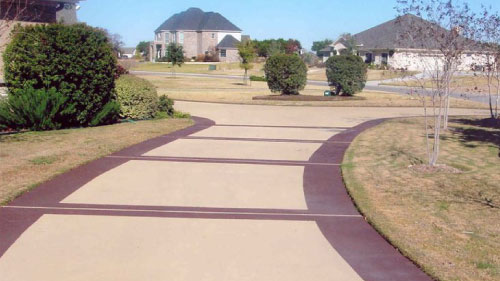
     Transform your outdoor spaces with a colored concrete driveway or walkway. Select colors that harmonize or contrast with your landscaping and architecture to create a striking first impression. Earthy tones for a natural feel or bold colors to make a statement are popular choices.

    2. Patios and Outdoor Spaces 

    Enhance your backyard with a beautiful, functional patio or pool deck made from colored concrete. Whether you prefer a sleek modern look or a rustic aesthetic, colored concrete can be tailored to your specific tastes, improving the overall ambiance of your outdoor space.

    3. Commercial Flooring 

    For businesses aiming to make a memorable impression, colored concrete offers a unique flooring solution. In retail stores, office buildings, or restaurants, custom-colored concrete floors add sophistication while being durable enough to handle high foot traffic.

    4. Artistic and Decorative Elements

     Colored concrete is ideal for creating custom designs and decorative elements. It can be used for intricate logos, patterns, or even decorative countertops, making it a versatile medium for artistic projects.
     

    How to Choose the Right Color for Your Project

    • Consider the Environment: Choose colors that complement the natural surroundings and architectural elements of your property. Earthy tones work well with landscapes, while brighter hues can add contrast to urban settings. 
    • Test Samples: Request color samples to see how they appear in different lighting conditions, ensuring you select a color that looks great in real-world scenarios.
    • Think Long-Term: Opt for timeless colors that will look good for years to come, even as trends evolve.

    Choose Aparna RMC for Quality Colored Concrete Solutions

    At Aparna RMC, we are committed to helping you realize the full potential of your projects with our top-notch AsthetiCrete colored concrete solutions. From residential driveways to large-scale commercial installations, our expertise ensures that your vision becomes a reality. We work closely with you throughout the design and installation process to guarantee a seamless and stunning result. 

    Colored concrete offers a perfect blend of aesthetic appeal, durability, and versatility, making it an ideal choice for various construction projects. Whether you’re looking to transform your home’s outdoor spaces, create a striking commercial space, or experiment with artistic concrete features, colored concrete can take your project to the next level. Ready to transform your next project with colored concrete? Contact us today!
  • RMC vs Traditional On-Site Mixing: A Cost-Benefit Analysis 

    RMC vs Traditional On-Site Mixing: A Cost-Benefit Analysis 

    The construction industry is constantly evolving, and one of the critical decisions builders face is whether to use Ready-Mix Concrete (RMC) or stick to traditional on-site mixing methods. Both approaches have their advantages and drawbacks, and understanding the cost-benefit analysis is crucial for making informed decisions. In this blog, we will explore the key factors that contribute to the cost-effectiveness of RMC compared to traditional on-site mixing. 

    Does choosing Ready-Mix Concrete save construction time? 

    One of the most significant advantages of Ready-Mix Concrete is its time efficiency. Ready-mix concrete is produced in a controlled environment, allowing for precise batching and quality control. This results in a faster construction process compared to traditional on-site mixing, where the concrete must be mixed on the spot.

    Time is money in the construction industry, and RMC can significantly reduce construction timelines, leading to potential cost savings. 

    How does Ready-Mix Concrete reduce your Labour Costs? 

    Traditional on-site mixing requires a dedicated team for the entire concrete mixing process, including batching, mixing, and transportation. In contrast, RMC suppliers handle the entire concrete production process, minimizing the need for on-site labour. This reduction in labour requirements can lead to substantial cost savings, especially on larger construction projects. 

    Does RMC provide better quality than On-Site Mixing? 

    Quality control is a critical aspect of any construction project. Ready Mix Concrete, being produced in controlled environments with stringent quality standards, often results in a more consistent and high-strength concrete mix compared to on-site mixing. This can lead to fewer issues during construction, reducing the likelihood of rework and additional costs associated with poor-quality commercial concrete. 

    How do you keep your construction site waste efficient and clean?

    On-site mixing may result in material waste due to inaccuracies in batching, overordering of raw materials, and spillage during the mixing process. RMC suppliers, on the other hand, precisely measure and batch the concrete, reducing the risk of material waste. This efficiency can translate into cost savings for the builder and contribute to a more sustainable construction process helped through sustainable RMC. 

    Ready-Mix Concrete cuts out your Equipment Costs 

    Investing in on-site concrete mixing equipment can be a significant upfront cost for construction companies. Ready Mix Concrete eliminates the need for such equipment, allowing builders to allocate resources to other critical aspects of the project.

    While there is a cost associated with purchasing ready-mix concrete, it may still be more economical than investing in and maintaining specialized mixing equipment. 

    How price-effective is Ready-Mix Concrete transportation compared to On-site Mixing? 

    Ready-Mix Concrete is delivered to the construction site in ready-to-use form, reducing the need for transportation of raw materials to the site. This can result in lower transportation costs compared to traditional on-site mixing, where multiple trips may be required to transport raw materials and the final product.

    As there are many raw materials required for on-site mixing, purchasing concrete, concrete additives, cement, sand, gravel, and water and getting them transported to the concrete site becomes hectic, burdensome and most of all very expensive. Reduced transportation requirements can also contribute to a smaller environmental footprint through the use of sustainable Ready Mix Concrete. 

    Using RMC is Space-effective and clean 

    Ready Mix Concrete only requires suitable access for the RMC bulk truck but in traditional on-site mixing storage of concrete, cement, gravel and other materials results in the usage of a lot of space. Whereas in Ready Mix Concrete you’re relieved of the hassle of buying, storing and mixing concrete, gravel, water and other materials. It becomes a space-effective manoeuvre to choose RMC instead of traditional on-site mixing.

    Conclusion 

    In conclusion, the choice between Ready-Mix Concrete and traditional on-site mixing involves careful consideration of various factors, including time efficiency, labour costs, quality control, material waste, equipment costs, and transportation costs.

    While Ready-Mix Concrete may have a higher upfront cost, the potential savings in time, labour, and material waste make it a compelling option for many construction projects. Builders should assess the specific needs of their project and weigh the long-term benefits of each method to make an informed decision that aligns with their budget and timeline requirements.