Aparna RMC

Author: aparna_rmc

  • Aparna Reddy Unstoppable Journey

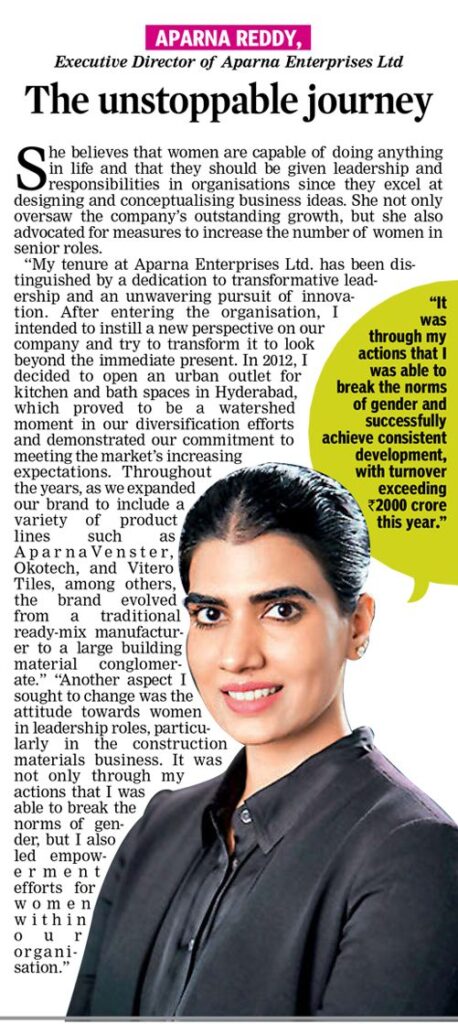
    Aparna Reddy Unstoppable Journey

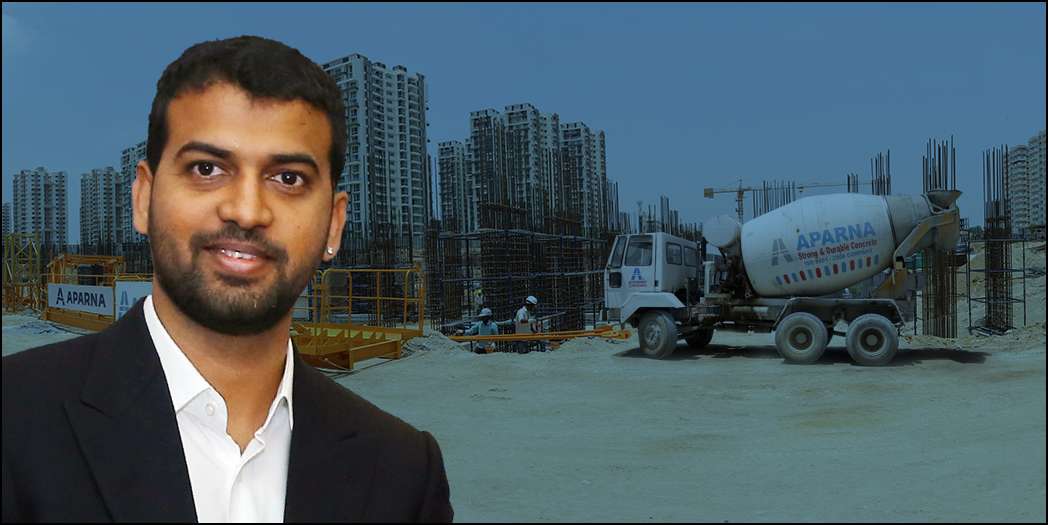
    Aparna Enterprises Limited, of which Aparna RMC is a part is set to cross an impressive Rs.2000 Cr. turnover this year, said Ms.Aparna Reddy, Executive Director of Aparna Enterprises Limited.

  • Choosing the Right RMC for High-Rise Buildings: A B2B Guide

    Choosing the Right RMC for High-Rise Buildings: A B2B Guide

    In the world of B2B high-rise construction, the selection of the right concrete plays a pivotal role in ensuring the structural integrity and durability of skyscrapers. Ready Mix Concrete (RMC) emerges as a critical component, particularly when addressing the strength requirements for high-rise buildings. Among the leaderskey players in this domain, Aparna RMC stands out as a reliable choice, offering tailor-made solutions for constructing towering structures.

    Concrete for Tall Structures:

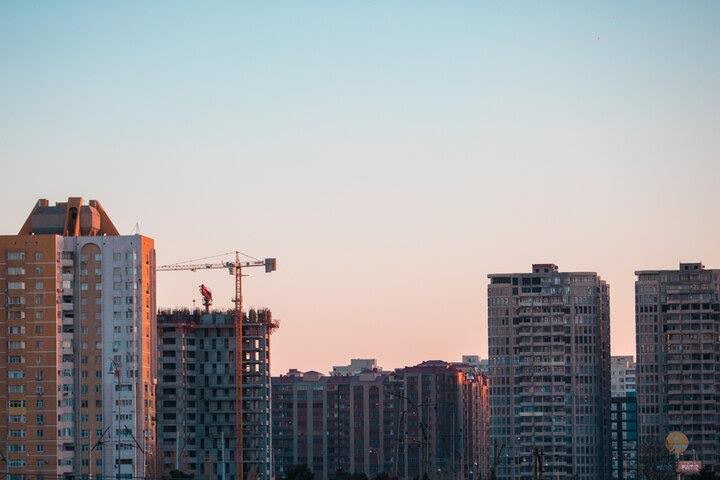
    Constructing high-rise buildings demands a meticulous approach, and the choice of concrete cannot be overlooked. The unique challenges posed by skyscrapers, such as increased loads and varying weather conditions, necessitate a concrete mix that goes beyond conventional standards. Aparna RMC for skyscrapers, with its expertise in crafting specialized concrete for tall structures, provides a comprehensive solution that aligns with the demanding needs of high-rise construction.

    When it comes to high-rise projects, strength and durability are paramount. Aparna RMC’s Ready Mix Concrete is engineered to meet and exceed the stringent requirements of vertical construction. This ensures that the concrete not only bears the vertical load efficiently but also withstands lateral forces, ensuring the stability and safety of the entire structure.

    Strength Requirements for High-Rise Buildings:

    Meeting the strength requirements for high-rise buildings is not just a matter of compliance but a critical factor that directly impacts the safety and longevity of the structure. B2B high rise construction requires concrete with high compressive strength that isis evident in every mix that Aparna RMCthey delivers. This strength is achieved through a meticulous blend of raw materials and cutting-edge manufacturing processes, ensuring that the concrete meets or exceeds the specified standards for high-rise construction.

    Aparna RMC for skyscrapers adheres to stringent quality control measures that guarantee that each batch of Ready Mix Concrete meets the necessary strength requirements for high rise buildings. It offers peace of mind to construction professionals working on projects that require concrete for tall structures.

    Innovative Concrete Solutions for Modern Skyscrapers:

    Beyond the traditional considerations of strength, Aparna RMC stands out for its commitment to innovation in concrete solutions for B2B high-rise construction. As high-rise buildings demand specialized materials, Aparna RMC provides tailor-made Ready Mix Concrete that meets and exceeds the stringent strength requirements for these towering structures.

    Environmental Sustainability in Vertical Development:

    In the era of sustainable B2B high-rise construction practices, Aparna RMC takes a conscientious approach to environmental impact. Their Ready Mix Concrete, engineered for skyscrapers, incorporates eco-friendly materials and follows practices that reduce the carbon footprint associated with vertical development. As the demand for environmentally sustainable solutions rises in the construction industry, Aparna RMC offers concrete that aligns with these principles, meeting the strength requirements for high-rise buildings while promoting responsible building practices.

    Collaborative Partnership in High-Rise Construction:

    Choosing the right Ready Mix Concrete for B2B high-rise buildings extends beyond a transactional relationship; it’s about fostering a collaborative partnership. Aparna RMC understands the intricacies of B2B high-rise construction and actively engages with clients to tailor solutions that suit the unique requirements of each project. This collaborative approach ensures the delivery of superior-quality Ready Mix Concrete, meeting the strength requirements for high-rise buildings, and establishes Aparna RMC as a dependable and adaptable partner throughout the construction journey, from planning to execution.

    Conclusion:

    In the competitive landscape of B2B high-rise construction, the choice of Ready Mix Concrete is a decision that is crucialperfect when choosing concrete for tall structures. Aparna RMC for skyscrapers ishas the committedment to crafting concrete solutions tailored for buildings. The expertise required in addressing the strength requirements for high-rise buildings, coupled with a reputation for reliability, makes Aparna RMC for skyscrapers a preferred choice for developers and contractors embarking on ambitious vertical projects. When choosing the right RMC for high-rise buildings, consider partners dedicated to elevating construction standards and ensuring the success of monumental projects that shape city skylines.

    When it comes to the topic of B2B high-rise construction, reliability is key. Aparna RMC’s track record in delivering on-time, superior-quality Ready Mix Concrete has earned them a reputation as a trusted partner for developers and contractors engaged in ambitious skyscraper projects.
  • Types of Concrete: Grades, Uses & Properties Explained

    Types of Concrete: Grades, Uses & Properties Explained

    Concrete is a manufactured building material made by mixing cement, water, sand (fine aggregate), and gravel (coarse aggregate), combined with chemical admixtures. The construction industry classifies concrete in five ways: binder type, density, reinforcement, production and placement, and performance. Modern construction uses a wide range of concrete types, classified by binder, density, reinforcement, production and placement, and performance.

    The five most common types of concrete are plain concrete for non-structural bases and pavements, reinforced concrete for beams, columns and slabs, prestressed concrete for long spans and bridges, precast concrete manufactured in factories and assembled at the site, and ready-mix concrete produced at a batching plant and delivered ready for pouring.

    This article explains different types of concrete based on their classification and common uses.

    Key takeaways

    • Concrete is classified based on its materials, density, reinforcement, production method, placement method, and performance.
    • The four main structural types are plain, reinforced, prestressed, and precast concrete. Each type is used for different construction needs.
    • In a grade like M20, M means Mix, and 20 means the concrete has a characteristic compressive strength of 20 MPa after 28 days.
    • Concrete grades start from M5 and can go up to M80 and above. Special high-performance concrete can have a strength of more than 200 MPa.
    • The right type of concrete depends on the load, site conditions, exposure, and how the concrete will be placed.

    What Is Concrete? Composition and How Types Are Classified?

    The Four Core Ingredients

    Concrete is made from four main ingredients: cement, water, coarse aggregate, and fine aggregate.

    • Cement binds the other materials together.
    • Water reacts with cement through a process called hydration, which makes concrete harden.
    • Coarse aggregate, such as crushed stone or gravel, gives concrete strength and volume.
    • Fine aggregate, usually sand, fills the gaps between coarse aggregate and improves workability.

    Concrete does not harden because the water simply dries out. It hardens because cement reacts chemically with water.

    By volume, concrete typically consists mainly of aggregate, with cement, water and air making up the remaining portion; the exact proportions vary with the mix design. The water cement ratio is usually between 0.40 and 0.60. A lower water cement ratio generally gives higher strength but can make the concrete less workable.

    Admixtures can be added to change the properties of concrete. Plasticisers improve workability, retarders slow setting, accelerators speed up setting, and air-entraining agents add controlled air bubbles.

    Materials such as fly ash, GGBS, and silica fume can replace part of the cement in a mix.

    How Concrete Types Are Classified?

    Concrete can be classified in different ways, and one type can belong to more than one category. For example, ready-mix concrete can also be self-compacting or fibre-reinforced. This is why different sources may list different numbers of concrete types.

    Classified byWhat variesExamples
    BinderWhat holds the aggregate togetherPortland cement concrete, limecrete, polymer concrete, geopolymer concrete
    DensityUnit weight of the hardened concreteLightweight, normal-weight, heavyweight
    ReinforcementWhat carries the tensile loadPlain, reinforced, prestressed, fibre-reinforced, ferrocement
    PerformanceWhat property is it engineered forHigh-strength, high-performance, self-compacting, rapid-set, pervious

    Nominal Mix vs Design Mix

    Concrete mixes are mainly of two types: nominal mix and design mix.

    Nominal mix uses fixed proportions of cement, sand, and aggregate. As per IS 456:2000, it is permitted up to M20. The standard ratios are:

    • M5: 1:5:10
    • M7.5: 1:4:8
    • M10: 1:3:6
    • M15: 1:2:4
    • M20: 1:1.5:3

    Nominal mix is mainly suitable for small-scale and lower-grade construction where simple and consistent proportions are needed.

    The design mix is prepared using laboratory trials to achieve the required strength and performance. The mix proportions are designed as per IS 10262. It provides better control and is generally more suitable for higher grades of concrete. As per IS 456, grades above M20 require a design mix.

    All Types of Concrete at a Glance

    The table below gives a quick overview of the concrete types covered in this article, including their main property and common uses:

    Type Classified by Key property Typical strength / range Main uses
    Plain (PCC) Reinforcement No steel reinforcement 10–20 MPa Levelling, sub-base, flooring
    Normal-strength Performance General-purpose concrete 10–40 MPa Residential and general construction
    Reinforced (RCC) Reinforcement Steel carries tension M20 and above Beams, columns, slabs, footings
    Prestressed Reinforcement Tensioned tendons M30–M40 minimum Bridges, long-span roofs
    Precast Production Made off-site Varies Staircases, lintels, slabs
    High-strength Performance Higher strength Above 40 MPa High-rise columns, precast work
    High-performance (HPC) Performance Better durability and performance Varies Marine and coastal structures
    Ultra-high-performance (UHPC) Performance Very high strength, often with fibres 150–200 MPa Bridge joints, thin panels
    Rapid-set / rapid-hardening Performance Gains strength quickly Varies Road repairs, emergency work
    Temperature-controlled concrete Performance Controls concrete temperature and heat of hydration Grade-dependent Mass pours, raft foundations, high-rise and infrastructure projects
    Lightweight Density Uses lightweight aggregates Below 1,920 kg/m3 Blocks, bridge decks, insulation
    Heavyweight Density Uses dense aggregates 3,000–4,000 kg/m3 Radiation shielding, counterweights
    Air-entrained Performance Contains small air bubbles 3–6% air Freeze-thaw applications
    Steel fibre reinforced Reinforcement Steel fibres control cracking Varies Industrial floors, tunnels
    Glass fibre reinforced Reinforcement Glass fibres provide reinforcement Varies Façades, mouldings
    Synthetic fibre Reinforcement Helps control cracks Varies Slabs, screeds
    Polymer concrete Binder Uses resin instead of cement 60–100 MPa Chemical floors, linings
    Ferrocement Reinforcement Uses layers of wire mesh; typically 10–40 mm thick Varies Tanks, boats, domes
    Ready-mix (RMC) Production Plant-batched concrete Varies Medium and large projects
    Slab concrete Production Ready-mix concrete designed for slab and residential applications Grade-dependent Residential slabs, basements, floors
    Bag concrete Production Portable concrete supplied in bags for small or access-restricted pours Grade-dependent Column starters, small columns, staircases, trenches
    Site-mixed Production Mixed at the site Varies Small and remote projects
    Self-compacting (SCC) Performance Flows without vibration 650–750 mm slump flow Congested reinforcement
    Smart Dynamic Concrete (SDC) Performance High-flow, self-consolidating concrete designed for smooth placement Grade-dependent Mivan construction, load-bearing walls, congested sections
    Pumped Production Designed for pumping 100–150 mm slump High-rise construction
    Shotcrete / guniting Production Sprayed onto the surface Varies Tunnels, slope stabilisation
    Vacuum concrete Production Excess water is removed Higher early strength Floors, deck slabs
    Roller-compacted Production Compacted using rollers Varies Pavements, dams
    Tremie / underwater Production Placed through a pipe underwater 150–200 mm slump Piles, diaphragm walls
    Mass concrete Performance Controls heat from hydration Varies Dams, raft foundations
    Fly ash concrete Sustainability Part of the cement is replaced with fly ash Varies Mass and marine structures
    GGBS / slag concrete Sustainability Uses GGBS as part of the binder Varies Foundations, marine structures
    Green concrete Sustainability Reduces environmental impact Varies General construction
    Recycled aggregate concrete Sustainability Uses recycled aggregates Varies Sub-bases, non-structural work
    Limecrete Binder Uses lime as a binder Low Heritage buildings

    Standard and Structural Types of Concrete

    Plain or Ordinary Concrete (PCC)

    PCC has no steel reinforcement. It is strong in compression but weak in tension.

    • Common mixes: 1:2:4 (M15), 1:3:6 (M10)
    • Strength: 10–20 MPa
    • Uses: Levelling courses, sub-bases, flooring and kerbs.

    Normal-Strength Concrete

    Normal-strength concrete is used for general construction and usually has a strength of 10–40 MPa.

    Reinforced Cement Concrete (RCC)

    RCC contains steel bars or mesh. Concrete carries compression, while steel carries tension and bending.

    • Minimum grade: M20 under mild exposure, as per IS 456:2000.
    • Uses: Beams, columns, slabs, footings, retaining walls and bridge decks.

    Prestressed Concrete

    Prestressed concrete uses tensioned steel tendons to improve load capacity and allow longer spans.

    • Pre-tensioning: Tendons are tensioned before casting.
    • Post-tensioning: Tendons are tensioned after casting.

    Minimum grade: M40 for pre-tensioned and M30 for post-tensioned work, as per IS 1343.

    Uses: Bridges, long-span roofs, parking structures and transfer beams.

    Precast Concrete

    Precast concrete is made and cured away from the site and then installed at the site. It can be plain, reinforced, or prestressed.

    • Benefits: Faster construction and better quality control.
    • Limitations: Transport and lifting.
    • Uses: Staircases, lintels, hollow-core slabs, poles, drainage units and facade panels.

    RCC vs PCC: What’s the Difference?

    PCC RCC
    No steel Steel reinforcement
    Compression Compression + tension
    Non-structural work Structural work
    Levelling, flooring, sub-bases Beams, slabs, columns, footings

    Strength and Performance-Based Types

    These types are classified based on the strength or performance required.

    High-Strength Concrete

    High-strength concrete has a compressive strength above 40 MPa (M40 and above) in India. It uses a low water-cement ratio and may contain materials such as silica fume.

    Uses: High-rise columns, bridge components, transfer structures and precast elements.

    High-Performance Concrete (HPC)

    HPC is designed to meet specific requirements such as strength, durability, low permeability and workability.

    It may use fly ash, GGBS or silica fume.

    Uses: Marine structures, infrastructure and structures exposed to harsh conditions.

    Ultra-High-Performance Concrete (UHPC)

    UHPC has a compressive strength of 120 MPa or more, commonly around 150–200 MPa.

    It uses a very low water-binder ratio and usually contains fine sand, cement, silica fume and steel fibres, without coarse aggregate.

    Uses: Bridge joints, thin panels, structural repairs and blast-resistant structures.

    Rapid-Set and Rapid-Hardening Concrete

    These types are designed to set or gain strength quickly, often within hours.

    Uses: Road and runway repairs, emergency work, precast production and fixing posts or anchors.

    Temperature controlled concrete

    This concrete manages heat of hydration and setting behavior using chilled water, ice, SCMs, and admixtures. It maintains workability and reduces thermal and plastic-shrinkage cracking.

    Uses: Mass pours, raft/bridge foundations, high-rises, and extreme-temperature infrastructure.

    Density-Based Types

    These types are classified based on the density of the concrete.

    Lightweight Concrete

    Lightweight concrete has a dry density below 1,920 kg/m³. It uses lightweight aggregates such as LECA, pumice, perlite and vermiculite.

    It reduces the dead load and provides better insulation but generally has lower strength.

    Uses: Bridge decks, blocks, floor screeds, roof insulation and fire protection.

    High-Density or Heavyweight Concrete

    Heavyweight concrete has a density of about 3,000–4,000 kg/m³. It uses dense aggregates such as barytes, magnetite, and haematite.

    Uses: Radiation shielding, X-ray and radiotherapy rooms, counterweights and offshore ballast.

    Air-Entrained Concrete

    Air-entrained concrete contains 3–6% small air bubbles. These bubbles help protect concrete from freeze-thaw damage and improve workability.

    Uses: Pavements, hydraulic structures, and areas exposed to freezing conditions.

    Fibre-Reinforced and Composite Types

    These types use fibres or other materials to improve crack control, strength or durability.

    Steel Fibre Reinforced Concrete (SFRC)

    SFRC contains steel fibres mixed throughout the concrete. The fibres help control cracks and improve toughness and impact resistance.

    Uses: Industrial floors, tunnel linings, shotcrete, precast units and airport pavements.

    Glass Fibre Reinforced Concrete (GFRC)

    GFRC uses alkali-resistant glass fibres and is mainly used for thin, lightweight architectural panels.

    Uses: Facades, cladding, mouldings, permanent formwork and street furniture.

    Polypropylene and Synthetic Fibre Concrete

    Synthetic fibres help control cracking. Micro-fibres control early shrinkage cracks, while macro-fibres provide crack control after hardening.

    They do not corrode and can also improve fire performance.

    Uses: Slabs, screeds, precast units, shotcrete and tunnel linings.

    Polymer Concrete

    Polymer concrete uses polymer resin instead of cement to bind the aggregate. It has high strength, low permeability, and good chemical resistance. The compressive strength of this concrete ranges from 60–100 MPa.

    Uses: Chemical plant floors, drainage channels, sewer linings, repair work, and machine bases.

    Ferrocement

    Ferrocement uses layers of fine steel wire mesh and cement mortar, without coarse aggregate. It is usually 10–40 mm thick and has good crack resistance.

    Uses: Water tanks, boat hulls, domes, shell roofs and precast components.

    Production and Placement Method Types

    These types are classified based on how concrete is made, transported or placed.

    Ready-Mix Concrete (RMC)

    RMC is mixed at a central batching plant and delivered to the site in transit mixers. In India, it is covered by IS 4926.

    • Benefits: Consistent quality, less waste, faster placement, and less on-site storage.
    • Uses: Medium and large construction projects.

    Slab Concrete

    Slab concrete is ready-mix concrete supplied in the required grade for slabs and other residential applications. Plant-controlled mixing provides consistent quality, reduces on-site material handling and labour, and supports economical placement across different residential grades.

    Uses: Residential slabs, basement slabs, floors, villas, individual houses, bungalows and apartments.

    Bag Concrete

    Bag concrete is supplied in portable bags for places where regular concrete delivery or pumping is difficult. It is easy to carry and handle, making it suitable for small concreting jobs and restricted-access areas.

    Uses: Column starters, small columns, staircases, trenches, pothole filling and other small concreting works.

    Site-Mixed and Volumetric Concrete

    Site-mixed concrete is mixed at the construction site. Volumetric concrete uses a mobile mixer to mix concrete as needed.

    Uses: Small pours, remote sites, and locations far from batching plants.

    Self-Compacting Concrete (SCC)

    SCC flows into the formwork and compacts without vibration. Its typical slump flow is 650–750 mm.

    Uses: Congested reinforcement, fair-face concrete, and precast work.

    Smart Dynamic Concrete (SDC)

    Smart Dynamic Concrete is a highly flowable, self-consolidating concrete designed to move efficiently through pumps, congested reinforcement and narrow sections. It reduces the need for conventional compaction, enables faster placement, lowers construction noise, and improves flow where conventional concrete may be difficult to place.

    Uses: Mivan and aluminium-formwork construction, load-bearing walls, congested structural sections, precast elements, bridge decks and piers.

    Pumped Concrete

    Pumped concrete is designed to flow through concrete pumps. It usually has a slump of 100–150 mm.

    Uses: High-rise buildings, tunnels, basements, and difficult-to-reach areas.

    Shotcrete and Guniting

    Shotcrete is sprayed onto a surface at high speed. Guniting generally refers to the dry-mix method.

    Uses: Tunnel linings, slope stabilisation, swimming pools, repairs and canal linings.

    Vacuum Concrete

    Vacuum concrete uses vacuum equipment to remove excess water after placement. This improves surface hardness and wear resistance.

    Uses: Industrial floors, deck slabs, and car parks.

    Roller-Compacted Concrete

    Roller-compacted concrete is a zero-slump mix placed with an asphalt paver and compacted using rollers.

    Uses: Industrial pavements, ports, dams, mining roads, and road shoulders.

    Tremie and Underwater Concrete

    Tremie concrete is placed underwater through a tremie pipe. The pipe remains inside the concrete during placement to prevent water from entering.

    Uses: Bored piles, diaphragm walls, bridge foundations, marine works and cofferdams.

    Mass Concrete

    Mass concrete is used for large pours where heat from cement hydration needs to be controlled.

    Uses: Dams, raft foundations, bridge pier bases, and thick retaining structures.

    Sustainable and Low-Carbon Concrete Types

    These types aim to reduce the environmental impact of concrete.

    Fly Ash Concrete

    Fly ash concrete replaces part of the cement with fly ash from coal-fired power plants.

    It improves workability, reduces heat and permeability, and can improve long-term strength.

    Replacement: 15–35%; high-volume mixes: 35–60%

    Uses: Mass concrete, marine structures, pavements and general construction.

    GGBS or Slag Concrete

    GGBS concrete replaces part of the cement with Ground Granulated Blast-furnace Slag (GGBS) from iron production.

    It improves resistance to sulphates and chloride penetration and reduces heat of hydration.

    Replacement: 25–70%, up to 80% for some mass concrete

    Uses: Marine structures, foundations, mass concrete and sulphate-exposed areas.

    Green Concrete

    Green concrete is designed to reduce environmental impact by using materials such as fly ash, GGBS, recycled aggregates, and manufactured sand.

    Uses: Buildings, roads, bridges, foundations, and other applications where required strength and durability are achieved.

    Recycled Aggregate Concrete

    This concrete uses crushed concrete from demolished structures to replace some natural aggregate.

    It uses more water and may have lower strength than conventional concrete.

    • IS 383:2016: Permits recycled concrete aggregate up to 25% in plain concrete and 20% in reinforced concrete for specified applications.
    • Replacement: Up to 25% for plain concrete; up to 20% for reinforced concrete
    • Uses: Non-structural concrete, sub-bases, kerbs, drainage works and lower-grade structural work.

    Limecrete

    Limecrete uses lime instead of Portland cement as the binder. It is breathable but has lower strength and gains strength more slowly than cement concrete.

    Uses: Heritage buildings, traditional floors, vaults, domes, and lime screeds.

    Geopolymer Concrete

    Geopolymer concrete does not use Portland cement. It uses materials such as fly ash or GGBS with an alkaline solution.

    It can significantly reduce CO₂ emissions and has good resistance to acid attack and high temperatures. Some mixes require heat curing.

    Uses: Precast units, railway sleepers, marine structures and acid-resistant flooring.

    Hempcrete

    Hempcrete uses a mixture of hemp hurds (shives) and a lime-based binder instead of cement and stone aggregates.

    It is lightweight, highly insulating, and carbon-negative as the hemp plant absorbs more CO₂ during its growth than is emitted during manufacturing.

    Uses: Non-structural insulation walls, roof insulation, floor slabs, and timber frame infills.

    Ferrock

    Ferrock is an emerging experimental material made using recycled industrial materials, including iron-rich waste and silica, with carbon dioxide involved in its formation. It is being explored as a potential low-carbon alternative to conventional cement-based materials.

    Because Ferrock has limited commercial use, its performance and applications are still being evaluated.

    Uses: Potential applications include marine and other specialised environments, but commercial use remains limited.

    Silica Fume Concrete

    Silica fume concrete replaces a small portion of cement with ultra-fine silica fume, a byproduct of silicon metal production.

    It creates an extremely dense microstructure, radically increasing compressive strength and lowering permeability to chemicals.

    Replacement: 5–12%

    Uses: High-rise buildings, high-strength structural columns, heavy-wear industrial floors, and bridge decks.

    LC3 (Limestone Calcined Clay Cement) Concrete

    LC3 concrete utilizes a blend of calcined clay, crushed limestone, and gypsum to replace a major portion of traditional clinker.

    It reduces manufacturing CO₂ emissions by up to 40% and achieves high structural strength using widely available low-grade clays.

    Replacement: Clinker replacement: Up to 50%

    Uses: General structural concrete, reinforced concrete frames, masonry mortars, and structural plastering work.

    Decorative and Architectural Concrete Types

    These types mainly involve surface finishes or decorative treatments rather than completely different concrete mixes.

    Coloured Concrete

    Coloured concrete uses pigments added to the mix or applied to the surface.

    Uses: Facades, landscaping, feature floors and precast panels.

    Stamped Concrete

    Stamped concrete is a finishing method where patterns are pressed into fresh concrete. It can resemble stone, brick, tile, or wood.

    Uses: Driveways, patios, pool areas, walkways, and feature floors.

    Polished and Exposed-Aggregate Concrete

    Polished concrete is ground and polished to create a smooth finish. Exposed-aggregate concrete removes the surface layer to show the aggregate underneath.

    Uses: Retail floors, warehouses, driveways, pool decks, and public paving.

    Glass Concrete

    Glass concrete uses recycled crushed glass as aggregate. Fly ash or GGBS, can be used to control the risk of alkali-silica reaction.

    Uses: Decorative flooring, worktops, façade panels and terrazzo.

    Special-Purpose Concrete Types

    These types are designed for specific applications.

    Pervious or Permeable Concrete

    Pervious concrete has an open structure that allows water to pass through it. It usually has a strength of 3.5–28 MPa.

    Uses: Car parks, footpaths, driveways, low-traffic roads and drainage systems.

    Asphalt Concrete

    Asphalt concrete uses bitumen instead of cement to bind the aggregate. It is a flexible pavement material.

    Uses: Highways, urban roads, car parks, airport taxiways, and running tracks.

    Smart and Self-Healing Concrete

    Smart concrete can help monitor structural changes, while self-healing concrete can seal small cracks using methods such as bacteria or healing agents.

    Uses: Seismic structures, tunnels, marine structures, and critical infrastructure.

    3D-Printed Concrete

    3D-printed concrete is placed layer by layer using a robotic or gantry-mounted nozzle, reducing the need for formwork.

    The main challenge is providing reinforcement while printing.

    Uses: Low-rise housing, architectural elements, street furniture, and demonstration bridge projects.

    Concrete Grades Explained: M5 to M80

    What Does the M in M20 Concrete Mean?

    The M stands for Mix. The number shows the characteristic compressive strength in MPa at 28 days.

    For example, M20 means 20 MPa at 28 days.

    Concrete grades range from M5 to M80 and above.

    Ordinary Grades: M5 to M20

    These grades can use nominal mixes up to M20, as permitted by IS 456:2000.

    GradeMix ratioStrengthCommon use
    M51:5:105 MPaLevelling, filling
    M7.51:4:87.5 MPaLean concrete, filling
    M101:3:610 MPaPCC bedding, floor bases
    M151:2:415 MPaPavements, flooring, kerbs
    M201:1.5:320 MPaResidential RCC, slabs, beams, and columns

    Standard Grades: M25 to M55

    These grades use a design mix based on laboratory trials under IS 10262.

    GradeStrengthCommon use
    M2525 MPaResidential RCC
    M3030 MPaCommercial structures, pavements
    M3535 MPaPrecast and commercial work
    M4040 MPaHigh-rise columns, bridges, prestressed work
    M4545 MPaPrestressed girders, industrial structures
    M5050 MPaBridge girders, high-rise structures
    M5555 MPaSpecialised structural work

    High-Strength Grades: M60 to M80

    These grades are used for applications requiring higher strength and tighter quality control.

    GradeStrengthCommon use
    M6060 MPaTall building columns, bridges
    M6565 MPaHeavily loaded columns, precast
    M7070 MPaHigh-rise cores, transfer structures
    M7575 MPaLong-span bridges, infrastructure
    M8080 MPaTall buildings, major bridges, precast
     
    ApplicationConcrete typeTypical grade
    House foundationRCCM20–M25
    Ground-floor slabPCC or RCCM15–M20
    Suspended slabRCCM20–M25
    Columns and beamsRCCM20–M30
    Boundary wallPCC or precastM10–M15
    DrivewayPCCM20–M25
    Patio / decorative pavingColoured or stamped PCCM15–M20
    Industrial / warehouse floorSFRC or RCCM30–M40
    Water tankLow-permeability RCCM30+
    Swimming poolRCC or SCCM30+
    Road pavementPQC or RCC pavementM30–M40
    Basement retaining wallRCCM25–M30

    How to Choose the Right Type of Concrete?

    Choosing concrete doesn’t mean picking a random mix from a list because it is a critical structural decision.
    To get the best results, you need to match the technical properties of the mix with the physical demands of your project.

    Choosing by application

    Think what the concrete need to do. Does it need to hold up a heavy roof, bend without breaking, or keep water out? What you are building tells you exactly what kind of concrete mix you need.

    What you are buildingConcrete TypeStrengthSimple Reason
    House foundationStandardM20–M25Stops the house from sinking.
    Ground-floor slabPlainM15–M20Makes a flat floor over the dirt.
    Suspended slabReinforcedM25Stops upper floors from bending or sagging.
    Columns and beamsStrong ReinforcedM25–M30Carries the heavy weight of the building.
    Boundary wallStandardM20Stands firm against strong wind.
    DrivewayFibre-reinforcedM20–M25Stops cracks from vehicle tires.
    Patio / Decorative pavingSmoothM20Easy to shape and make look nice.
    Industrial / Warehouse floorExtra StrongM30+Won’t break under heavy trucks and forks.
    Water tankWaterproofM30Blocks water from leaking out.
    Swimming poolWatertightM30Keeps water safely locked inside.
    Road pavementHeavy-dutyM30–M40Takes constant traffic pounding.
    Basement retaining wallWaterproofM30Keeps wet mud and outside water out.

    Choosing by Environment and Exposure

    • Coastal or marine: Use GGBS or fly ash blends, with at least M30 and suitable reinforcement cover.
    • Sulphate-bearing soil: Use sulphate-resisting cement or high GGBS content.
    • Hot climate: Use retarders, place concrete during cooler hours, and cure properly.
    • Heavy monsoon: Use at least M30 for severe exposure.
    • Freeze-thaw areas: Use air-entrained concrete.
    • Industrial chemical exposure: Consider polymer concrete or protective coatings.
    • Higher exposure: Follow IS 456:2000 requirements for increased reinforcement cover.

    A Six-Point Checklist Before You Order

    1. What load will the concrete carry?
    2. Will the element be exposed to harsh conditions?
    3. How will the concrete be placed?
    4. What finish is required?
    5. How quickly is strength needed?
    6. How much concrete is required, and can the pour be completed continuously?

    Types of Concrete Aparna RMC Supplies

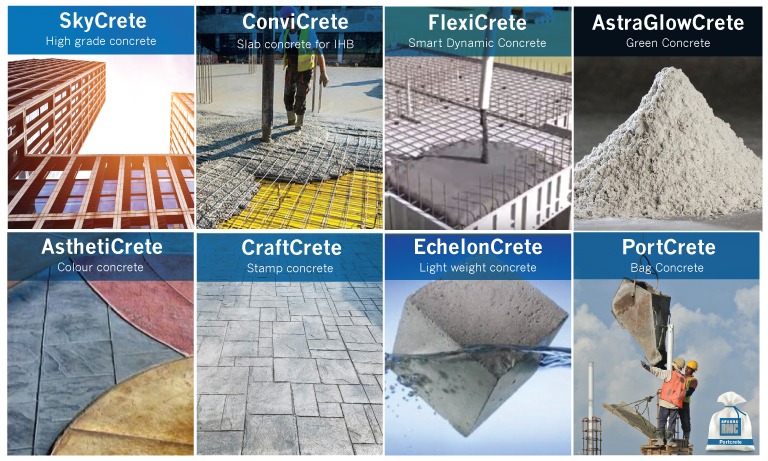
    Aparna RMC supplies ready-mix concrete for residential, commercial and infrastructure projects. Its range includes high-grade, slab, self-compacting, smart dynamic, green, colour, stamp, lightweight, fibre-reinforced, steel fibre-reinforced, and temperature-controlled concrete. Its product range also includes glass fibre reinforced, porous, and bag concrete.

    Aparna RMC produces concrete grades from M5 to M80, with customised mixes for different project requirements.

    Aparna RMC at a Glance

    For the right concrete type and grade, the mix should be selected based on the project requirements, application, and site conditions.

    Frequently Asked Questions

    The four common types are plain, reinforced, prestressed, and precast concrete. Plain has no reinforcement, reinforced uses steel, prestressed uses tensioned steel, and precast is made off-site.

    M20, M30, and M40 indicate compressive strengths of 20, 30, and 40 MPa at 28 days.

    The number of concrete types varies because concrete can be classified by binder, density, reinforcement, production and placement, and performance.

    Ultra-high-performance concrete (UHPC) is among the strongest, reaching 120–200 MPa. Conventional grades can reach M80 and above.

    PCC has no steel reinforcement and is mainly used for non-structural work. RCC contains steel reinforcement and is used for structural elements such as beams, slabs, and columns.

    M20–M25 is commonly used for residential slabs, while commercial slabs may use M25–M30, depending on load and exposure.

    Reinforced cement concrete (RCC) is widely used for structural work, often supplied as ready-mix concrete.

    M20–M25 is commonly used for residential foundations and M25–M30 for commercial foundations. Higher grades may be required for severe exposure conditions.

    References and Standards

    • IS 456:2000 — Plain and Reinforced Concrete, Code of Practice
    • IS 10262:2019 — Concrete Mix Proportioning, Guidelines
    • IS 383:2016 — Coarse and Fine Aggregate for Concrete, Specification
    • IS 1343:2012 — Prestressed Concrete, Code of Practice
    • IS 4926:2003 — Ready-Mixed Concrete, Code of Practice
    • IS 3812 — Pulverized Fuel Ash, Specification
    • IS 16714:2018 — Ground Granulated Blast Furnace Slag for Use in Cement, Mortar and Concrete
  • Top 10 reasons to choose Ready Mix Concrete (RMC)

    Top 10 reasons to choose Ready Mix Concrete (RMC)

    When it comes to construction, choosing the right materials is significant for the outcome of the project. Among the various options available, Ready mix concrete (RMC) is a versatile and efficient choice to make. In this blog, we will explore key factors that contribute to RMC being the best option for construction.

    1. Consistency and Quality

    Ready mix concrete’s reliability is one of its key advantages. One of the foremost benefits of RMC is its consistent quality. Ready-mixed concrete is produced in controlled settings, as opposed to on-site mixed concrete, which can have variations in composition and quality due to human error. The thorough manufacturing of RMC guarantees that every batch complies with stringent quality requirements, lowering the possibility of structural problems in your project.

    2. Time Efficiency

    Time is of the essence in the construction industry, and RMC can save the day. When you choose ready-mix concrete, it arrives at your construction site fully prepared for use. As a result, on-site mixing is not required, which minimizes downtime and speeds up project completion. Your construction schedule becomes more dependable and effective.

    3. Cost-Effectiveness

    Ready-mix concrete is frequently cost-effective in the long run, despite having a higher initial cost than conventional approaches. Reduced labor expenses, less material waste, and quicker construction periods all contribute to significant budgetary savings. Effectively making RMC a smart investment.

    4. Customization

    The requirements for construction projects vary and RMC can be customized to fit particular needs. Ready mix concrete vendors can produce concrete to your exact specifications, whether you need high-strength RMC for a foundation or a mix with a certain slump for a particular application. It may be used for a variety of construction applications due to its adaptability.

    5. Reduced Labor Intensity

    Physical labor in the construction industry can be taxing, and hand concrete mixing is no exception. Construction workers’ risks of injury and exhaustion are decreased by RMC by minimizing the requirement for on-site mixing and handling. Ready-mix concrete not only improves safety but also boosts worker morale and productivity.

    6. Environmental Benefits

    At a time when sustainability is a top priority, ready-mix concrete can contribute to the solution. Many RMC plants are equipped with efficient waste management and recycling systems, reducing the environmental impact of construction projects. By deciding to use ready-mix concrete for your projects, you help the building industry become more environmentally friendly.

    Using RMC minimizes the need for storing and handling raw materials on-site. This is especially beneficial in space-constrained areas. It also reduces the logistical challenges associated with managing construction materials, making your project more efficient.

    7. Quality Control

    For ready-mix concrete suppliers, quality control is of the utmost importance. To ensure that the concrete complies with industry standards and your project’s particular requirements, ready-mix concrete suppliers have put in place strict safeguards. You can trust that the RMC that is supplied to your site is of the highest quality.

    8. Weather Independence

    Weather has a significant impact on building projects, frequently leading to delays and difficulties. However, Ready-Mix Concrete (RMC) provides a way to lessen the effects of the weather. Construction projects have the flexibility to proceed uninterruptedly regardless of unfavorable weather conditions, or extreme temperatures because RMC is prepared and cured in controlled off-site surroundings. This added advantage considerably boosts a project’s effectiveness and resilience to unforeseen environmental difficulties.

    9. Reduced Construction Site Congestion

    Fewer construction vehicles and less on-site concrete mixing mean reduced congestion at your construction site. This not only improves safety but also enhances logistical efficiency, making it easier to manage your project.

    10. Lower Risk of Errors

    Human errors in mixing proportions can lead to costly issues down the line. Ready mix concrete reduces this risk by ensuring that the concrete meets project specifications and design requirements. It’s a reliable choice for maintaining quality and structural integrity.

    Aparna RMC

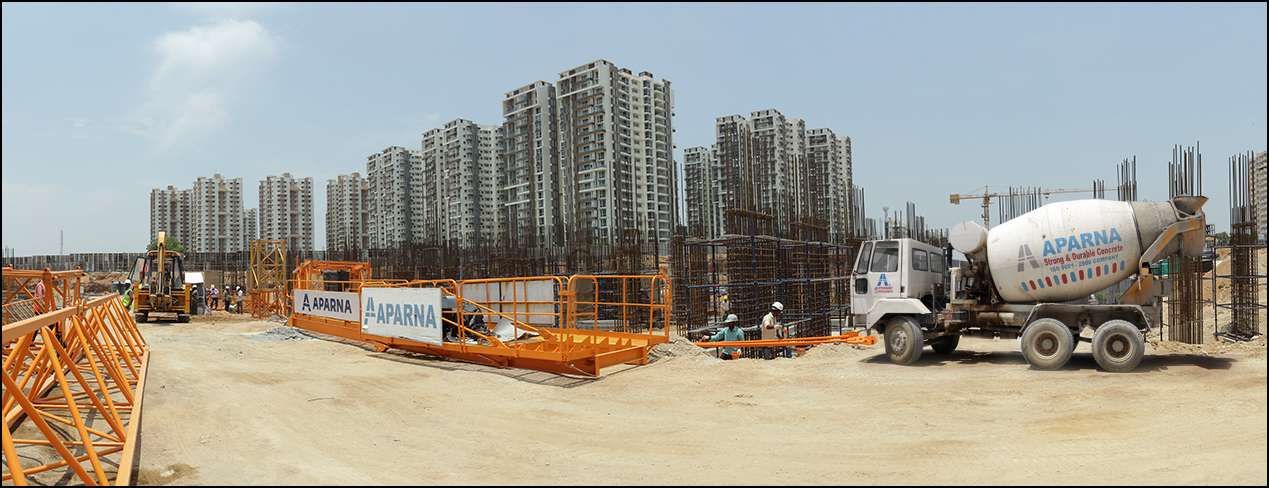
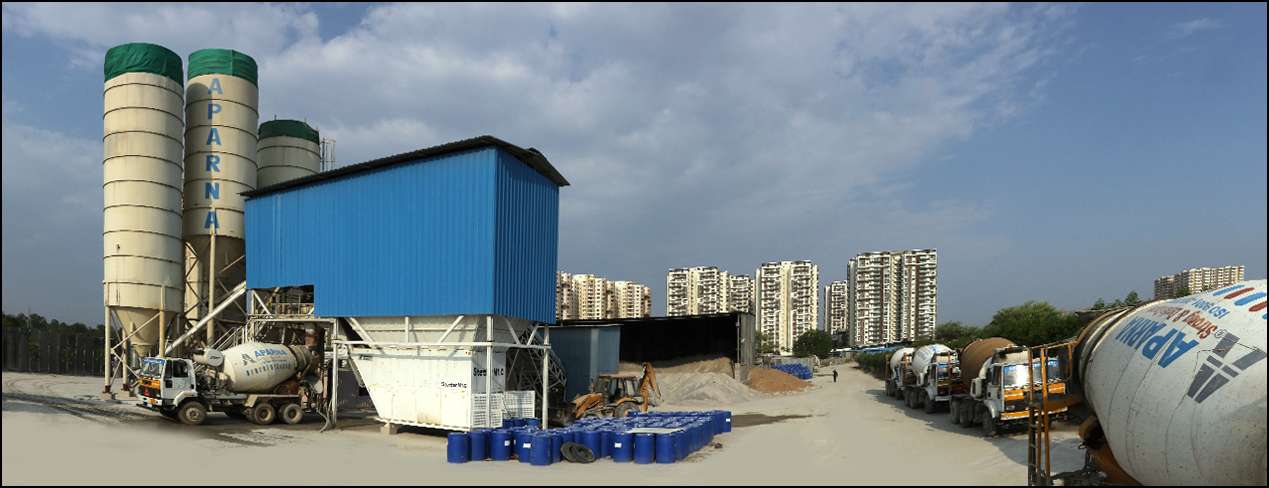
    Aparna RMC is a construction industry leader in India, with 27 RMC plants nationwide. The largest division, comprising 27 RMC plants, boasts one of the country’s highest concrete production capacities, producing a remarkable 1.8 million cubic meters of ready-mix concrete annually.

    Aparna RMC’s commitment to technology and quality is evident through their 27 fully computerized Schwing Stetter ready mix concrete plants, controlled by MCI 360 and Siemens PLCs, ensuring precision batching. We also offer custom mixes with large stocks of aggregates, cement, and admixtures and maintain continuous production with 150 cubic meter inline silos, making ourselves a reliable and efficient partner in the construction industry.
  • Inauguration of our newest Ready Mix Concrete plant at Mankoli

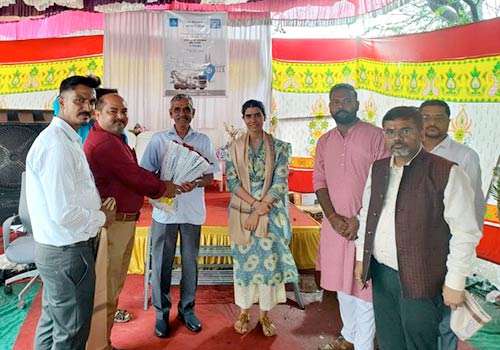
    Inauguration of our newest Ready Mix Concrete plant at Mankoli

    Excited to announce the inauguration of our newest Ready Mix Concrete plant at Mankoli, Thane in the Mumbai region. This plant will help us serve Bhiwandi, Kalyan, Dombivili and all the emerging hotspots of North Mumbai region.

    Congratulations to the entire team behind this new milestone. Gopal KrishnaSrikanth Narnepati
  • Aparna Enterprises eyes Rs 2,100 crore revenue by FY24

    Aparna Enterprises eyes Rs 2,100 crore revenue by FY24

    Aparna Enterprises eyes Rs 2,100 crore revenue by FY24

    Jun 14, 2023

    Aparna Enterprises eyes Rs 2,100 crore revenue by FY24

    Aparna Enterprises, a buildings material products company, is eyeing Rs 2,100 crore revenue by FY24 as it expands its presence across major markets driven by strong demand for construction material.

    The Hyderabad-based firm clocked revenue of Rs 1,650 crore in FY23.

    The firm has set up a new manufacturing unit with an investment of Rs 100 crore for UPVC manufacturing unit in Rudraram, Hyderabad.

  • Show of women power: over 75 women leaders at realty+ women icon conclave & awards 2023​

    Show of women power: over 75 women leaders at realty+ women icon conclave & awards 2023​

    Show of women power: over 75 women leaders at realty+ women icon conclave & awards 2023​

    Jun 09, 2023

    Show of women power: over 75 women leaders at realty+ women icon conclave & awards 2023​

    The Realty+ Women Icon Conclave & Awards once again brought together the iconic women leaders of real estate, building and construction sector from across the nation.

    Dr. Annurag Batra, Editor-in-Chief & Chairman, exchange4media Group & BWBusinessWorld Group set the tone of the day with his ever motivating inaugural address. He said, “Leadership is all about leading from the front. Women leadership in every domain is growing and we hope we have more women entrepreneurs. This is a great initiative by Realty+ bringing together the women leaders of today that are setting an example and will inspire next generation of female leaders in this sector.”

    The first session of the day Redefining Real Estate for Attracting Newage Investors was a real estate focused industry talk.

    The discussion was moderated by Gautam Saraf- Managing Director, Mumbai & New Business, Cushman & Wakefield. Joining him for the session were Anjana Sastri– Director – Marketing, Sterling Developers, Bani G. Anand, Vice Chairperson, ATS Infrastructure Ltd. Hina Kamra– Managing Director – NeoWealth Management, Khair Ull Nissa Sheikh– Executive Director- WTC Services, World Trade Center Noida. Reshmi Panicker– Executive Director Land and Residential Services, Knight Frank and Sarah Jacob-Director Trine Holdings.  

    The speakers spoke about the sustainability as the crucial factor in the investment decision making process. Role of amenities, cost factors, return on investment as well as the growing inclination of younger generation towards REITs and Fractional ownership models of investing. 

    Next session Transforming Workspaces, One Design at A Time was design centric discussion.

    The session was moderated by Arnab Ghosh– Managing Director – Corporate Fitouts India, Colliers The panelist joining him for the session included- Dr Ananya Gandotra, Founder Director, AG Strategic Management & Engineering Solutions Pvt. Ltd. Erna David– Project Head – Interiors, APICES Studio Pvt Ltd. Fancy George– CEO, Thomas Workplace Design. Gagandeep Kapila– Founder and Principal Architect, Workshop for Metropolitan Architecture. Dr. Ponni M. Concessao– Founder & Principal Architect Oscar & Ponni Architects and Sanober Garda– Senior Director – Office Leasing Services, Mumbai, Savills India. 

    The panelists shared their views on transformation of workspace design and the new concepts in office design from ‘hybrid’, ‘flexible’, ‘agile’ etc,  The phenomena of flexi spaces and changing the corporate office structures were talked about. The ability to retrofit and repurpose spaces, use of technology and virtual collaborative environment such as metaverse were discussed.

    The Fireside Chat of the day Being Champions of Change in Tech World had women leaders in Proptech segment participating.

    This intriguing session was chaired by Shajai Jacob– MD & Country Head – ApnaComplex, CEO – GCC, ANAROCK. The speakers of this session were Kanika Gupta– Founder & COO, Squareyards. Shivani Karia Jhaveri– Co-Founder & CMO, Blox. Nidhi Srivastava– Co-Founder & CEO – Vibe Realty, Founder – Graviti Dubai and Priti Thakur– General Manager- Salesforce Initiatives, Oberoi Realty Ltd. 

    The experts spoke about how real-estate industry needs to adopt and adapt to fast age technology and how Proptech is accelerating not only the behavioral change but also accelerating participation of women in real estate. 

    The concluding session of the day Real Talk- Inspiring Success Stories had Sapna Srivastava- Editor, Realty+ in a candid conversation with two renowned and respected women leaders Adv. Flavia Agnes– Women Rights Lawyers and Co-Founder & Director, Majlis Law and Dr. Ananta Singh Raghuvanshi– Founder Member & President, NAREDCO MAHI.

    Adv. Flavia Agnes stressed upon the importance of accessibility to court and simplification of legal system so that women especially from the lower strata can take benefit of the laws. Dr. Ananta Singh Raghuvanshi spoke about the ways to deal with the challenging situations at work especially when a women is in a leadership role and is in competition with men dominated management.

    The finale to the day was marked by the Dr Niranjan Hiranandani– MD, Hiranandani Group& Vice-Chairman, NAREDCO.

    Addressing the winners of the Realty+ Women Icon Awards 2023 he said, “We cannot achieve a double digit growth in Indian GDP without the participation of women. We have seen large number of women in various field of activity such as technology, engineering, space, aviation, science, sports, business, philanthropy, education and medicine. The role of men also is crucial in terms of changing mindsets and encouraging the fellow women professionals so that we have more women in leadership in real estate as well as other sectors. I congratulate Realty+ for creating such path breaking initiatives and encourage them continue to lead the real estate with many new endeavours.”

    The Realty+ Women Icon Awards 2023 glittering evening saw the felicitation of some remarkable women achievers in various segments of real estate, building and construction industry.

    Women Young Achievers

    Aparna Reddy, Executive Director, Aparna Enterprises Ltd

    Anshika Aggarwal, Whole Time Director, SMC Real Estate Advisors Pvt. Ltd.

    Women Achievers in Marketing

    Asha Singh, Sr. Vice President – Marketing, 360 Realtors & Axon Developers

    Dr. Rachna Sharma, Vice President – Marketing, Satya Group

    Shalini Shetty, Business Leader – Luxury Marketing & Pre-Sales, Embassy Group

    Women Achievers in PR & Corp Comm

    Apoorva Verma, Manager Public Relations, WeWork India

    Natasha Gupta, Founder & CEO, Story Brews Pvt Ltd

    Tehseen Chauhan, DGM- Corporate Communications, Lodha

    Women Achievers in Residential Realty

    Sunaina Kohli, Senior Vice President – Sales & Marketing, Phoenix Mills Ltd.

    Sri Raja Rajeshwari S., Head – Presales, Brigade Enterprises Ltd.

    Shanthi V, Executive Vice President – Project Management Office, Sobha Limited

    Women Achievers in Commercial Realty

    Aparna Premnath, Associate Director – Occupier Strategy and Solutions, Knight Frank India Pvt. Ltd.

    Bhavna Jetly, Vice President – Occupier Strategy and Solutions, Knight Frank India Pvt. Ltd.

    Mehak Kala, Assistant Vice President – Occupier Strategy and Solutions, Knight Frank India Pvt. Ltd.

    Shovna Panigrahi, Vice President Asset Management, RMZ Corp

    Smita Patil, Director, SSPL Group

    Neha Agarwal, Director – Tenant Advisory Group, Cushman & Wakefield India Pvt. Ltd

    Women Achievers in Start-Up

    Mansi Malhotra, Co-Founder, Vuee Designs

    Women Achievers in Organizational Sales

    Emanda Vaz, Assistant Vice President – Embassy Luxury Business, Embassy Group

    Yasha Saraf, Co-Founder, ArisUnitern RE Solutions Pvt Ltd

    Nitu Mishra, Business Solution Lead – Residential (West), JLL India

    Women Achievers in Property Consulting

    Binita Patel, Director – Advisory Services, Knight Frank India Pvt. Ltd.

    Divya Agarwal, Vice President – Research, Knight Frank India Pvt. Ltd.

    Poonam Gupta, Principal Consultant – Valuation & Advisory, Knight Frank India Pvt. Ltd.

    Shailaja, Director – Valuations, Mumbai, Cushman & Wakefield India Pvt. Ltd.

    Women Achievers in Education

    Mona N. Shah, Founder & Director, Vayati Systems and Research Inc

    Women Achievers in Customer Relations

    Anju Venugopal, Chief Information Officer, Asset Homes Pvt. Ltd.

    Monisha Aluvila, Head – Customer Success, Puravankara Group

    Sanchari Roy Chowdhury, Senior General Manager ? Customer Relations Management, Shriram Properties Ltd.

    Urvashi Yadav, CRM Head, Hero Realty Pvt. Ltd

    Women Achievers in Legal Practice

    Anjana Bali, Head – Legal, DLF Home Developers Limited

    Bhakti Vijay Jadhav, Senior General Manager – Legal, Puravankara Limited

    Women Achievers in Interior Design.

    Meenamurthy Kakkar, Partner & Design Head, Envisage

    Women Achievers in Architecture

    Geetha Nair, Vice President – Design & Engineering, Sobha Limited

    Ar. Riya Patel, Associate, Co-Founder Kalagate Collective & Associate & Pei Cobb Freed & Partners

    Varsha Jain, Co-founder and Principal Architect, Creative Architects & Interiors

    Women Achievers in Sustainability

    Alpana Gupta, Partner, Vijay Gupta Architects

    Isha Anand, Associate Director- Development Management, RMZ Corp

    Women Achievers in Industrial & Warehousing

    Sneha Gurjar, Director, CEM Engineers

    Women Achievers in Hospitality

    Sarah Jacob, Director, Trine Holdings

    Women Achievers in Property Management

    Sapna Chandiramani, CEO, Co-founder & Managing Director, Property Angel Management Pvt. Ltd

    Women Achievers in Product Brands

    Khushbu Brahmbhatt, Chief Creative Officer, Insomniacs Digital Pvt. Ltd

    Shambhavi Kadam, Assistant Vice President – Premium Sales, Embassy Residential, Embassy Group

    Women Achievers in CSR.

    Asmita Dindorkar, CMD, Avishkar Buildcon LLP

    Women Achievers in Engineering

    Reeja Prakashan, AGM – ERP Systems and Process Management, Brigade Group

    Women Achievers in Technology

    Priti Thakur, General Manager – CRM & Salesforce Initiatives, Oberoi Realty Ltd.

    Women Achievers in Finance

    Thara R., Asst. General Manager – Finance & Treasury, Brigade Group

    Hina Kamra, Managing Director, Neo Wealth & Asset Management

    Women Achievers in Facility Management

    Saumya Sarda Binani, Director Founder, TalbotFORCE Pvt. Ltd

    Vinitha K, Regional Operations Head, Embassy Services Pvt Ltd

    Women Achievers in Entrepreneurship.

    Nidhi Arvind Jain, Director, Pride Purple Group

    Women Achievers in HR

    Fabiola Mendes E Rodrigues, Director | Human Resource Partner, The Bennet & Bernard Company

    Priti Shetty, Chief People and Culture Officer, WeWork India

    Women Rising Star

    Binitha Dalal, Founder , Mt. K Kapital

    Aishwarya Bansal, Co-Founder, Smartworld Developers Pvt Ltd

    Women Icon of the Year

    Kanika Gupta Shori, Founder and Chief Operating Officer, SquareYards

    Watch the Full Event on – https://www.youtube.com/watch?v=ZTu03EVE04Y

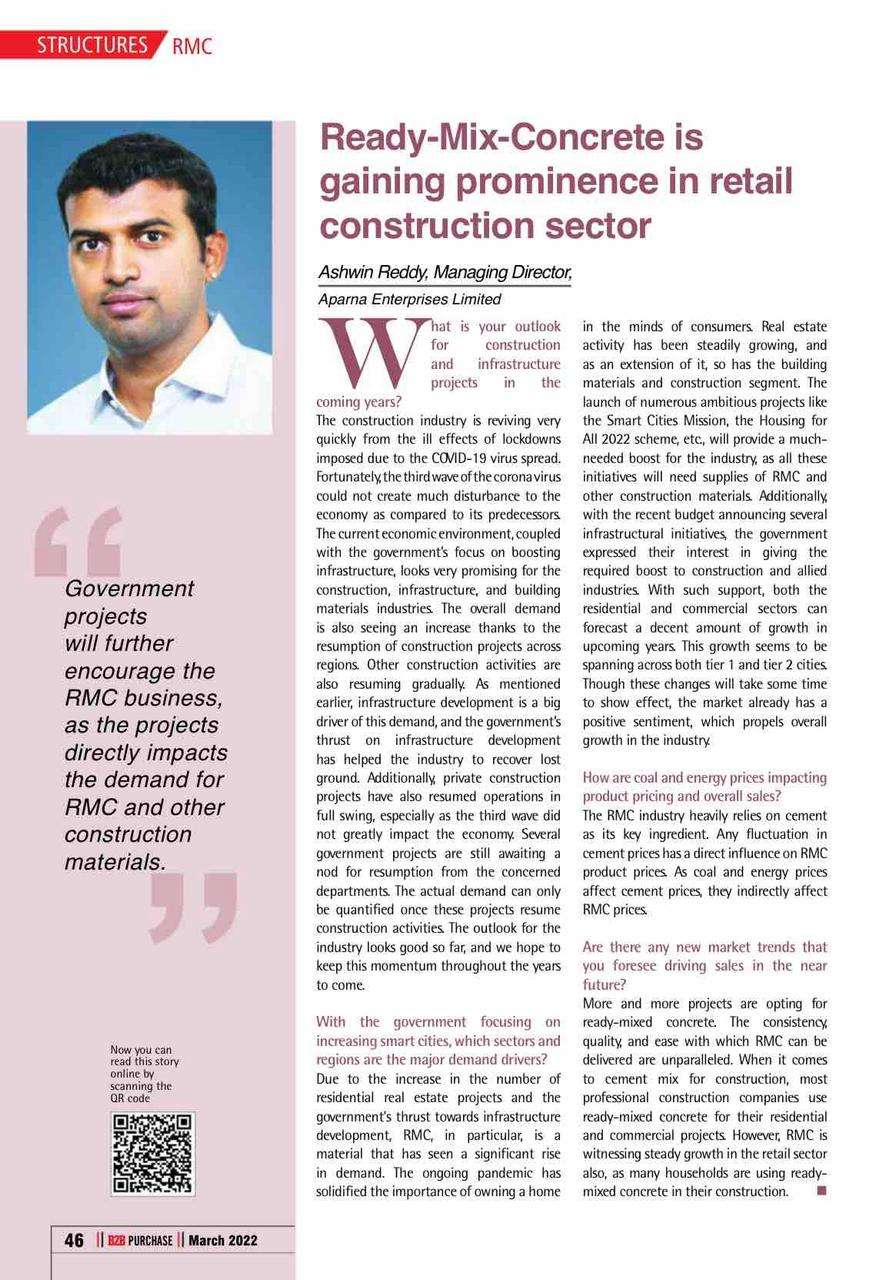
  • Ready-Mix Concrete is gaining prominence in retail construction sector

    Ready-Mix Concrete is gaining prominence in retail construction sector

    Ready-Mix Concrete is gaining prominence in retail construction sector

    Mar 18, 2022

    Ready-Mix Concrete is gaining prominence in retail construction sector
    Aparna RMC times release
  • The RMC market is on its path to a steady recovery, says Ashwin Reddy, Managing Director, Aparna Enterprises

    The RMC market is on its path to a steady recovery, says Ashwin Reddy, Managing Director, Aparna Enterprises

    The RMC market is on its path to a steady recovery, says Ashwin Reddy, Managing Director, Aparna Enterprises

    Dec 17, 2021

    The RMC market is on its path to a steady recovery, says Ashwin Reddy, Managing Director, Aparna Enterprises

    How is the market for RMC shaping up in India?
    The RMC market is on its path to a steady recovery after the tumultuous first and second waves of the pandemic. The first lock down resulted in the stalling of all ongoing projects, construction activities had come to a complete halt. The initial period where everyone struggled to find a foothold amidst the pandemic impacted the industry significantly. Businesses were able to overcome the situation only after the lockdown was lifted, which led to the resumption of economic and construction activities across regions, and the building materials industry also got back on its track gradually. The overall demand is seeing an increase thanks to the resumption of construction projects across regions. Other construction activities are also resuming gradually. Government’s thrust on infrastructure development has also resumed and is helping the industry to recover the lost ground.

    Which are the RMCs you have introduced in the market in the recent past?  What is the USP of the RMCs?
    RMC consists of cement as main ingredient with several other standard components – Aggregates, sand and water. What differentiates RMCs is different grades of RMC which is customised as per structure’s requirement. Aparna RMC offers concrete mix in different grades from M-05 to M-80. RMC is customised concrete mix which is ready to use at the construction site. RMC ensures constant ratio of various ingredients across different batches, to ensure uniform strength. For high rise buildings, the concrete mix is lifted through special pumps.

    What are the innovations going on at your R&D to bring out strong and sustainable concrete?
    We use state-of-the-art machinery to produce quality RMC across batches. Aparna RMC uses large storage bins to ensure uninterrupted supply. Aparna RMC uses Schwing Stetter equipment for production and batching. R&D is a constant activity to ensure usage of optimum cement quantity and other ingredients. A lot of research is done on a continuous basis for supplying self-compacting concrete used in high rise buildings

    With stringent regulation in force for project completion, how are your RMC helping in faster completion of projects?
    Continuous supply of RMC contributes majorly in timely completion of any project. We always map our production capacity with our customer’s requirements. RMC consumption has been increased at steady pace due to shift from traditional wall system (Bricks and Blocks) to concrete walls on account of increase in high rise buildings and strict timelines. RMC has various grades/design mixes which can cater to all the building concrete requirements. This is also one of the pull factor for RMC.

    There are reports of building collapses during monsoon; being a leading RMC manufacturer what role RMC can play in protecting the building from collapse?
    Building/structure collapse due to concrete mix is a very rare possibility. Building structure collapse happens due to faulty design of the foundation and unauthorized alterations to the structure.

    How is the unorganized nature of the RMC industry affecting the organized players? Has the introduction of RERA and GST helped in expanding the organized players market share?
    With the introduction of RERA and GST, majority of the project business is catered by organized RMC Players. However since the entry barrier is low, unorganized players are playing at considerably low product price for catering to the small & big projects.

    How are you overcoming skilled manpower shortages?
    One way of overcoming skilled manpower shortages is to up-skill the existing employees. The term however is not restricted to just technical skills, but it also includes skills like being mindful of safety, team work and mental health in the work place; everything that contributes to fostering a wholesome work environment. We continuously invest in training our staff on all important topics to increase their awareness.

    What are the challenges faced by RMC players in India?
    The pandemic brought about several disruptions in business continuity of building materials products. While business activities have resumed, certain factors continue to slow down the momentum and growth. A key factor that impacts the demand for RMC is the increase in the prices of raw materials. Fluctuation in cement prices is also a key factor impacting the industry. Rising fuel prices coupled with cost rise in the supply chain transportation are also aspects that influence the industry’s revenue and growth. Decline in availability of cash or cash flow also affects the demand-supply chain for commercial and residential constructions which has direct impact on the RMC industry.

    Your take on the government policies and regulations and the tweaks required to propel the sector?
    The building material industry is one of the largest employers in India. A key driver that enables the growth in this industry is the infrastructural development of the country. The government during its budget 2020-21, had proposed projects amounting to INR 105 lakh crores for the next five years, and had announced the fast-tracking of projects. However, there are certain pain points that require government attention, when it comes to infrastructural development in India. A few of them are; timely interventions and quicker clearances and approvals especially in terms of environmental clearances; adequate funding support from the banks and financial institutions. Long term funding support in case of long gestation projects and compulsory adherence to the contracts irrespective of political or policy changes; launch of projects like the Housing for All 2022 scheme, etc, will provide the much needed boost for the industry, as all these initiatives will need supplies of RMC.

    Furthermore, all recent policy reforms such as GST, RERA, REIT, etc, are all aligned to strengthen the future of construction industry in India. However, vision and investment alone would not be enough to turn around this infrastructure dream into a reality; there are many planning, technical and financial oriented issues that needs to be taken into account and handled immediately and efficiently.

    Lastly, what are your growth plans for your organization for the next three years?
    Our aim is to further strengthen our market share and presence in the RMC segment. We are looking at utilizing our production capabilities to the fullest and increase consumer base in both project and retail segments. We are also increasing the number of RMC plants to have greater coverage of the market.

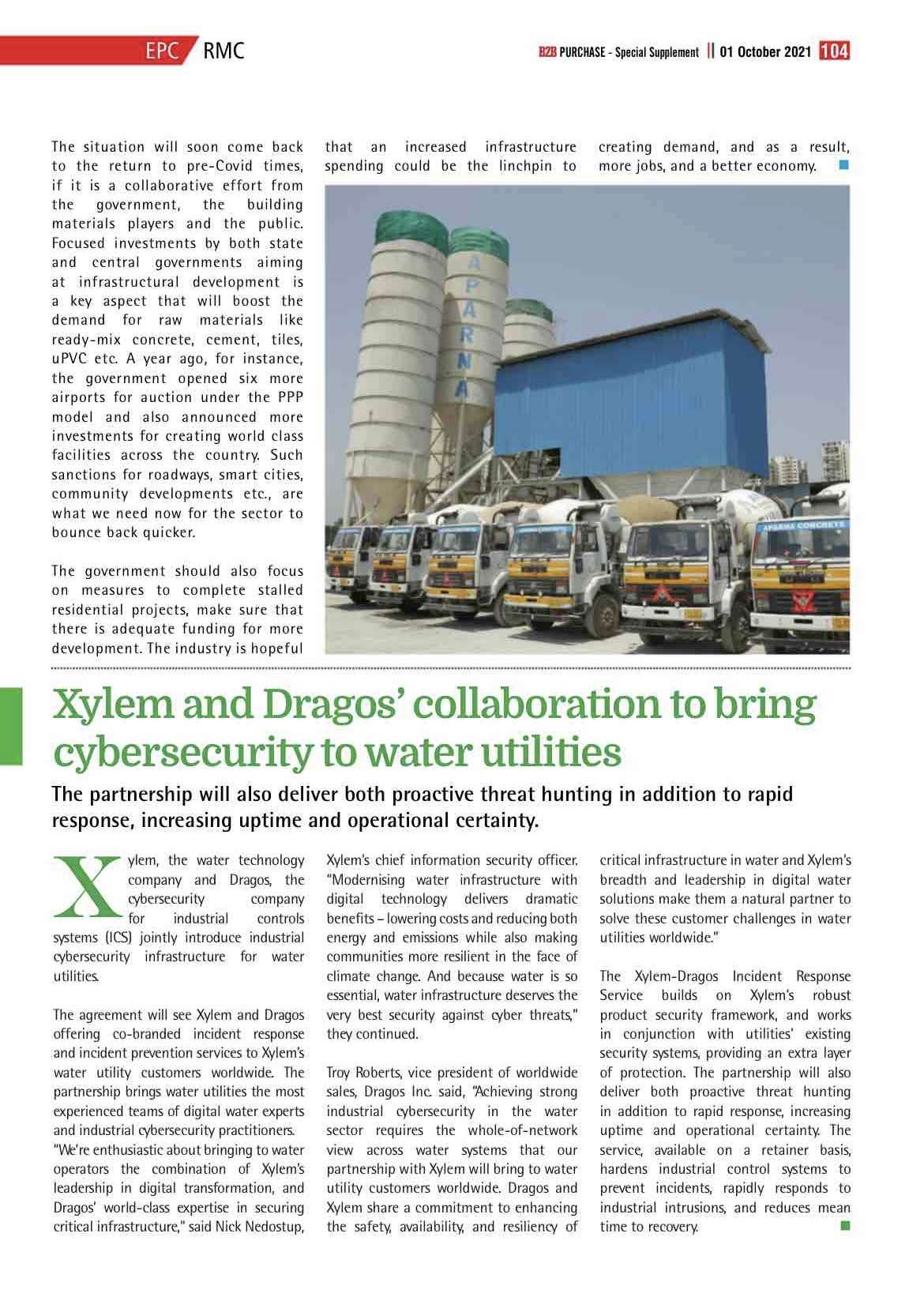
  • Infrastructure development to boost demand for RMC

    Infrastructure development to boost demand for RMC

    Infrastructure development to boost demand for RMC

    Nov 22, 2021

    Infrastructure development to boost demand for RMC
    Aparna RMC Infrastructure Development