Aparna RMC

Author: aparna_rmc

  • Green Concrete: What It Is, How It’s Made & Why It Matters

    Green Concrete: What It Is, How It’s Made & Why It Matters

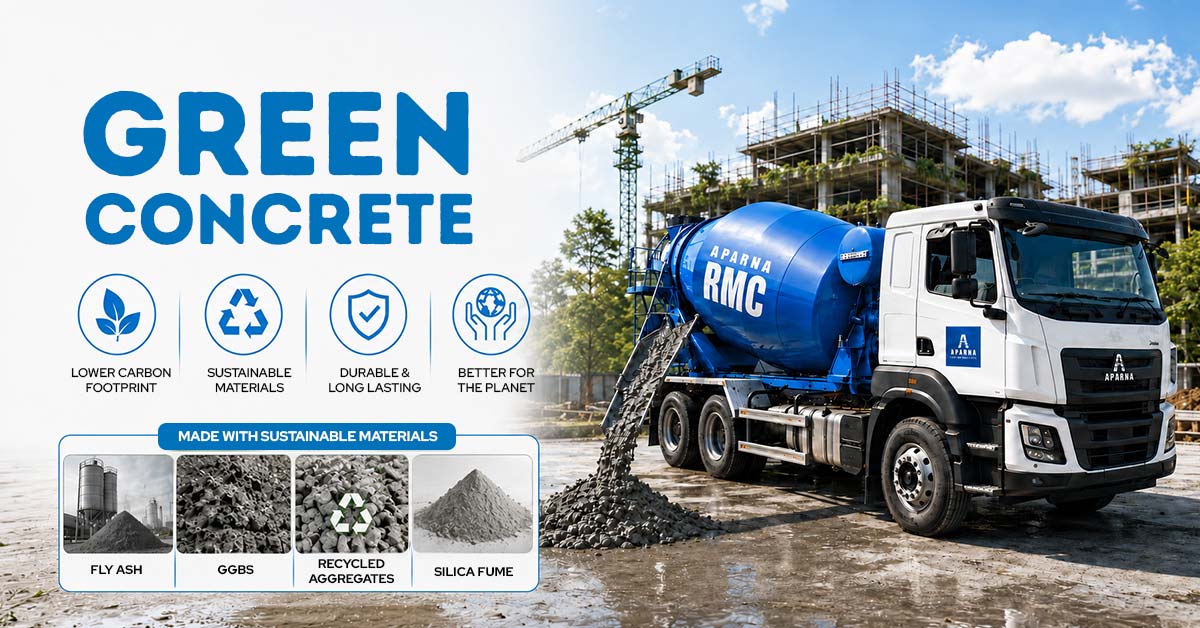
    Green concrete is a special type of concrete that is designed to reduce environmental impact. It is achieved by replacing part of the Portland cement with industrial by-products like fly ash and Ground Granulated Blast Furnace slag (GGBS) and using recycled aggregates and water.

    Cement production accounts for roughly 7–8% of global CO2 emissions, [1] and nearly all of concrete’s carbon footprint traces back to its cement content.

    This article discusses what green concrete is, what it is made of, how it compares with conventional concrete, and how it earns green-building credits in India.

    Key Takeaways

    • Green concrete cuts CO2 emissions by replacing 25–70% [2] of Portland cement with fly ash or GGBS – supplementary cementitious materials (SCMs)
    • A well-designed green concrete matches or exceeds conventional concrete’s long-term strength and durability.
    • Green concrete mixes help projects earn IGBC, GRIHA and LEED credits for recycled content and lower embodied carbon.

    What Is Green Concrete?

    Green concrete is an eco-friendly alternative to traditional concrete, which is high–carbon cement. The main goal of green concrete is to reduce carbon emissions during manufacturing and minimise the use of virgin material. This is achieved through the mix design, not a completely new product. It contains the same cement, aggregate, and water, but proportions differ. The concept was initially formalised in Denmark in the late 1990s but now it is widely used.

    What Green Concrete Is Made Of?

    Green concrete is not completely free from conventional ingredients. Only a certain portion of specific components gets substituted for lower-carbon or recycled alternatives.

    It is made of:

    • Fly ash
    • GGBS
    • Silica Fume
    • M-Sand
    • Recycled concrete
    • Recycled water

    The table below shows substitution, what it replaces, and the replacement level used in practice:

    MaterialReplacesTypical Replacement LevelKey Benefit
    Fly AshPortland Cement15–35% by weight of cementImproves workability and reduces embodied carbon.
    GGBSPortland Cement25–70% by weight of cementImproves durability and reduces embodied carbon
    Silica FumePortland Cement5–10% by weight of cementDelivers strength and keeps water out.
    Recycled Concrete AggregatesCrushed/recycled concrete chunksUp to ~20–25% for structural use; higher for non-structuralCuts down on landfill waste.
    M-SandRiver SandUp to 100%Protects river ecosystems and provides consistent sizing.
    Recycled WaterFresh WaterAs permitted under applicable water-quality provisionsSaves freshwater resources.

    Note: Replacement levels shown are indicative ranges based on IS 3812, IS 16714, and IS 15388; actual proportions are determined by mix design and verified through cube testing at the batching plant.

    Standards Referenced

    Green concrete practice in India draws on several IS standards, including IS 456 (concrete code), IS 3812 (fly ash), IS 12089/IS 16714 (GGBS), IS 383 (aggregates including recycled), and IS 15388 (silica fume).

    Disclaimer: Replacement levels and clause references are indicative and may vary with the current edition of each standard. Please confirm exact figures for project-specific specifications.

    Green Concrete vs Conventional Concrete

    The differences show up in cement content, carbon footprint, strength development, and durability

    ParameterConventional ConcreteGreen Concrete
    Cement content100% OPC30–75% OPC + SCMs
    Embodied CO2BaselineTypically 20–40% lower, mix-dependent
    Early strengthFasterSlower with high SCM content
    Long-term strengthBaselineEqual or higher at 56–90 days
    DurabilityBaselineGenerally better — lower permeability, lower heat of hydration
    CostBaselineComparable; SCMs are often cheaper than cement, but QC matters
    AvailabilityUniversalDepends on SCM supply and a capable batching plant

    Green concrete takes longer to harden, and it is a normal trait, not a defect. Because of this slow start, construction teams must adjust their project schedules and keep the building molds (formwork) in place longer.

    Benefits of Green Concrete

    1. Lower carbon footprint: Every tonne of cement produced releases around 0.9 tonnes of CO2. Replacing cement with SCMs reduces embodied carbon.
    2. Uses industrial waste: Fly ash and slag that would otherwise go to landfill become a useful binder instead.
    3. Equal or better durability: SCM concretes have lower permeability and better resistance to sulphates and chlorides, which is why coastal and infrastructure projects prefer them for performance, not just sustainability.
    4. Better workability and pumpability: Fly ash’s spherical particles improve flow at the same water content, a practical gain on high-rise and long-pump projects.
    5. Lower heat of hydration: Reduces thermal cracking risk in large pours such as rafts and mass foundations.
    6. Conserves natural resources: Less limestone mining, less river sand dredging, less quarrying overall.
    7. Conserves water: Treated or recycled batching water reduces freshwater demand, a benefit distinct from aggregate conservation and one that’s relevant to certification documentation.
    8. Green-building credits: Contribute to IGBC, GRIHA, and LEED points, covered in detail in the certification section below.

    Considerations of Green Concrete

    • Longer Setting Time: Reaches full strength later, requiring adjusted construction schedules.
    • Material Sensitivity: Requires strict quality checks due to variable raw materials.
    • Strict Curing Needs: Demands rigorous moisture management to reach full strength.
    • Localised Supply: Availability depends entirely on regional industrial production.

    Green Concrete and Green Building Certifications in India

    Green concrete mixes can contribute toward material-related credits under IGBC, GRIHA, and LEED (administered in India through IGBC), which recognise recycled content, responsible material sourcing, and lower embodied carbon.

    Disclaimer: Specific credit categories and point values vary by rating system and manual version. Consult the current IGBC/GRIHA/LEED rating manual or a certified green-building consultant for project-specific credit eligibility.

    Where Green Concrete Actually Gets Made — the Batching Plant

    Green concrete is made only in a plant and exists only as a designed mix. The SCM percentages, recycled aggregate ratios, and water controls are set during mix design and executed at a batching plant with weigh-batching and material testing. Site-mixed concrete cannot reliably produce it.

    Aparna RMC designs and supplies green concrete from its batching plants across all its locations. Fly ash and GGBS mixes designed and batched by weight, with material and cube testing at each stage.

    Builders and developers planning projects with sustainability targets can contact Aparna RMC for a green mix consultation.

    Disclaimer: Figures and historical references in this article are provided for general informational purposes and are based on commonly cited industry sources. For technical specifications, compliance, or certification decisions, please verify with current IS codes, rating manuals, or Aparna RMC’s technical team.

    Frequently Asked Questions On Green Concrete

    Is green concrete as strong as normal concrete?

    Yes, green concrete can be as strong as normal if properly designed. SCM mixes gain strength more slowly but match or exceed conventional concrete by 56–90 days, with better durability. Strength comes from the mix design, not the label.

    Is green concrete more expensive?

    Cost is generally comparable to conventional concrete, though it can vary by project, mix design, and material availability. For a project-specific cost comparison, please contact Aparna RMC for a quotation.

    What is the difference between green concrete and green cement?

    Green cement is the eco-friendly ingredient, while green concrete is the finished product. Green cement reduces the clinker content — clinker is the carbon-intensive part — typically by blending in SCMs or calcined clay. It does not work by eliminating limestone. In simple terms, green cement is an ingredient, and green concrete is the product.

    Is geopolymer concrete the same as green concrete?

    Geopolymer concrete is a type of green concrete, but a distinct one. Conventional green concrete keeps Portland cement and replaces a portion of it with SCMs; geopolymer uses zero Portland cement, activating fly ash or slag with alkaline activators instead. All geopolymer is green concrete; not all green concrete is geopolymer.

    Can green concrete be used for houses and apartments?

    Yes, green concrete is used to construct modern houses and apartments. Its applications include slabs, columns, and foundations.

    Does Aparna RMC offer Green Concrete?

    Yes, Aparna RMC offers green concrete under the name AstraGlowCrete. This special ready-mix concrete replaces a portion of traditional cement with puzzolanic material such as Fly Ash / GGBS and offers lower heat of hydration.
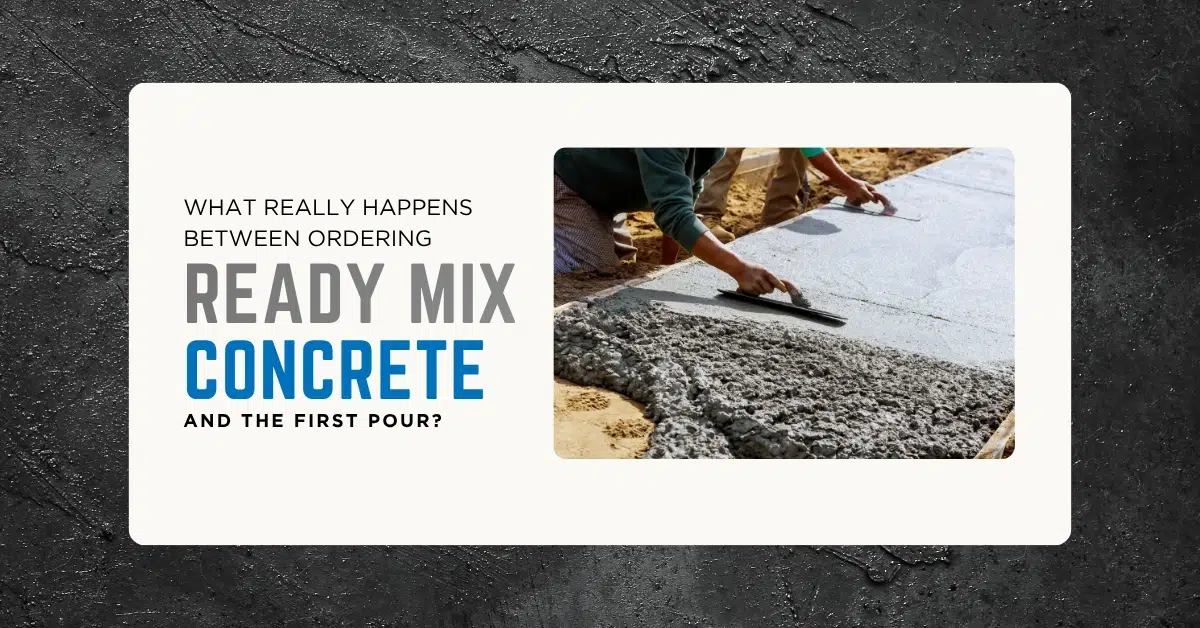
  • What Really Happens Between Ordering Ready Mix Concrete and the First Pour?

    What Really Happens Between Ordering Ready Mix Concrete and the First Pour?

    Most people on a construction site only see one part of the concrete story — the moment the transit mixer rolls in and the drum starts turning. What they don’t see is everything that happened before that truck even left the plant. And honestly, that’s the part that decides whether the pour goes smoothly or turns into a headache.

    There’s a fair bit that happens between placing an order for ready mix concrete and actually getting concrete into the formwork. It’s not just “call the plant, truck shows up.” There’s mix design, batching, quality checks, transit planning — a whole sequence that, when done right, you barely notice. When it’s done badly, you notice immediately, usually in the worst possible way.

    This blog walks through that entire sequence, step by step, so you know exactly what should be happening behind the scenes every time you place an order.

    It Starts With a Conversation, Not a Delivery Slip

    A lot of people assume ordering concrete is basically like ordering any other building material — you specify a quantity, pick a delivery date, and that’s that. It’s not quite that simple, and honestly it shouldn’t be.

    The order itself needs to nail down a few things that matter a lot more than they might seem. What grade of concrete does the job need — M20, M25, M30 ready mix concrete, or something higher depending on the structural element? What volume, in cubic metres? What slump is required for the pumping and placement method being used? And critically, what’s the pour window — meaning, when exactly will the site actually be ready to receive and place the concrete?

    That last point gets glossed over more often than it should. A pour window isn’t just “sometime Tuesday morning.” It’s a specific time frame during which reinforcement has been inspected, formwork is checked, the pump is positioned, and the crew is standing by. Getting this wrong on the ordering call is where a lot of downstream problems quietly begin.

    At Aparna RMC, this conversation between the site engineer and the technical team is treated as the actual starting point of the pour — not just an administrative step before the real work begins.

    Mix Design Gets Locked In Before a Single Ingredient Is Touched

    Mix Design Gets Locked In Before a Single Ingredient Is Touched

    Once the order details are confirmed, the relevant batching plant starts working on the concrete mix design specific to that order. This isn’t a generic recipe pulled off a shelf. It’s calibrated to the grade required, the slump needed, and the actual conditions the concrete will face between batching and placement.

    If the pour is happening during peak summer heat, the mix might include a retarder to buy a bit more working time before the concrete starts setting. If it’s a large mass pour — something like a raft foundation or a thick bridge deck — temperature-controlled concrete formulations come into play to manage the heat building up inside the pour as it cures. None of this is improvised on the day. It’s worked out and signed off before a single bag of cement is opened.

    This is really where the foundation for a successful pour gets laid, long before anyone on site sees a truck.

    The Plant Starts Prepping a Couple of Hours Before Dispatch

    About two hours ahead of when the truck needs to leave, the plant kicks into preparation mode. Aggregates get measured and loaded into the batching system. Cement gets weighed out from the silos. Water gets measured against the exact water-cement ratio that was approved in the mix design. Admixtures get dosed in at the right quantities.

    At an Aparna RMC plant, all of this runs through SCADA-automated systems, which basically means every single ingredient is weighed to spec rather than eyeballed by someone with a shovel. The system logs each batch against the order it belongs to, which is what creates the batch certificate that travels with the delivery — your paper trail proving exactly what went into that load.

    Before the drum even starts properly mixing, a slump test gets run on the fresh concrete right there at the plant. If it’s outside the range it should be in, the batch gets adjusted or scrapped before it ever leaves the gate. So by the time concrete is dispatched, it’s already passed its first real check.

    Then the Clock Starts — Dispatch and Transit

    The mixer gets loaded, sealed up, and sent off. And from this exact moment, time becomes the most important variable in the whole process. Hydration is already underway — it started the second the cement met water — and the concrete has roughly a 90-minute working window under normal conditions. In Indian summer heat, that window often shrinks to somewhere around 60 to 70 minutes.

    This is exactly why how close the plant is to your site actually matters, and not in some abstract logistics sense — it directly affects pour quality. Aparna RMC runs 36 plants across five states, specifically so urban construction sites can be served within a transit time that doesn’t eat too far into that working window. In a city like Hyderabad, the nearest plant is usually somewhere around 20 to 30 minutes from most active construction zones.

    While the truck is moving, the drum keeps turning at mixing speed to keep everything homogeneous. Once it gets to the site, it shifts down to a slower agitating speed — enough to keep the mix workable without overworking it.

    Arrival on Site: The Checks That Actually Matter

    The truck shows up. Before any of that concrete goes anywhere near the formwork, there are three things that should happen — and skipping any of them is asking for trouble later.

    First, someone checks the delivery challan against what was actually ordered — grade, volume, mix design reference, plant batch number. This is the first real confirmation that what arrived matches what was requested.

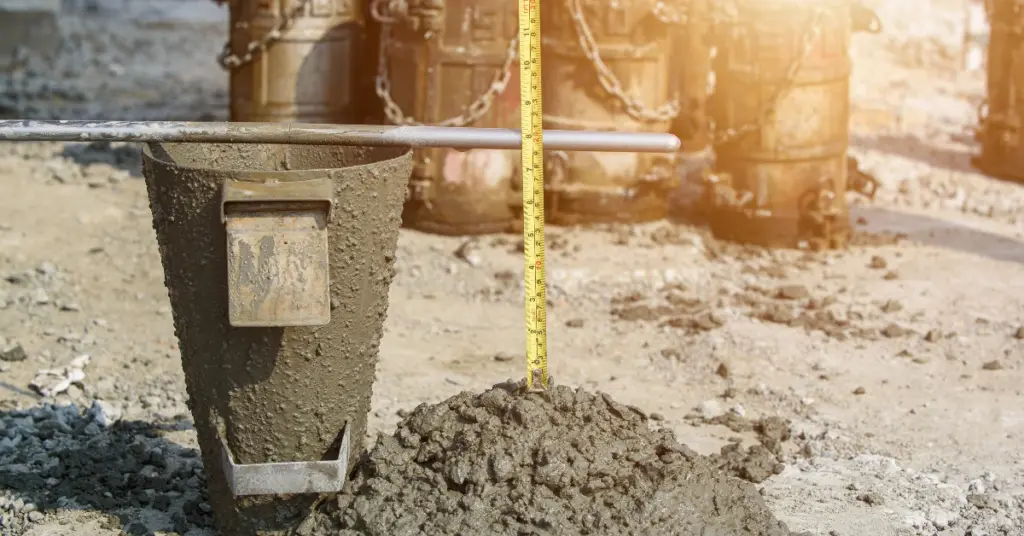
    Second, an on-site slump test is run. A sample comes out of the drum, goes into a standard slump cone, the cone gets lifted, and the distance the concrete settles gets measured. If that number falls outside the range the structural engineer specified, that load needs to be flagged before it goes anywhere.

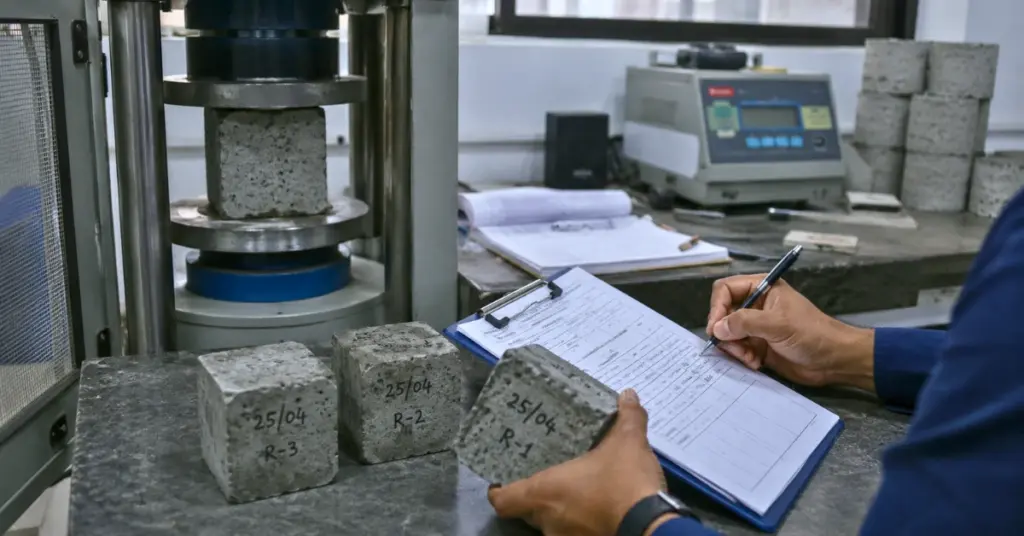
    Third, cube samples are taken. Six standard cube moulds get filled from that same batch, sealed, labelled, and set aside to cure alongside the actual structure. These cubes become the quality record — proof of exactly what was poured, where, and when, in case anyone needs to check later.

    The Actual Pour: Where Timing and Technique Meet

    Discharge starts. Concrete flows out of the drum, into the pump, through the line, and into the formwork. The rate has to be managed carefully against how fast the crew can place and compact it — too fast, and it piles up faster than it can be worked properly; too slow, and parts of it start setting before the rest is in.

    For slab work, concrete typically goes in layers and gets spread with a screed board. For columns and walls using regular concrete, each layer needs to be vibrated to get rid of air pockets and make sure the mix fully wraps around the reinforcement. With self-compacting concrete, the mix flows into place on its own and settles without needing mechanical vibration — which is a real advantage in tight rebar zones where getting a vibrator in is genuinely difficult.

    Throughout this, the site engineer is watching for warning signs — segregation, where the aggregate starts separating from the paste, excess bleed water sitting on top, or spots that just aren’t filling properly.

    Final Placement and the Start of the Real Waiting Game

    Last bit of concrete goes in, the mixer gets washed out, and it heads back. The surface gets screeded level, floated to close it up, and finished to whatever texture the project calls for.

    At this point, the concrete is at its most fragile. Everything that happens over the next week decides how strong it ends up being at 28 days.

    Curing — The Step Everyone Knows About and Plenty Still Get Wrong

    Curing starts the moment placement wraps up, and it needs active attention, not just being left alone and hoping for the best. The surface gets covered with wet hessian or polythene right away to hold moisture in. Water gets applied morning and evening, minimum, for at least seven days.

    During peak summer, exposed surfaces sometimes need extra shading to slow down how fast moisture evaporates. For big mass pours like raft foundations or thick retaining walls, internal temperature monitoring can catch thermal cracking before it actually becomes a problem — which is where temperature-controlled concrete formulations are worth specifying upfront.

    Seven Days In: The First Real Check

    The 7-day cube samples head to the lab. Results should come back somewhere around 65 to 70 percent of the expected 28-day strength. For an M25 mix, that’s roughly 16 to 18 MPa at the 7-day mark. If the numbers come back noticeably lower than that, it’s a signal something needs investigating — the mix, the curing, or even how the cubes were prepared — and it’s much better to catch that now than three floors later.

    28 Days Later: The Number That Actually Matters

    28 Days Later_ The Number That Actually Matters

    The 28-day cubes get tested, and this result is the one that really counts. It gets documented, filed against the structural drawings, and becomes part of the permanent quality record for that pour. Meets or beats the specified grade — great, that element is verified. Falls short — the structural engineer needs to be looped in and remediation gets assessed.

    This whole loop, from the first conversation about mix design all the way through to that 28-day result, is really what separates a pour that was actually managed properly from one that just got lucky with the weather.

    Final Thoughts

    There’s a lot more happening between placing an order and that first cube of concrete getting placed than most people on site ever see. And honestly, that’s exactly the point — when every step in this sequence is handled properly, the pour itself should feel almost uneventful. No drama, no surprises, just concrete that behaves exactly the way it’s supposed to.

    Knowing what’s actually meant to happen at each stage gives you a much better sense of what to expect from your supplier, and what to ask if something feels off. Aparna RMC manages this entire sequence — from mix design through to batch-certified delivery — across 36 plants in five states, so the process behind your pour is as solid as the structure it’s going into.

    FAQ: Ready Mix Concrete Delivery, Your Questions Answered

    Q1. How far in advance should I place a ready mix concrete order? Ideally 24 to 48 hours before the pour. That gives the plant enough time to finalise the correct mix design, schedule production properly, and line up transit mixers around your pour window — especially important during busy construction months when plants are juggling multiple orders.

    Q2. What is a slump test and why does it happen both at the plant and on site? A slump test checks how workable fresh concrete is. Testing it at the plant catches problems before dispatch. Testing it again on arrival confirms transit hasn’t changed it beyond an acceptable range, which is the quickest way to know the load matches what was ordered.

    Q3. Why does concrete get tested at both 7 days and 28 days? The 7-day test gives an early read on how strength is developing — usually 65 to 70 percent of final strength — so issues can be caught before the next pour happens above it. The 28-day test is the official number that confirms whether the concrete actually hit its specified grade.

    Q4. What should happen if the truck is delayed and concrete arrives past its working window? It shouldn’t be placed. Adding water to make it workable again ruins the strength, so the right move is to reject that load and arrange a replacement. This is exactly why tracking each load in transit matters — delays get caught early enough to actually do something about them.

    Q5. Does the concrete mix design change depending on weather conditions? Yes. Hot-weather pours often need a retarder to extend the working window, while large-mass pours may need temperature-controlled formulations to manage internal heat buildup. These adjustments get planned into the mix design before the order is even batched, not improvised on the day.

    Q6. How does Aparna RMC keep the process consistent across so many plants? Every plant runs on SCADA-automated batching following the same approved mix design standards, with pre-dispatch testing and batch certification on every load. Combined with VTS-tracked transit mixers, this keeps the process — and the quality — consistent whether you’re ordering from a plant in Hyderabad or anywhere else in Aparna RMC’s five-state network.

  • The Cost of a 30-Minute Delay: Why Timing Matters in Concrete Construction

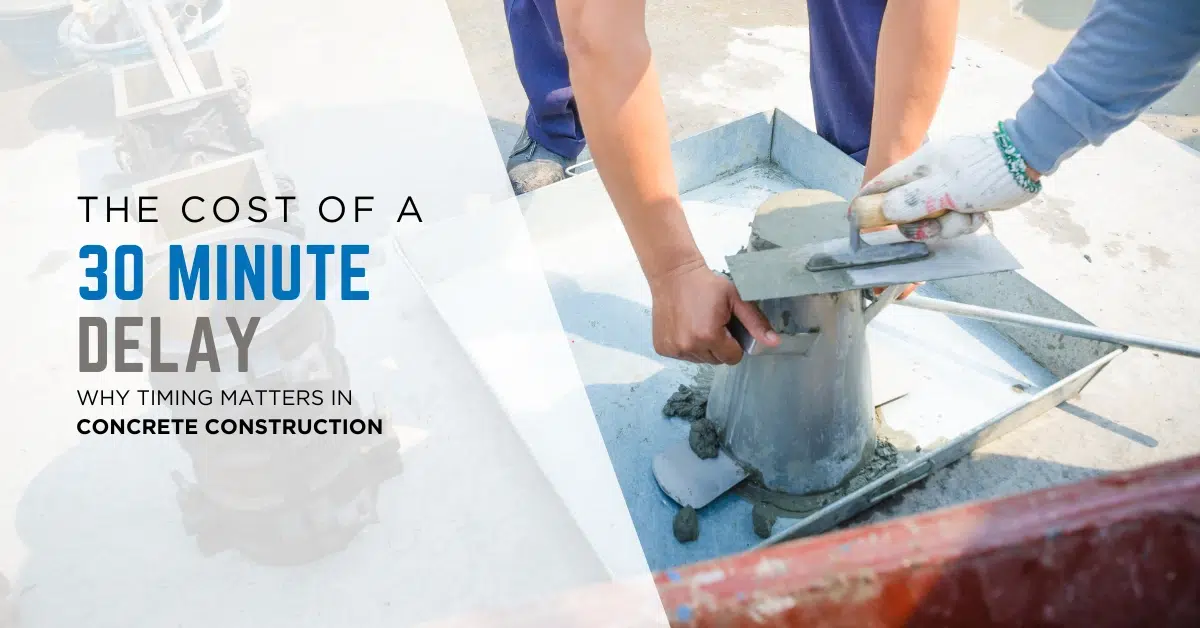
    The Cost of a 30-Minute Delay: Why Timing Matters in Concrete Construction

    Ask anyone managing a construction site, and they’ll tell you delays happen constantly. A late delivery, a traffic snarl on the way to the site, a crew that starts twenty minutes behind schedule — most of the time, this stuff just gets absorbed into the day. Nobody panics over it.

    Concrete is different. Once cement meets water, the clock starts, and it doesn’t stop for traffic. What looks like a small scheduling hiccup on paper can, in practice, decide whether a pour holds up the way it’s supposed to for the next fifty years or quietly carries a weakness nobody catches until much later.

    So what actually happens in those thirty minutes? Why do reliable ready mix concrete suppliers treat timing like it’s non-negotiable? And what does it really cost when that timing slips? That’s what we’re getting into here.

    Why Concrete Has a Clock Running From the Moment It’s Batched

    When the second cement and water come together, a chemical reaction called hydration kicks off. This is the same reaction that eventually gives concrete its strength — but it also means the material is never sitting still. It’s changing from the moment it leaves the plant, whether anyone on site is ready for it or not.

    Under normal conditions, ready mix concrete remains workable for about 90 minutes after batching, although the exact duration depends on the mix design, temperature, and the use of admixtures. That’s the window where it can still be poured, compacted, and finished properly. Push past that, and the mix starts stiffening up, which compromises both how it sets structurally and how it finishes on the surface.

    In India, especially through the summer months, that 90-minute figure isn’t something you can rely on blindly. Once temperatures climb past 40°C, hydration speeds up and the working window shrinks. A delay that wouldn’t matter much in cooler weather suddenly becomes a real problem in peak summer heat, because every extra minute in transit is eating into a window that’s already tighter than usual.

    This is really the whole reason timing gets treated so seriously by RMC suppliers who know what they’re doing. Transit time isn’t an afterthought tacked onto delivery — it’s baked into the mix design from the start.

    What Actually Happens in a 30-Minute Delay

    What Actually Happens in a 30-Minute Delay

    Here’s the thing about a thirty-minute delay — it doesn’t show up as some dramatic failure on site. It’s quiet. Which is exactly why it’s risky.

    The mix starts losing slump: Slump tells you how workable concrete is — basically how easily it flows and fills the formwork. As time passes, the mix stiffens naturally, and slump drops with it. A load that left the plant at the right consistency for pumping might show up on site noticeably stiffer than expected.

    Someone reaches for a hose: This is the part where a delivery delay turns into an actual structural issue instead of just an annoying wait. When concrete looks too stiff to place easily, the natural instinct on site is to add water and loosen it back up. It feels harmless, even helpful. But that one decision throws off the water-cement ratio that was carefully calculated into the original mix design. The concrete might still look fine going into the formwork — it just won’t be as strong once it cures.

    If workability needs to be maintained, only approved admixtures should be used under controlled conditions. Adding water on site is not recommended because it can weaken the concrete by changing the water-cement ratio. 

    Compaction gets tougher: Even if nobody adds water, stiffer concrete is genuinely harder to work into tight rebar zones or complex formwork shapes. Get this wrong, and you end up with honeycombing or trapped air pockets, both of which quietly chip away at the strength of that section.

    Cold joints become a real risk: If a delay hits one load in a sequence, there’s a decent chance the next batch won’t bond properly with what’s already been placed. That creates a cold joint — a weak plane running through what’s meant to be one continuous structural element. Once it’s there, no amount of surface patching brings back the original strength.

    None of this is visible on the day it happens. It tends to show up weeks or months down the line, as cracking or reduced durability, and by then, good luck tracing it back to a thirty-minute delay on some Tuesday afternoon.

    Why 30 Minutes Is Rarely Just 30 Minutes

    In real life, a delay rarely stays isolated. It usually sets off a chain reaction that gets worse as the day goes on.

    Take a mid-sized commercial pour needing six loads of transit mixer. If the first one is held up thirty minutes by traffic or a scheduling slip at the plant, everything after it shifts too. The crew that was standing ready is now just standing around. The pump that was primed might need re-priming. The whole sequence was planned assuming a certain delivery rhythm, and that rhythm just broke.

    If the delay means a later load misses its working window entirely, the site is stuck choosing between two bad options — water down the stiffened concrete and accept weaker strength, or reject the load and risk a gap that turns into a cold joint. Either way, the structural outcome takes a hit, and either way, it traces back to something that initially looked like nothing more than a minor scheduling annoyance.

    The Real Cost of Getting Timing Wrong

    People tend to underestimate what a delivery delay actually costs, mostly because nobody adds it all up properly.

    There’s the obvious cost — a full pour crew standing idle racks up real money fast, between wages, equipment hire, and lost time. There’s a remediation cost if the delay leads to honeycombing or a cold joint that needs to be broken out and re-poured. And then there’s the cost that rarely makes it onto a budget sheet but ends up being the biggest one: what it does to the project timeline.

    On multi-storey builds, structural pours usually sit right on the critical path. Delay the concrete on one floor, and you delay formwork removal, the next pour, MEP rough-in, and finishing — the whole sequence for that level slides. String enough of these delays together across a high-rise project and you’ve pushed the handover date back by weeks, with penalty clauses kicking in for every day past the agreed deadline.

    What started as a thirty-minute hold-up on one delivery can quietly turn into one of the most expensive things on the entire project — and nobody saw it coming.

    How Reliable Ready Mix Concrete Suppliers Manage Timing as a Structural Priority

    This is exactly why suppliers who take quality seriously treat timing as part of the engineering, not just the logistics.

    At Aparna RMC, every order starts with a clear picture of the pour window the site actually needs, and production at the nearest plant is scheduled around that — not around whatever’s easiest for the plant. Proximity matters here more than people realise. With 36 plants spread across five states, Aparna RMC can serve most urban sites within a transit window that doesn’t leave much room for things to go wrong.

    Every transit mixer in the fleet runs on live vehicle tracking, so site teams can actually see where a load is at any moment instead of just hoping it shows up on time. That means if something is running late, there’s still time to adjust the pour sequence or give the crew a heads-up, rather than finding out the hard way when the truck doesn’t pull in when expected.

    For bigger pours needing several loads, the delivery cadence gets planned out in advance based on how fast the site can place concrete — so each load lands inside a window that protects the bond with the previous one instead of leaving a gap that turns into a cold joint.

    Put together — plant network, careful batching, tracked logistics — this is what lets ready mix concrete actually deliver on what it promises: concrete that performs exactly the way it was designed to, because every variable, timing included, was handled before the truck ever left the gate.

    Final Thoughts

    Thirty minutes doesn’t sound like a big deal when you’re looking at a construction schedule. But in the life of a concrete pour, it can be the line between a structure that performs exactly as engineered and one quietly carrying a weakness for decades. The real mistake is treating concrete delivery like a logistics problem when it’s actually a structural one.

    Whether you’re pouring a residential slab or running a multi-tower commercial project, choosing a supplier with the plant network, the tracking, and the discipline to actually honour a pour window isn’t a small thing — it’s protecting the integrity of whatever you’re building. Plan your pour windows properly, communicate them clearly to your ready mix concrete supplier, and don’t write off a delay as “not a big deal.” With concrete, it always is.

    FAQ: Concrete Delivery Timing, Your Questions Answered

    Q1. How long does ready mix concrete stay workable after batching? Around 90 minutes under normal conditions. In Indian summer heat, that window can drop to 60–70 minutes, which makes transit time a genuine quality factor, not just a scheduling one.

    Q2. What happens if concrete shows up past its working window? It stiffens and gets harder to place properly. Adding water fixes the workability but wrecks the water-cement ratio and weakens the final strength. The right call is usually to reject the load rather than force it in.

    Q3. Why does adding water to delayed concrete actually weaken it? The water-cement ratio in any mix design is set to hit a specific strength target. Add more water than that, and you dilute the cement paste — the concrete gets more porous and ends up weaker, even though it might look perfectly normal going into the form.

    Q4. Does plant distance really make a difference to delivery timing? Yes, more than people assume. Shorter transit means less exposure to traffic and more of the working window left when the truck arrives. It’s a big part of why sourcing concrete from a nearby plant isn’t just about convenience — it protects the pour itself.

    Q5. What exactly is a cold joint, and how does it connect to delays? It’s what happens when fresh concrete is placed against concrete that’s already started setting — usually because there was a gap between loads. It leaves a structural weak point that can’t really be fixed afterward, which is why delivery cadence matters so much on multi-load pours.

    Q6. How does Aparna RMC handle timing on bigger pours? Delivery cadence gets mapped out ahead of time based on how fast the site can actually place concrete, and every mixer is tracked live through VTS. With 36 plants across five states, Aparna RMC keeps transit exposure low and protects the pour window regardless of project size.

  • Top 7 Factors That Affect Concrete Strength on Construction Sites

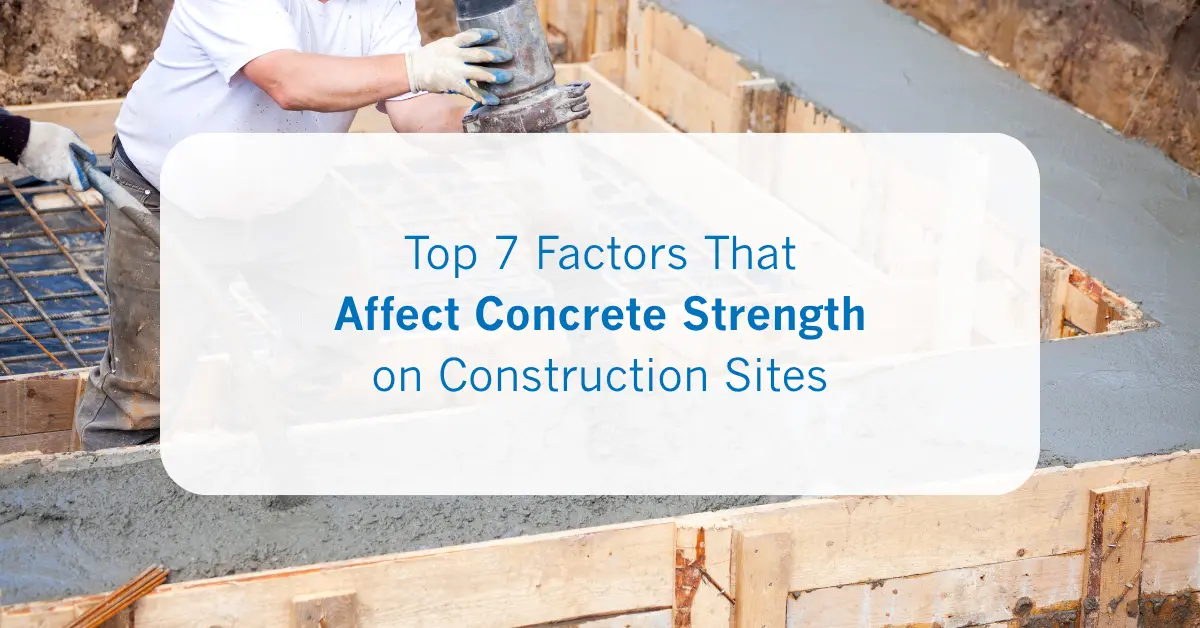
    Top 7 Factors That Affect Concrete Strength on Construction Sites

    Walk past any construction site and concrete is everywhere being poured, set, cured, and built upon. It holds up walls, carries floor loads, anchors columns, and forms the very skeleton of a structure. Yet, for something so universally used, concrete is surprisingly misunderstood when it comes to what actually determines its strength.

    The truth is, concrete doesn’t just gain strength because you mix cement with water and aggregate. Dozens of variables influence how strong a concrete element will ultimately be, and getting even a handful of them wrong can result in cracking, spalling, structural failure, or costly rework years down the line.

    Whether you’re a site engineer, a project manager, or a homeowner building your dream home, understanding what governs concrete strength is not a technical luxury, it’s a practical necessity. Here are the seven most critical factors that determine concrete strength on real construction sites, and what you can do to get each one right.

    1. Water-Cement Ratio: The Single Biggest Variable in Concrete Strength

    If there is one number that matters more than any other in concrete performance, it’s the water-cement ratio, the ratio of water to cement by weight in the mix. The relationship is simple and unforgiving: the higher the water-cement ratio, the lower the compressive strength.

    Water is needed to trigger cement hydration. But excess water beyond what’s chemically needed creates capillary pores within the concrete as it dries. These pores reduce density, increase permeability, and dramatically lower strength. A mix with a water-cement ratio of 0.40 will produce a significantly stronger concrete than one with a ratio of 0.60, using the same materials.

    This is why the concrete mix ratio is so carefully calculated in any professional mix design. For structural elements like columns and slabs, exceeding the design water-cement ratio, even by adding a few extra litres on-site to improve workability, is one of the most common and most damaging mistakes in field concreting.

    Ready mix concrete manufactured at a calibrated batching plant, such as an Aparna RMC plant, eliminates this guesswork. Every batch is produced with a precisely controlled water-cement ratio as part of the concrete mix design, ensuring that no unauthorised water additions creep into the process.

    2. Concrete Mix Design and Mix Proportions

    Concrete Mix Design and Mix Proportions

    Behind every high-performing concrete is a carefully crafted concrete mix design, a recipe that determines the proportion of cement, fine aggregate, coarse aggregate, water, and admixtures to achieve a target strength, workability, and durability.

    Getting the mix proportion of concrete right is both a science and a site discipline. Too much fine aggregate makes the mix sticky and prone to shrinkage cracking. Too little cement reduces binding capacity. Incorrect aggregate sizes affect packing density and void content. Each ingredient has a role, and each proportion matters.

    Different structural elements call for different designs. The M10 concrete ratio, used mostly for lean concrete and non-structural fills, is very different from the M25 concrete mix ratio used for beams and slabs, or the M30 ready mix concrete grade used in high-rise structures and bridges. Using a lower grade where a higher one is specified, either due to cost-cutting or lack of awareness, is a mistake that compromises safety at its core.

    A professionally prepared concrete mix design, validated through lab trials and adjusted for site-specific conditions, is what separates durable concrete from concrete that merely looks good for the first few years.

    3. Quality and Gradation of Aggregates

    Aggregates make up nearly 70–75% of the total volume of concrete. Despite this, they’re often treated as the “filler” component, procured from any available source with little attention to quality, gradation, or cleanliness.

    That’s a serious oversight. The strength, durability, and workability of concrete are directly influenced by the type, size distribution, and surface texture of both coarse and fine aggregates. Aggregates that are dirty, contain excessive silt or clay, are poorly graded, or have weak internal structure contribute to a weaker final product, regardless of how good the cement or the mix design is.

    Well-graded aggregates, meaning a good distribution of particle sizes, pack more densely, reduce void content, and improve the bond between aggregate and cement paste. Aggregates with rough, angular surfaces provide better mechanical interlocking, improving tensile and shear performance.

    At an Aparna RMC batching plant, aggregates are sourced, tested, and graded before use. Moisture content in aggregates is measured and accounted for in each batch so that the effective water-cement ratio remains consistent. This level of control is very difficult to replicate on a conventional site-mix setup.

    4. Cement Type, Quality, and Freshness

    Cement is the binding agent in concrete, and its quality sets the ceiling on what concrete can achieve. Not all cement is equal, and even good cement can underperform if it’s not stored or used correctly.

    Different types of cement have different strength development curves. Ordinary Portland Cement (OPC) gains strength relatively quickly and is the most common choice for general construction. Blended cements like PPC (Portland Pozzolana Cement) gain strength more gradually but often produce denser, more durable concrete in the long run, making them better suited for certain environmental exposures.

    Cement that has been stored too long or exposed to humidity begins to undergo pre-hydration, reducing its reactive capacity. Using partially hydrated cement in a structural pour is like using a battery that’s already half-drained. The mix may appear normal, but the maximum achievable strength is already compromised.

    For ready mix concrete suppliers operating at scale, cement quality is monitored rigorously, lot-tested, stored in silos under dry conditions, and used within acceptable timelines. This is one of the underrated advantages of sourcing RMC concrete from a certified plant over mixing on-site from bags stored in open conditions.

    5. Compaction and Placement Practices

    Concrete can be perfectly designed and batched, and still end up weak if it’s not placed and compacted correctly. Entrapped air is concrete’s enemy. Every percentage point of air void left in hardened concrete can reduce compressive strength by roughly 5%.

    Poor compaction leads to honeycombing, visible voids or cavities in the concrete surface, as well as internal voids that are invisible but structurally dangerous. Concrete that isn’t adequately vibrated after placement will have weak zones, especially around reinforcement bars, where bond strength is critical.

    On the flip side, over-vibration causes segregation, heavier aggregates settle to the bottom and water rises to the top, creating layered zones of non-uniform strength. The key is methodical vibration with proper equipment, at the right frequency, inserted at regular intervals and withdrawn slowly.

    Concrete placement during adverse conditions, rain, extreme heat, or when concrete has partially stiffened during transit, also compromises compaction. This is why delivery time and slump consistency are taken seriously by professional RMC suppliers. Aparna RMC’s delivery system is designed to minimise transit time and maintain workability so that concrete is placed in its optimal condition.

    6. Curing Conditions and Duration

    Of all the factors on this list, curing is perhaps the most consistently neglected on Indian construction sites. Once concrete is poured and the formwork looks solid, there’s a tendency to move on, assuming the hard work is done. It isn’t.

    Curing is the process of maintaining adequate moisture and temperature in freshly placed concrete so that cement hydration continues to completion. Concrete doesn’t dry to gain strength, it chemically reacts. Stop that reaction too early, and you freeze the strength development well short of the design target.

    Concrete gains roughly 70% of its 28-day strength in the first 7 days, but only if cured properly. Beyond 7 days, continued curing keeps adding strength. Concrete that is left exposed and uncured can lose 30–40% of its potential strength depending on ambient conditions.

    For M20 grade concrete and above, a minimum curing period of 7 days using water or wet hessian is standard. For blended cements and higher-grade mixes, 14 days is more appropriate. Curing compounds can be used where water curing is impractical, but they must be applied immediately after the surface sets.

    7. Concrete Grade Selection for the Right Application

    This might sound obvious, but selecting the wrong concrete grade for the application is far more common than the construction industry would like to admit, and it has a direct, measurable impact on structural strength.

    Every structural element has a design requirement, a minimum concrete grade that the engineer has specified based on the loads the element must carry, the exposure conditions it will face, and the safety margins required. Using M15 or M20 where M25 has been specified doesn’t just reduce strength, it changes the fundamental safety assumptions of the structure.

    Understanding the difference between grades matters practically. M10 concrete ratio mixes are suitable for blinding layers and non-structural fills. M20 grade concrete is the minimum for reinforced structural elements in most residential buildings. M25 concrete mix ratio is used for beams, columns, and slabs in mid-rise construction. M30 ready mix concrete is used for high-load, high-rise, or exposure-critical applications.

    Choosing the right grade also depends on environmental factors, concrete exposed to moisture, sulphates, or aggressive soils needs higher grades and lower permeability. This is where a ready mix concrete supplier with technical expertise adds real value. Aparna RMC’s team helps clients choose the right grade and mix design based on their specific structural and environmental requirements, not just the most economical option.

    Why Ready Mix Concrete Is the Smarter Choice for Strength-Critical Pours

    Why Ready Mix Concrete Is the Smarter Choice for Strength-Critical Pours

    When you look at all seven factors above, a pattern becomes clear, controlling them consistently on a conventional site-mix setup is genuinely difficult. It requires precise weighing, lab-tested materials, calibrated mixing equipment, trained labour  and constant quality supervision.

    Ready mix concrete addresses most of these variables at source. When you order RMC from a certified plant:

    The concrete mix design is prepared in a laboratory and validated before production begins. Aggregates are tested and adjusted for moisture content before batching. The water-cement ratio is maintained within tight tolerances using calibrated batching systems. Every batch is tested for slump, temperature, and air content before dispatch. Delivery is timed to minimise slump loss and ensure workability at the pour point.

    Aparna RMC has spent 19 years refining this process across 36 plants in five Indian states. With ISO certification, state-of-the-art batching plants, and a commitment to consistent quality, Aparna RMC is one of the most trusted ready mix concrete manufacturers and suppliers across Hyderabad, Chennai, and beyond. Whether you need M20, M25, or M30 ready mix concrete, every batch that leaves an Aparna RMC plant is built on the science of strength, not chance.

    You can also use the Aparna RMC calculator on their website to estimate your concrete volume requirement before placing an order, making it easier to plan your pour and avoid material wastage.

    Wrapping Up

    Concrete strength is never accidental, it is the result of deliberate decisions made at every stage, from mix design to curing. The seven factors covered in this blog are not abstract engineering concepts. They play out on every construction site, every day, and the quality of decisions made around them determines whether a structure performs safely for 50 years or starts showing distress in five.

    If you’re serious about structural integrity, start with the right concrete, designed, batched, and delivered with precision. That’s the foundation of everything else.

    FAQ: Concrete Strength on Construction Sites

    Q1. What is the most important factor affecting concrete strength? 

    The water-cement ratio is widely regarded as the single most influential factor. Even small, unplanned additions of water on-site can significantly reduce compressive strength and increase porosity.

    Q2. What is the difference between M20 and M25 concrete mix ratio? 

    M20 grade concrete has a characteristic compressive strength of 20 N/mm² and is used for general structural work in residential buildings. M25 concrete mix ratio produces a stronger mix with 25 N/mm² strength, suitable for columns, beams, and slabs in larger or more demanding structures.

    Q3. How does poor curing reduce concrete strength? 

    When curing is inadequate or stopped too early, the cement hydration process is interrupted. This means the chemical bonds that give concrete its strength never fully form, resulting in concrete that can lose 30–40% of its intended design strength.

    Q4. Is ready mix concrete stronger than site-mixed concrete? 

    Not inherently, but consistently so. Ready mix concrete is batched using controlled, calibrated systems that replicate the same mix design every time. Site-mixed concrete is vulnerable to human error, variable material quality, and inconsistent proportioning, all of which can reduce final strength unpredictably.

    Q5. How do I know which concrete grade is right for my project? 

    Your structural engineer will specify the concrete grade in the design drawings. For common residential construction, M20 or M25 is typical. For high-rise, commercial, or exposure-critical applications, M30 or above may be required. A knowledgeable RMC supplier can also guide you based on your project type and location.

    Q6. Where can I find ready mix concrete near me in Hyderabad? 

    Aparna RMC operates multiple RMC plants in Hyderabad and surrounding areas. You can visit aparnarmc.com to locate your nearest RMC plant, use the RMC calculator to estimate volumes, and get in touch with their team for customised mix design support.

  • Why Temperature-Controlled Concrete Is Essential During Indian Summers

    Why Temperature-Controlled Concrete Is Essential During Indian Summers

    If you’ve ever touched a steel railing in May in Hyderabad or walked barefoot on a terrace in the afternoon, you already know how brutal Indian summers can be. Now imagine freshly poured concrete sitting in that same heat, absorbing temperatures that can push past 45°C, and you begin to understand why summer concreting is one of the most technically demanding challenges in construction.

    Concrete, at its core, is a chemical system. The moment cement meets water, a series of hydration reactions begin that will ultimately determine how strong, durable, and crack-resistant the final structure turns out to be. Heat, particularly the extreme, sustained heat of an Indian summer, accelerates and distorts these reactions in ways that can quietly devastate structural integrity.

    Temperature-controlled concrete isn’t a luxury reserved for large infrastructure projects. It’s a necessary standard for any serious construction happening between March and June across India. Here’s why.

    What Happens to Concrete in Extreme Heat

    What Happens to Concrete in Extreme Heat

    To understand why temperature control matters, you need to understand what heat does to fresh concrete at a chemical level.

    When the ambient temperature rises above 35°C, and in cities like Hyderabad, Nagpur, or Ahmedabad, it regularly crosses 42–45°C, several problems begin to compound simultaneously.

    First, water evaporates from the concrete surface faster than the cement hydration process can absorb it. This rapid moisture loss causes plastic shrinkage cracking , fine surface cracks that appear within the first few hours of placement. These cracks may look minor, but they create pathways for moisture, carbonation, and chlorides to penetrate the structure over time, accelerating long-term deterioration.

    Second, the rate of cement hydration speeds up dramatically. This sounds like a good thing, faster setting, faster strength gain. But what actually happens is that the early strength comes at the cost of long-term strength. Concrete that sets too fast in heat develops a coarser internal microstructure, which is weaker and more porous than concrete that hydrates slowly under controlled conditions.

    Third, the workability of the mix drops sharply. As temperature rises, ready mix concrete stiffens faster in transit and on-site. If workers try to compensate by adding water at the site, a shockingly common practice, the water-cement ratio shoots up, and the concrete mix ratio that was carefully engineered at the batching plant becomes meaningless.

    Why the Concrete Mix Design Gets Compromised in Summer

    Every concrete mix design , whether it’s M20 grade concrete for a residential slab, M25 concrete mix ratio for a column, or M30 ready mix concrete for a high-rise structure, is calibrated for a specific set of conditions. Temperature is one of the most critical variables in that calibration.

    When concrete leaves an RMC plant at, say, 30°C and travels 30 minutes to a summer site, it can arrive at 35–38°C or higher. By the time it’s placed, vibrated, and levelled, valuable workability time has already been consumed by heat. The concrete’s slump, its measure of flowability, may have dropped significantly from what was specified.

    This is a problem that cascades. Reduced slump makes proper compaction harder to achieve. Poor compaction leaves voids and honeycombing in the structure. Honeycombed concrete is structurally inferior and highly vulnerable to rebar corrosion, which in turn leads to spalling and eventual structural failure.

    The mix proportion of concrete, once disrupted by heat-induced stiffening or unauthorised water addition, cannot be restored on-site. What was batched as M25 may effectively perform as M15 in the field. This is the hidden cost of ignoring temperature control in summer concreting.

    What Temperature-Controlled Concrete Actually Means

    Temperature control in concrete is not a single technique, it’s a set of coordinated practices applied at the batching plant, in transit, and at the construction site to keep concrete within a safe temperature range throughout the process.

    At a properly equipped RMC plant, temperature control begins with the raw materials. Chilled water or ice is used instead of regular water in the concrete mix to lower the initial temperature of the batch. Aggregates, which absorb and retain a significant amount of heat, are stored under shade or sprinkled with water to keep them cool before use. In some cases, liquid nitrogen is used for rapid cooling of the mix before dispatch.

    The target is to keep the concrete temperature at the point of discharge below 30°C as per IS 7861 (Part 1), India’s code of practice for extreme weather concreting. Some specifications for critical infrastructure push this limit even lower.

    In transit, transit mixers keep the drum rotating to prevent stiffening and heat build-up. Scheduling dispatches in early morning hours, before 7 AM where possible, reduces the ambient temperature exposure during both transit and placement.

    At the site, sun shades over the pour area, pre-wetting of formwork and reinforcement, and prompt curing measures all contribute to keeping temperature within acceptable limits.

    The Role of Ready Mix Concrete in Hot-Weather Construction

    There is a reason why temperature control in concrete is practically impossible to achieve consistently with site-mixed concrete. On a manual batching site, the tools, controls, and data required to monitor and adjust concrete temperature simply don’t exist. You can’t chill your site mixer’s water supply. You can’t measure aggregate moisture and temperature and compensate in real time. You can’t guarantee the concrete mix design batch after batch.

    This is where ready mix concrete, produced at a certified, well-equipped batching plant, makes an enormous difference during Indian summers.

    At an Aparna RMC plant, concrete is batched using computerised mix design systems that account for temperature conditions. Chilled water systems are in operation during peak summer months. Aggregate temperature and moisture are checked before each batch. The concrete is dispatched in transit mixers that are calibrated for summer delivery schedules, ensuring that the time from batching to placement is minimised.

    This level of consistency is simply not replicable on a manual site, regardless of the skill of the workers involved. For anyone asking about ready mix concrete near me during the summer months, the answer isn’t just about convenience, it’s about getting concrete that will actually perform as designed.

    Grade-Wise Considerations for Summer Concreting

    Grade-Wise Considerations for Summer Concreting

    Different concrete grades respond to summer heat in different ways, and the risks scale with the structural importance of the element being cast.

    For M10 concrete ratio applications, lean mixes used for blinding or non-structural fill, summer heat is an inconvenience but not a crisis. The structural consequences of minor strength variation are limited.

    For M20 grade concrete used in residential slabs and beams, temperature control becomes important. A strength reduction of even 10–15% due to poor summer practices can push the concrete below the minimum structural threshold.

    For M25 concrete mix ratio and above, used in columns, transfer beams, foundations of multi-storey buildings, and high-performance applications, temperature control is non-negotiable. These grades are specified because the design demands a guaranteed minimum strength. If summer heat compromises that, the consequences are structural, not cosmetic.

    For high-grade ready mix concrete in infrastructure applications (bridges, flyovers, industrial floors), temperature-controlled concreting is explicitly specified in the project contracts. Contractors who don’t comply risk rejection of entire pours during quality audits.

    Common Summer Concreting Mistakes That Destroy Structural Strength

    Beyond the temperature issue itself, summer conditions encourage a series of on-site shortcuts that make things worse.

    • Pouring during peak afternoon hours between 11 AM and 4 PM, exposes fresh concrete to the highest ambient temperatures of the day. The concrete stiffens rapidly, workability is lost, and the window for proper compaction narrows dangerously.
    • Inadequate or delayed curing is especially damaging in summer. Concrete that isn’t kept moist within the first few hours of placement in hot weather loses water so fast that the hydration process stalls. The result is a surface that appears solid but has never reached its design strength internally. Seven days of proper curing, using wet hessian, water ponding, or curing compounds, is the minimum standard regardless of how hot the weather feels.
    • Using the wrong admixtures or no admixtures is another common mistake. Retarding admixtures are specifically designed to slow the setting time of concrete in hot weather, extending the workability window so that placement and compaction can be done properly. Ignoring admixture design during summer is like driving without brakes in heavy traffic. It might work for a while, but the first time it doesn’t, the consequences are severe.
    • Neglecting to pre-wet reinforcement and formwork means the steel and timber absorb moisture from the fresh concrete the moment it’s placed, accelerating local drying and creating weak interface zones. A simple spray of water on the reinforcement cage and formwork surface before pouring is a small step that makes a measurable difference.

    How Aparna RMC Supports Summer Construction Projects

    Aparna RMC has been supplying ready mix concrete in Hyderabad and across South India for nearly two decades, and summer concreting is something the team has dealt with extensively. With RMC plants spread across five Indian states, Aparna RMC is positioned to serve both large infrastructure projects and residential construction sites with consistent, temperature-managed concrete supply.

    For summer projects, Aparna RMC offers concrete mix designs adjusted for hot-weather conditions, including admixture packages, chilled water batching where required, and time-sensitive delivery schedules that align with the cooler parts of the day. The RMC calculator on the Aparna RMC website makes it easy to estimate concrete volume requirements, and the team can advise on the right grade and mix design for your specific project conditions.

    To further support summer concreting, Aparna RMC offers TempCrete, a specialized concrete solution designed to maintain workability and performance even under high ambient temperatures. TempCrete helps reduce the challenges associated with hot-weather concreting, ensuring consistent quality from batching to placement. Combined with Aparna RMC’s large fleet of transit mixers and robust logistics network, projects benefit from timely deliveries, reduced turnaround times, and uninterrupted concrete supply, helping construction teams stay on schedule even during peak summer months.

    Whether you’re looking for ready mix concrete suppliers for a housing project, a commercial structure, or an industrial floor, the quality controls in place at every Aparna RMC batching plant ensure that what you receive is what was designed, not a heat-compromised version of it.

    Closing Thoughts

    The Indian summer is relentless, and concrete doesn’t get a break from it. Every pour made in peak summer heat without temperature control is a gamble, and in construction, structural gambles have consequences that show up years down the line, long after the site has been handed over.

    Temperature-controlled concrete isn’t about over-engineering. It’s about making sure that what is designed on paper is what actually gets built in the ground. Ready mix concrete from a certified RMC plant, produced with proper summer protocols, delivered on schedule, and placed using correct site practices, is the single most effective way to ensure structural quality doesn’t get cooked away by the summer sun.

    Plan your summer construction with the right concrete partner, and your structure will thank you for decades.

    FAQ: Temperature-Controlled Concrete in Indian Summers

    Q1. What is the maximum permissible temperature for concrete at the time of placement? 

    The temperature of concrete at the point of discharge should not exceed 30°C during hot-weather concreting. For critical structures, many project specifications set even stricter limits.

    Q2. Can regular ready mix concrete be used during peak summer months in India? 

    Yes, but it must be produced with temperature control measures in place, chilled water, cooled aggregates, and adjusted admixtures. Standard RMC without these adaptations will perform below design strength in extreme heat. Always confirm with your RMC concrete supplier whether their plant has hot-weather protocols.

    Q3. What is the best time of day to pour concrete during Indian summers? 

    Early morning , ideally before 8 AM, is the best window for summer concrete placement. This takes advantage of cooler ambient temperatures and reduces the risk of rapid moisture loss and accelerated setting.

    Q4. Does heat affect all concrete grades equally? 

    No. Higher-grade mixes like M25 and M30 ready mix concrete are more sensitive to temperature deviations because they are designed to hit specific strength targets. Lower-grade mixes used for non-structural purposes are less critically affected.

    Q5. How does ready mix concrete help with temperature control better than site-mixed concrete?

    Ready mix concrete is produced at a batching plant equipped with chilled water systems, aggregate temperature monitoring, computerised mix design, and quality-controlled dispatch scheduling. None of these controls are achievable on a manual mixing site.

    Q6. How do I calculate how much ready mix concrete I need for my summer project? 

    Aparna RMC offers a free RMC calculator on their website, simply enter your slab dimensions or structural element details, and you’ll get an accurate volume estimate. The team can then help you plan delivery scheduling suited to summer conditions.

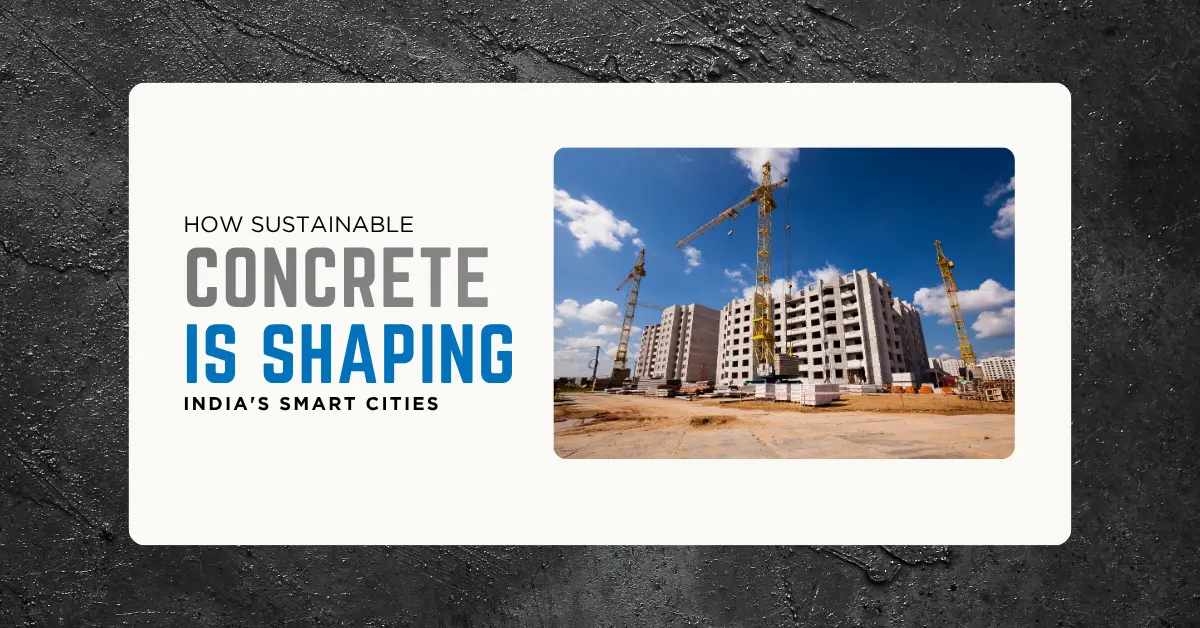
  • How Sustainable Concrete Is Shaping India’s Smart Cities

    How Sustainable Concrete Is Shaping India’s Smart Cities

    India is building at a pace the world is watching. From metro rail corridors slicing through city skylines to pedestrian-friendly town centres being planned from scratch, the country’s smart city mission has moved far beyond vision boards and government presentations. It is now concrete,  quite literally.

    But the concrete going into India’s smart cities today is not the same material that built the infrastructure of the 1980s and 1990s. It is engineered, leaner, and increasingly sustainable. And that shift is not cosmetic. It reflects a fundamental rethinking of how India wants to build, not just fast, but responsibly, with an eye on the decades ahead.

    This blog explores how sustainable concrete is becoming the backbone of India’s smart urban future, what it means in practical terms for builders and developers, and why choices made at the concrete mix design stage can define whether a city is truly smart or just smart-looking.

    What Does “Sustainable Concrete” Actually Mean?

    Before anything else, it’s worth clearing up a misconception. Sustainable concrete is not a single product or a niche material reserved for green-certified luxury projects. It is a broad category that covers several innovations in how concrete is formulated, produced, delivered, and used.

    At its core, sustainable concrete aims to reduce environmental impact without compromising structural performance. This can happen in several ways, by replacing a portion of cement with industrial by-products like fly ash or GGBS (ground granulated blast furnace slag), by reducing material waste through precise batching, by designing mixes that last longer and require less repair, or by incorporating alternative materials that reduce the overall carbon footprint of construction.

    The concrete mix design plays a central role here. When engineers specify the right mix proportion of concrete, factoring in strength grade, durability requirements, and environmental exposure, they are already making a sustainability decision. A well-designed mix uses no more material than is needed. That precision is sustainability in action.

    The Smart City Challenge: Why Concrete Choices Matter More Than Ever

    India’s Smart Cities Mission, launched in 2015, targets the development of 100 cities with world-class infrastructure, efficient public services, and sustainable urban environments. The built environment is at the heart of this, roads, flyovers, drainage systems, public buildings, transit hubs, and housing.

    All of it needs concrete. Enormous quantities of it.

    The challenge is that traditional concrete production is resource-intensive. Cement manufacturing alone accounts for roughly 7–8% of global CO₂ emissions. As India accelerates urban construction, using the same old approach to concrete production would contradict the very goals that smart cities are meant to achieve,  cleaner air, lower emissions, more livable environments.

    This is where sustainable concrete steps in as both a technical and ethical solution.

    How Ready Mix Concrete Supports Sustainable Urban Infrastructure

    How Ready Mix Concrete Supports Sustainable Urban Infrastructure

    One of the most impactful changes India’s construction sector can make, and is making, is the widespread adoption of ready mix concrete over site-mixed concrete. The sustainability credentials of RMC concrete go well beyond convenience.

    • Precision batching reduces waste:

    At a modern RMC plant, every ingredient is weighed and batched by computer-controlled systems. There is no guesswork in the mix proportion of concrete, no over-ordering of cement to compensate for inconsistency, and no excess material discarded at the end of a pour. For large-scale smart city infrastructure projects, this precision translates into significant material savings over the project lifecycle.

    • Controlled quality means longer-lasting structures:

    Sustainable construction is not just about what goes in, it’s about how long it lasts. Ready mix concrete, because it is produced under controlled laboratory and plant conditions, consistently achieves the target strength for every grade, from M10 concrete ratio applications in non-structural fill to M25 concrete mix ratio and M30 ready mix concrete used in high-rise frames and bridge decks. Structures that meet their design life don’t need early repair or replacement. That is sustainability measured in decades, not just carbon points.

    • Reduced on-site emissions:

    Site-mixed concrete requires diesel-powered mixers running for extended periods on-site, contributing to localised air pollution. Centralised RMC plants, especially those investing in cleaner energy, consolidate that emission burden and are better positioned to manage and reduce it.

    • Reduces the High Carbon Footprint of Construction

    The construction sector is a major contributor to global carbon emissions, largely due to the production of cement. Ready Mix Concrete helps reduce this environmental impact through precise batching, optimized mix designs, and the use of supplementary cementitious materials such as fly ash and GGBS. By minimizing material wastage and reducing cement consumption without compromising performance, RMC supports the development of more sustainable and lower-carbon construction projects.

    • Supports Flood Mitigation

    As cities face increasing rainfall intensity and climate-related challenges, resilient infrastructure has become essential. Ready Mix Concrete plays a key role in the construction of stormwater drains, culverts, retaining walls, flood channels, and other water-management structures that help control and redirect excess water. Its consistent quality, strength, and durability ensure these critical systems perform reliably over time, helping urban areas better manage flooding and protect communities from water-related damage.

    Lightweight Concrete: Doing More With Less

    One of the most exciting developments in sustainable urban construction is the growing use of lightweight concrete. In smart city projects, where multi-level parking structures, elevated walkways, transit-oriented developments, and prefabricated building panels are common, reducing dead load is a real structural and economic advantage.

    Lightweight concrete achieves lower density, typically between 300 to 1850 kg/m³ compared to the 2400 kg/m³ of standard concrete, by replacing conventional coarse aggregate with lightweight alternatives such as expanded clay, sintered fly ash aggregates, or foamed cellular structures. The result is a concrete that places less load on structural frames, allows for larger spans with less material in beams and columns, and often provides better thermal and acoustic insulation.

    For smart cities prioritising energy efficiency in buildings, the thermal performance of lightweight concrete is a genuine value-add. Walls and roof elements that naturally moderate temperature reduce the HVAC load on buildings, contributing to long-term energy savings without additional systems or technology.

    Glass Fiber Reinforced Concrete: Aesthetic Meets Performance

    India’s smart cities are not just being built for function, they are being designed for experience. Public plazas, transit stations, civic buildings, and urban art installations are part of the smart city vision. And one material that bridges the gap between architectural ambition and structural practicality is glass fiber reinforced concrete (GFRC).

    Glass fiber reinforced concrete incorporates alkali-resistant glass fibres into the cement matrix, replacing the need for conventional steel reinforcement in thin, complex, or curved panel applications. The result is a material that is significantly lighter than conventional reinforced concrete, resistant to cracking, and capable of being cast into intricate forms and surface textures that would be impossible with standard concrete.

    For smart city streetscapes, bus shelters, seating elements, façade cladding, signage columns, and decorative urban furniture, GFRC is increasingly the material of choice. It is durable, low maintenance, and reduces the mass that conventional elements would add to a structure. All of this aligns well with the sustainability goals of urban planners.

    Stamped Concrete: Sustainable Surface Solutions for Public Spaces

    Public spaces in smart cities need to be functional, beautiful, and long-lasting. Stamped concrete, which replicates the appearance of stone, brick, tile, or wood through pattern imprinting on fresh concrete, offers a sustainable alternative to the real materials it mimics.

    Natural stone quarrying, brick kilns, and hardwood logging all carry significant environmental costs. Stamped concrete, by contrast, uses a locally produced material, concrete, to deliver comparable or superior aesthetic results. The surface can be coloured, textured with stamped concrete patterns, and sealed to resist weathering, reducing the long-term maintenance burden on city infrastructure budgets.

    Pedestrian plazas, cycling paths, market squares, and recreational areas across India’s smart cities are increasingly specifying stamped concrete for exactly these reasons. The mix design for stamped concrete surfaces requires careful attention to workability and setting time, and this is another area where ready mix concrete with a calibrated concrete design mix ratio outperforms site-mixed alternatives.

    The Role of Concrete Mix Design in Green Building Ratings

    The Role of Concrete Mix Design in Green Building Ratings

    India’s green building movement, anchored by rating systems like IGBC (Indian Green Building Council) and GRIHA, assigns credits for responsible material selection, reduced embodied carbon, recycled content, and efficient resource use. Concrete, as the dominant construction material by volume, is central to earning or losing those credits.

    Specifying the right concrete mix design with supplementary cementitious materials (SCMs) such as fly ash or GGBS can directly contribute to green rating points. Using M20 grade concrete where M25 is not needed, or specifying M30 ready mix concrete only where structural demands require it, is responsible engineering. It avoids over-specification, which wastes resources without adding structural benefit.

    RMC suppliers like Aparna RMC can provide mix design documentation, material certifications, and quality test reports that are required during green building assessments, making the compliance process smoother for project teams pursuing certification.

    How Aparna RMC Is Contributing to Sustainable Urban Construction

    Aparna RMC’s 19-year presence in the ready mix concrete market, with 36 plants operating across five Indian states, places it at the centre of this sustainability conversation. The company supplies ready mix concrete in Hyderabad and other major cities, delivering grades from standard structural mixes to specialised formulations, including mixes with fly ash, GGBS incorporation, and admixture-enhanced durability performance.

    For developers and contractors working on smart city projects, the ability to use an RMC calculator to estimate concrete requirements accurately helps avoid over-ordering, reduces waste, and improves cost predictability. Ready mix concrete suppliers with a proven track record, ISO certification, and a large plant network are exactly the kind of partners that smart city projects need, where quality, consistency, and on-time delivery are non-negotiable.

    Whether it’s ready mix concrete for residential foundations, ready mix concrete for large commercial slabs, or specialised concrete for infrastructure projects, the decision to work with a quality RMC plant is itself a sustainability choice.

    Conclusion

    India’s smart cities will be judged not just by the apps on their dashboards or the sensors in their streetlights. They will be judged by the streets themselves, by whether the roads hold up, the buildings breathe well, and the public spaces age gracefully. Concrete is the silent determinant of all of that.

    The shift to sustainable concrete, through ready mix concrete, lightweight concrete, glass fiber reinforced concrete, stamped concrete surfaces, and precision mix design, is not a distant green ambition. It is already happening on construction sites across the country. The builders, developers, and project teams choosing these materials today are shaping cities that will still be standing, and still functioning well, fifty years from now.

    That is what it really means to build smart.

    FAQ: Sustainable Concrete and Smart Cities

    Q1. What makes concrete “sustainable” in the context of smart city construction? 

    Sustainable concrete reduces environmental impact through lower cement content (using SCMs like fly ash or GGBS), precise mix design, minimised waste, and longer structural life. It doesn’t sacrifice strength; it achieves the required strength with less environmental cost.

    Q2. Is ready mix concrete more sustainable than site-mixed concrete? 

    Yes, in most respects. Ready mix concrete is produced with precision batching that reduces material waste, delivers consistent quality that extends structural life, and consolidates production emissions at the plant rather than across multiple sites. It also reduces on-site water and cement wastage.

    Q3. What concrete grade is most commonly used in smart city infrastructure? 

    It varies by application. M20 grade concrete is standard for general structural elements. M25 concrete mix ratio is common for columns, beams, and slabs in multi-storey construction. M30 ready mix concrete and above are used for high-load infrastructure like bridge decks and flyover piers.

    Q4. How does lightweight concrete contribute to smart city sustainability goals? 

    Lightweight concrete reduces the dead load on structures, enabling more efficient designs with less material in beams, columns, and foundations. It also offers better thermal performance in walls and roofs, which can reduce building energy consumption over its lifetime.

    Q5. Can stamped concrete be used in large public space projects? 

    Absolutely. Stamped concrete is durable, customisable, and a sustainable alternative to natural stone or hardwood in public plazas, pedestrian paths, and civic spaces. With the right concrete design mix ratio and proper sealing, it can last decades with minimal maintenance.

    Q6. How do I find ready mix concrete suppliers for smart city or large infrastructure projects?

    Look for suppliers with a wide plant network, ISO certification, documented mix design capabilities, and experience with large-volume structural projects. Aparna RMC, with plants across Hyderabad and multiple Indian states, is well-positioned for such requirements. You can also use their RMC calculator online to estimate your project’s concrete volumes before placing an order.

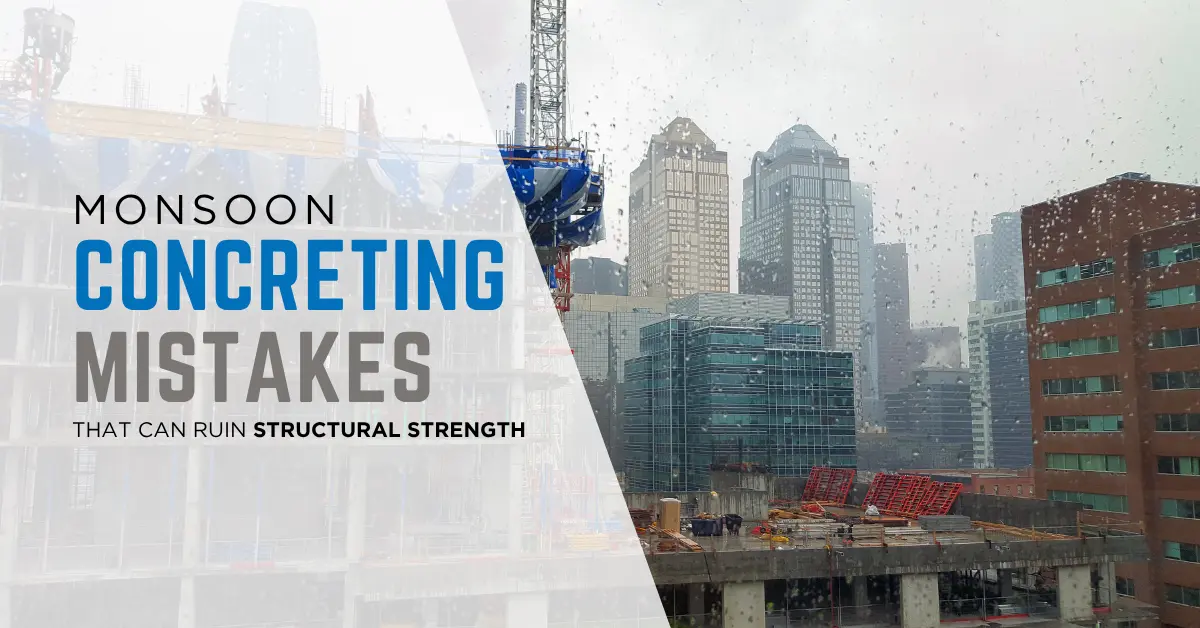
  • Monsoon Concreting Mistakes That Can Ruin Structural Strength

    Monsoon Concreting Mistakes That Can Ruin Structural Strength

    The monsoon season brings much-needed relief from the scorching Indian summer but for anyone involved in construction, it also brings a unique set of challenges that can quietly compromise the integrity of an entire building. Whether you’re pouring a foundation slab, a column, or a roof, working with concrete during rains is a task that demands precision, awareness, and the right materials.

    Many contractors and site engineers continue construction during the monsoon to meet deadlines. That’s perfectly fine, as long as you know what not to do. Unfortunately, several common practices during the rainy season end up doing far more damage than the rains themselves.

    In this blog, we break down the most damaging monsoon concreting mistakes and explain how they affect structural strength, so you can avoid them before they cost you dearly.

    Why Monsoon Concreting Demands Extra Attention

    Concrete is not just a mix of cement, sand, and aggregate. It’s a carefully engineered material that needs the right water-to-cement ratio, curing conditions, and temperature to gain its intended strength. The rainy season disrupts nearly every one of these variables.

    When rainwater mixes into freshly poured concrete, it changes the water-cement ratio uncontrollably. When humidity is high, the evaporation rate drops, affecting the curing process. When the ground is waterlogged, it creates unstable formwork conditions. Each of these factors, taken alone, is manageable. But during the monsoon, they pile up, and that’s when structural problems begin.

    This is exactly why ready mix concrete (RMC) has become the preferred choice for monsoon-season construction. Factory-batched and delivered under controlled conditions, ready mix concrete from reliable suppliers like Aparna RMC ensures that the concrete mix design is accurate before it ever reaches your site. But even the best RMC cannot save a pour if the site practices are careless.

    Mistake 1: Pouring Concrete Directly on Waterlogged Soil or Wet Formwork

    One of the most widespread and most damaging mistakes during the monsoon is allowing concrete to be poured over waterlogged ground or wet formwork without any corrective measure.

    When the base is excessively wet, water seeps upward into the concrete from below. This disrupts the water-cement ratio at the bottom layers, weakening the foundation before it even sets. In column footings and slabs, this can create voids, honeycombing, and uneven strength distribution that only become visible months or even years later.

    • What to do instead: Always inspect formwork and the pour area before any concrete is placed. Pump out standing water, allow the surface to drain adequately, and use polythene sheets as moisture barriers where needed. If you’re using RMC concrete from a batching plant, the concrete mix design is already calibrated; don’t let poor site prep undo that precision.

    Mistake 2: Ignoring the Water-Cement Ratio Due to Rain

    This is perhaps the most technically damaging mistake of all. Rainwater falling directly onto freshly placed or still-workable concrete adds uncontrolled water into the mix. Even an addition of just 5–10 litres of rainwater per cubic metre can significantly reduce the final compressive strength of the concrete.

    The concrete mix ratio, whether it’s for M20 grade concrete, M25, or M30 ready mix concrete, is designed with a specific water-cement (w/c) ratio to achieve a defined strength. When rainwater dilutes the mix on-site, that ratio goes out the window. The result is a concrete that looks fine on the surface but is internally weak, porous, and vulnerable to long-term deterioration.

    • What to do instead: Cover fresh concrete immediately after pouring using waterproof tarpaulins or plastic sheets held above the surface to allow ventilation. Never allow rain to fall directly on concrete that is still in a plastic or semi-plastic state. If rain is heavy and unavoidable, suspend the pour.

    Mistake 3: Skipping Proper Curing or Rushing It

    In summer, curing is done aggressively because the heat causes moisture to evaporate fast. Contractors often assume that during the monsoon, the ambient moisture is enough to cure concrete naturally. This is a dangerous misconception.

    Curing is not just about keeping concrete wet, it’s about maintaining the right moisture level and temperature for a sustained period so that the cement hydration process completes fully. Monsoon conditions, with intermittent rain and fluctuating temperatures, do not guarantee consistent curing.

    Inadequate curing leads to surface cracking, reduced tensile strength, and poor durability ,all of which affect the long-term structural performance of the building.

    • What to do instead: Follow a disciplined curing schedule for a minimum of 7 days for ordinary Portland cement and 14 days for blended cements. Use wet hessian cloth or curing compounds as needed. Don’t rely on rainwater as a substitute for structured curing.

    Mistake 4: Using Poorly Stored Cement and Aggregates

    Using Poorly Stored Cement and Aggregates

    Monsoon moisture doesn’t just affect concrete at the pour stage ,it begins much earlier, at the material storage level. Cement bags that have been exposed to moisture partially hydrate even before use, reducing their binding capacity. Aggregates like sand and coarse aggregate that are excessively wet will alter the effective water content in the mix without the site team realising it.

    This is one area where opting for ready mix concrete from a reliable RMC plant gives you a real advantage. At an Aparna RMC batching plant, materials are stored under controlled, covered environments, and aggregate moisture content is measured and adjusted in the concrete mix design before each batch is produced. This eliminates one of the biggest sources of monsoon-related inconsistency.

    • What to do instead: Store cement bags on raised platforms covered with waterproof sheets. Test sand and aggregate for moisture content before mixing. Adjust the water quantity in your mix proportion of concrete accordingly.

    Mistake 5: Continuing to Pour Without Temperature and Workability Checks

    During the monsoon, temperatures drop and humidity spikes, both of which affect concrete workability and setting time. Concrete that takes longer to set in cool, humid conditions is more vulnerable to damage from rain, foot traffic, or vibration during the extended open time.

    Many sites continue pouring based on schedules rather than checking concrete conditions. This leads to situations where concrete is placed in inappropriate weather windows, resulting in poor compaction, segregation, or compromised bonding between successive pours.

    Temperature control in concrete is a concept often reserved for summer concreting, but it’s equally relevant during heavy monsoon conditions where cool temperatures slow strength development, especially for higher-grade mixes.

    What to do instead: Monitor ambient temperature and concrete temperature at delivery. For critical structural elements, consider concrete with adjusted admixtures to manage setting time under monsoon conditions. Aparna RMC offers customised mixes that account for these variables, making it one of the most dependable choices among ready mix concrete suppliers in Hyderabad and beyond.

    Mistake 6: Neglecting Joint Treatment and Waterproofing in Slabs

    Neglecting Joint Treatment and Waterproofing in Slabs

    Monsoon construction that involves roof slabs or suspended slabs is especially vulnerable to joint-related failures. Construction joints, the points where one pour ends and the next begins, are often treated carelessly during the rains. When these joints are not properly prepared, cleaned, and keyed, they become weak planes where water infiltrates and structural continuity is broken.

    Additionally, many projects skip or delay waterproofing treatments on slabs citing monsoon conditions as an obstacle. This is a mistake in the opposite direction, the monsoon is precisely when waterproofing layers matter most.

    • What to do instead: Clean all construction joints thoroughly before resuming a pour. Use bonding agents or slurry coatings on old concrete surfaces before fresh concrete placement. Never delay slab waterproofing treatments; carry them out in weather windows between rains.

    Mistake 7: Underestimating the Impact on Lightweight and Specialty Concrete Mixes

    If your project involves lightweight concrete, glass fiber reinforced concrete, or stamped concrete, the stakes during the monsoon are even higher. These specialised mixes often have tighter tolerance windows for water content, finishing, and curing.

    Lightweight concrete, for instance, has a porous microstructure by design. Excess moisture infiltration during placement or curing can amplify those pores in unintended ways, reducing load-bearing capacity. Stamped concrete patterns applied during rain exposure can lose surface definition and colour consistency.

    • What to do instead: Specialised concrete applications should ideally be planned during weather breaks. Consult your RMC supplier for monsoon-specific mix adjustments when using non-standard concrete types.

    Mistake 8: Neglecting Formwork Safety During Monsoon

    Heavy rainfall can significantly impact the stability of formwork and shuttering systems. Wet soil can soften around supports, strong winds can loosen temporary structures, and excess moisture can weaken improperly secured formwork.

    If formwork shifts, bends, or collapses during a pour, it can lead to dimensional inaccuracies, surface defects, structural weaknesses, and serious safety hazards on site.

    • What to do instead: Inspect all formwork, props, supports, and scaffolding before every pour, especially after heavy rain. Ensure supports are resting on firm ground and that all connections are secure. Remove accumulated water from formwork and verify alignment before placing concrete. Regular inspections throughout the monsoon can prevent costly failures and delays.

    Mistake 9: Skipping or Rushing the Curing Process

    Many construction teams assume that because it is raining, concrete is receiving enough moisture for proper curing. In reality, rainfall is not a substitute for controlled curing.

    Concrete gains strength through hydration—a process that requires consistent moisture over a specified period. Irregular wetting from rain followed by drying can lead to surface cracking, reduced strength development, poor durability, and increased permeability.

    This mistake is particularly common during monsoon when project schedules are delayed and teams try to accelerate work once the weather clears.

    • What to do instead: Follow the recommended curing period for the concrete grade being used, regardless of weather conditions. Use ponding, wet coverings, curing compounds, or other approved curing methods to maintain consistent moisture. Ensure curing continues uninterrupted, even if rainfall occurs intermittently. Proper curing is essential for achieving the strength and durability the concrete was designed to deliver.

    How Ready Mix Concrete Reduces Monsoon Risk

    One of the most practical decisions a builder can make during the rainy season is switching to or continuing with ready mix concrete from a certified batching plant. Here’s why it makes a difference:

    The concrete mix design is prepared under laboratory conditions, ensuring the correct mix proportion of concrete every time. Aggregate moisture is measured and compensated for in the batch. Delivery is time-scheduled, reducing the window during which concrete is exposed to weather. Grades from M10 concrete ratio to M25 concrete mix ratio to M30 ready mix concrete are all produced with consistent, tested quality.

    Aparna RMC operates 36 plants across five Indian states and has built a 19-year legacy of supplying ready mix concrete in Hyderabad and other cities. With an ISO-certified process and in-house quality controls, every batch that leaves an Aparna RMC plant meets a strict strength and durability benchmark, monsoon season included.

    Final Thoughts

    Monsoon concreting isn’t about avoiding the rain, it’s about outsmarting it. The mistakes covered in this blog are not exotic or unusual; they happen on real construction sites every rainy season. The good news is that each one of them is preventable with awareness, planning, and the right concrete partner.

    Whether you’re building a home in Hyderabad or managing a large commercial project, the decisions made during the pour stage define the structural strength of what stands for decades. Choose your materials carefully, follow best practices rigorously, and when in doubt, call your RMC supplier before you pour, not after.

    FAQ: Monsoon Concreting, Your Questions Answered

    Q1. Can concreting work be done during the monsoon season? 

    Yes, concreting can continue during the monsoon with proper precautions, covering fresh pours, protecting formwork from waterlogging, and monitoring mix consistency. The key is not to allow uncontrolled rainwater to enter the mix.

    Q2. How does rainwater affect the concrete mix ratio? 

    Rainwater dilutes the mix by adding uncontrolled water, which increases the water-cement ratio beyond design limits. This directly reduces compressive strength, increases porosity, and can lead to long-term structural deterioration.

    Q3. Is ready mix concrete better suited for monsoon construction than site-mixed concrete? 

    Yes. Ready mix concrete is batched under controlled factory conditions where aggregate moisture is compensated for, and the mix proportion of concrete is accurately maintained. This removes the biggest source of monsoon variability from the equation.

    Q4. What concrete grade is recommended for structural work during the monsoon? 

    For most structural elements, M20 grade concrete is the minimum. For columns, beams, and slabs in multi-storey construction, M25 or M30 ready mix concrete is recommended. Your structural engineer or RMC supplier can advise on the right grade based on your design requirements.

    Q5. How long should concrete be cured during the monsoon? 

    A minimum of 7 days for OPC-based mixes and 14 days for blended cements. Ambient humidity during the monsoon can help, but it should not replace a structured, monitored curing process.

    Q6. How do I find a reliable ready mix concrete supplier near me during the monsoon? 

    Look for an ISO-certified RMC plant with a proven track record, on-time delivery systems, and the ability to customize mix designs. You can use Aparna RMC’s RMC calculator to estimate requirements and contact their nearest plant for a monsoon-ready supply.

  • Why Delays in Concrete Delivery Destroy Project Timelines (And How to Avoid Them)

    Why Delays in Concrete Delivery Destroy Project Timelines (And How to Avoid Them)

    1. Introduction

    A concrete pour cannot pause and resume. Once it starts, it continues until the element is complete — or the project has a serious problem. A delay in ready-mix concrete delivery mid-pour doesn’t create an inconvenience. It creates a cold joint: a structural discontinuity where fresh concrete meets partially set concrete, forming a plane of weakness that no amount of remediation fully eliminates.

    Beyond cold joints, delivery delays idle labour, stall downstream trades, trigger penalty clauses, and compound into project-wide timeline failures that end up costing far more than the concrete itself. Here’s why delays happen, what they actually cost, and the specific steps that prevent them.

    2. Why Concrete Delivery Delays Happen

    Most delivery delays share a common root. They’re not random — they’re predictable failures in planning, supplier capacity, or logistics. Understanding which category your risk falls into is where prevention starts.

    a. Supplier Plant Capacity

    Supplier Plant Capacity

    The most overlooked cause of delivery delay is insufficient plant capacity at peak demand. Indian construction activity clusters heavily around certain months — particularly the post-monsoon period from October to February. A single RMC plant serving multiple major projects simultaneously faces production scheduling constraints that push your pour window back by hours. A supplier with one plant has a fixed production ceiling. When demand exceeds that ceiling, somebody waits — and the contractor with the least leverage waits longest.

    b. Transit Distance and Urban Traffic

    The distance between the readymix concrete plant and your site determines two things: transit time and delivery risk. A transit mixer carrying a fresh batch that should arrive in 25 minutes can easily take 55 minutes when traffic backs up around a major junction. By arrival, the working window has narrowed significantly. If multiple loads need to follow in sequence, the cascade effect on the pour schedule is immediate. Sourcing ready mix concrete near me is not about convenience — it’s about protecting the structural integrity of your pour.

    c. Poor Pour Window Planning

    The pour window is the period during which the site is ready, labour is in position, equipment is set, and the weather is acceptable. When this isn’t communicated clearly to the ready-mix concrete supplier in advance, production scheduling at the plant defaults to best-guess timing. Best-guess timing produces avoidable gaps between loads. For large pours requiring multiple transit mixer loads, each load should arrive with 15–20 minutes between discharge completions — a delivery cadence that needs to be agreed in advance, not sorted out on the morning of the pour.

    d. Inadequate Site Preparation

    Some of the most damaging delays have nothing to do with the concrete supplier. The mixer arrives on time, but the reinforcement inspection isn’t complete. Or the pump hasn’t been positioned. Or the formwork hasn’t been checked. The concrete — a perishable product with a 90-minute working window — waits while site preparation catches up. Every minute the drum sits waiting is a minute off the available pour window.

    3. What Delivery Delays Actually Cost

    The cost of a concrete delivery delay has several layers, and most project managers only ever calculate the most visible one.

    a. Direct Remediation Cost

    A cold joint in a structural slab requires breaking out the affected zone, cleaning the interface, applying a bonding agent, and re-pouring. On a 1,500 sq ft floor, this costs ₹8–15 lakh in direct work, plus the concrete volume for the re-pour itself.

    b. Labour Idle Cost

    Labour Idle Cost

    A 30-person pour crew standing by while the next load is delayed costs ₹20,000–40,000 per hour in wages, equipment hire, and lost productivity. A two-hour delay across a full pour crew on a major commercial project runs to ₹60,000–80,000 before any structural consequence is factored in.

    c. Downstream Trade Delay

    Concrete must be cured before formwork can be struck. Formwork must be struck before the next structural element proceeds. MEP rough-in follows the structure. Finishes follow MEP. A two-day delay in a single concrete pour, if it sits on the critical path, pushes the project completion date by two days. On a contractual handover with penalty clauses, a two-day delay at peak construction stage can cost ₹2–5 lakh per day in penalties — making the ready mix concrete price look trivial by comparison.

    d. Total Project Timeline Impact

    In multi-storey construction, structural floors are typically on the critical path. Every delayed concrete pour that isn’t recovered adds directly to the handover date. On a 20-storey residential project, a pattern of two-day delays per floor across 15 structural pours extends project completion by a month — and brings all the penalties that come with it.

    4. How to Prevent Concrete Delivery Delays

    a. Choose a Supplier With Multiple Plants

    A single-plant supplier gives you one point of failure. A supplier with multiple plants in your city can reroute production to the closest available plant if one runs into a delay. For ready mix concrete in Hyderabad, Aparna RMC’s multi-plant network means that if one plant has a production issue, the adjacent plant picks up the order — without your pour being affected.

    b. Use a Supplier With Vehicle Tracking

    You can’t manage a pour window without knowing where your loads are. VTS — vehicle tracking systems on every transit mixer — gives you real-time visibility of each load between plant and site. When a load is running late, you know before it becomes a gap in the pour. Aparna RMC’s entire fleet of 300+ transit mixers operates with live VTS tracking, integrated into the dispatch and customer communication system. You know where your RMC concrete is before it arrives.

    c. Plan Pour Windows in Detail

    Share your pour plan with your supplier before the day of the pour, not on the morning. The plan should include total volume required, intended pour start time, acceptable delivery cadence between loads, and any site access constraints that affect approach or positioning. This gives the production team at the RMC plant what they need to schedule your loads correctly and protect your pour window.

    d. Complete Site Readiness Before First Dispatch

    Make it a hard rule: the first load is not dispatched until site readiness is confirmed. Reinforcement signed off. Pump ready. Formwork checked. Crew briefed and in position. A five-minute phone call confirming site readiness before dispatch prevents a two-hour idle on site.

    e. Use the RMC Calculator for Accurate Volume Planning

    Under-ordering concrete mid-pour forces an emergency top-up that can’t arrive within a safe time window. Over-ordering creates waste. Use Aparna RMC’s ready mix concrete calculator to calculate the precise volume your pour requires — accounting for element dimensions, wastage factor, and slope or taper where applicable. Order accurately, and the delivery schedule holds.

    5. The Supplier Decision Is the Risk Management Decision

    Every step above can be planned and controlled by the site team. But the foundation of reliable concrete delivery is choosing a ready mix concrete supplier with the plant network, fleet size, and logistics infrastructure to honour a pour window consistently — not just on a good day, but on the day your largest pour of the project is scheduled.

    A supplier with one plant, 20 mixers, and no tracking system is a delivery risk on every pour. A supplier with sufficient plants, 300+ tracked mixers, and ERP-integrated dispatch is a logistics partner who protects your timeline as a matter of operational standard.6. Conclusion

    Concrete delivery delays aren’t inevitable — they’re the predictable outcome of under-planning, insufficient supplier capacity, and misaligned logistics. Every one of the causes above is addressable before the pour window opens. Aparna RMC’s – wide range of network, 300+ VTS-tracked mixers, and ERP-integrated dispatch system are built to protect your pour window on every project, at every scale — because a late truck doesn’t just cost concrete. It costs everything that depends on that slab being finished on time.

    Don’t let a late delivery undo weeks of site preparation. Check plant locations near you at aparnarmc.com/rmc-plant-locations, get a quote at aparnarmc.com/get-quote, or call 18001216229 to plan your next pour with our team.

    7. FAQs

    Q1: What causes a cold joint in concrete, and can it be repaired?

    A cold joint forms when fresh concrete is placed against concrete that has already begun its initial set, typically caused by a gap between loads. Cold joints can be treated with bonding agents and patch repairs, but they remain a structural weak point. The only reliable fix is prevention: maintaining delivery cadence and ensuring each load arrives within the pour window.

    Q2: How many transit mixers does a pour typically require, and how far apart should loads arrive?

    This depends on the pour volume and the rate of placement. For most commercial pours, loads should arrive within 15–20 minutes between discharge completions. Your ready mix concrete supplier should schedule the delivery cadence based on your pour plan — which is why sharing the plan in advance, not on the day, is essential.

    Q3: Does the distance from the RMC plant to the site actually affect concrete quality?

    Yes, directly. Longer transit times shorten the concrete’s working window at the site, increasing the risk of the mix stiffening before placement is complete. In Indian summer conditions, where temperatures accelerate hydration, transit time becomes a critical quality variable — not just a logistics factor. Proximity to an RMC plant near you protects both quality and delivery reliability.

    Q4: What should I do if a transit mixer arrives and the concrete has begun to stiffen?

    Do not add water to restore workability — this reduces compressive strength and compromises the pour. Conduct a slump test on arrival. If the slump falls below the specified range and the mix is within its working window, discuss options with your supplier. If the load is beyond its working window, reject it and arrange a replacement. Document the rejection against the batch reference for your quality records.

  • Inside a Concrete Pour: The Complete Timeline of a Single Ready Mix Concrete Delivery

    Inside a Concrete Pour: The Complete Timeline of a Single Ready Mix Concrete Delivery

    1. Introduction

    Most contractors think of a concrete pour as starting when the transit mixer pulls onto the site. It doesn’t. The decisions that determine whether that pour succeeds or fails were made hours earlier — at the batching plant, during mix design sign-off, and in the logistics planning that set the pour window. Understanding what happens across the full timeline of a ready-mix concrete delivery gives you control over the outcome at every stage, not just the ones you can see.

    Here is exactly what happens, from the moment an order is placed to the moment concrete reaches its final position.

    2. T-Minus 24–48 Hours: Order Confirmation and Mix Design

    A concrete pour starts with a conversation between the site engineer and the readymix concrete supplier. This is where the pour is planned — not managed on the day. The order confirmation locks in four critical variables: the concrete grade required, the volume in cubic metres, the required slump, and the pour window — the time period during which site conditions, labour, and equipment are all ready.

    At Aparna RMC, this triggers the concrete mix design process at the relevant plant. The mix design is not a generic one-size-fits-all — it’s calibrated to the specific grade, slump, and delivery conditions of your pour. Admixtures are selected based on pour timing, ambient temperature, and structural requirements. If the pour is scheduled during peak summer, a retarder may be added to extend the working window. If it’s a mass pour, a temperature-controlled mix manages the heat of hydration. The design is signed off before the first ingredient is loaded.
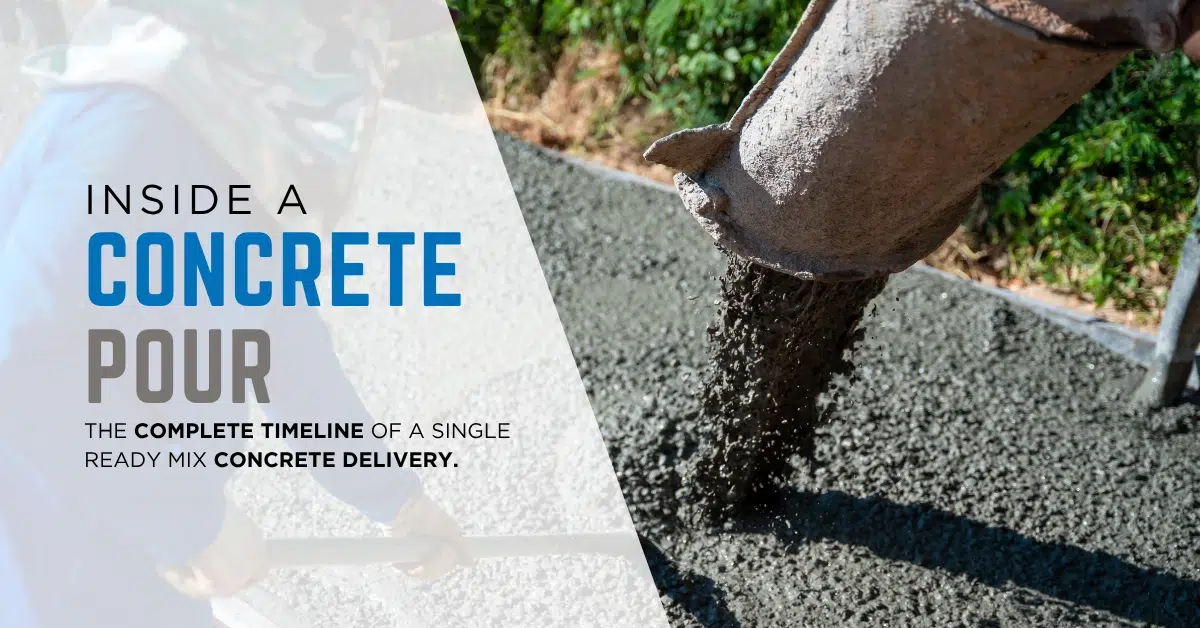
    3. T-Minus 2 Hours: Batching Plant Preparation

    Two hours before dispatch, the RMC plant begins final preparation. Aggregates are measured and loaded into the batching system. Cement from silos is weighed. Water is measured precisely against the approved water-cement ratio. Admixtures are dosed to specification.

    At an Aparna RMC plant, this entire process runs through SCADA-automated controls. Every ingredient is weighed to specification — not estimated. The system logs every batch against the order reference, generating the batch certificate that travels with every delivery. Before the drum even starts mixing, a slump test is conducted on the fresh concrete at the plant. If the slump falls outside the specified range, the batch is adjusted or rejected before dispatch. The concrete that leaves the plant has already passed its first quality check.

    4. T-Minus 60 Minutes: Dispatch and Transit

    Dispatch and Transit

    The transit mixer is loaded, sealed, and dispatched. From this point, the clock is running. Concrete begins hydration the moment cement meets water. The working window — the period during which the concrete remains placeable — is approximately 90 minutes under standard conditions. In summer conditions with ambient temperatures above 38°C, that window can shrink to 60–70 minutes.

    Transit time is not just a logistical detail — it’s a structural variable. This is exactly why proximity to a ready-mix concrete near me source matters for every pour. Aparna RMC plants are positioned to serve urban construction sites within practical transit windows. In Hyderabad, the nearest plant is typically within 20–30 minutes of any active construction zone in the city.

    5. T: Arrival on Site and Pre-Pour Checks

    The transit mixer arrives. Before a single cubic metre is discharged, three things must happen.

    a. Delivery Challan Verification

    Check the delivery challan against the order — grade, volume, mix design reference, and plant batch number. This is your first confirmation that what you ordered is what arrived. Any discrepancy gets resolved before discharge begins, not after.

    b. On-Site Slump Test

    A sample of concrete is drawn from the drum, placed into a standard slump cone, and the cone is lifted. The distance the concrete settles is measured. If the on-site slump reading falls outside the specified range, the load is flagged before it enters the formwork.

    c. Cube Sample Collection

    Six standard 150mm cube moulds are filled from the same sample batch, sealed, labelled with the pour date, element, and batch reference, and set aside for curing. These cubes are your quality record — the objective proof of what was poured in this element, from this batch, on this date. Three cubes are tested at 7 days, three at 28 days.

    6. T+15 to T+90 Minutes: Active Pouring and Compaction

    Discharge begins. Concrete flows from the drum into the pump hopper, through the pump line, and into the formwork. The rate of discharge is controlled against the pace of placement and compaction — discharge too fast and concrete builds up faster than it can be properly placed; too slow and the mix begins to set in sections.

    For slab pours, concrete is placed in layers and spread with a screed board. For columns and walls using conventional concrete, each pour layer is consolidated to eliminate air voids and ensure the mix fully surrounds the reinforcement. For pours using self-compacting RMC concrete, the mix flows into place and self-consolidates without mechanical compaction — eliminating honeycombing risk in dense rebar zones.

    7. T+90 Minutes: Final Placement and Surface Finishing

    The last cubic metre is discharged, the drum is washed, and the mixer departs. The concrete surface is screeded level, floated to close the surface, and — for floor slabs — finished to the specified surface texture. The concrete is now in its most vulnerable state. Everything that happens in the next seven days determines the strength it reaches at 28 days.

    8. T+0 to T+7 Days: Curing

    Curing begins the moment placement is complete. The concrete surface is covered immediately with wet hessian or polythene sheeting to trap surface moisture. Water is applied at regular intervals — typically morning and evening — for a minimum of seven days. In peak summer conditions, additional shading prevents rapid moisture evaporation from exposed surfaces.

    For large raft foundations or thick retaining walls, internal temperature monitoring may be warranted. Temperature control concrete is specifically formulated for these high-risk mass pour situations, managing heat of hydration through the critical early curing phase to prevent thermal cracking.

    9. T+7 Days: First Cube Test

    First Cube Test

    The 7-day cube samples go to the lab. Results should come in at approximately 65–70% of the expected 28-day strength. An M25 mix should read around 16–18 MPa in 7 days. If results fall significantly below this, it flags a problem — with the mix, the curing, or the cube preparation — that can be investigated before the next pour proceeds.

    10. T+28 Days: Final Strength Verification

    The 28-day cubes are tested. This is the definitive quality record for the pour. The result is documented and filed against the structural drawings reference, becoming part of the project’s quality assurance record. If the result meets or exceeds the specified grade, the element is verified. If it falls short, the structural engineer is notified and remediation options are assessed.

    This complete quality loop — from mix design through to 28-day test result — is what separates a properly managed concrete pour from one that just hopes for the best.

    11. Conclusion

    A concrete pour isn’t a single event — it’s a sequence of interdependent decisions that begins at the batching plant and ends four weeks after the formwork is struck. Every stage in that sequence has a defined standard, and every departure from that standard creates a risk that compounds downstream. Aparna RMC manages the plant end of that sequence with the rigour it requires — SCADA-automated batching, pre-dispatch testing, VTS-tracked transit, and batch-certified delivery across its plants in five states.

    Ready to take the guesswork out of your next pour? Get a quote at aparnarmc.com/get-quote, use the RMC Calculator at aparnarmc.com/rmc-calculator to plan your volumes, or call 18001216229 to speak with a technical team member.

    12. FAQs

    Q1: How far in advance should I order ready-mix concrete for a pour?

    Confirm your order at least 24–48 hours before the pour. This gives the plant time to prepare the correct mix design, schedule production, and allocate transit mixers to your pour window — particularly important during peak construction months when plant scheduling is tight.

    Q2: What is a slump test and why does it matter at the point of delivery?

    A slump test measures the workability of fresh concrete — how easily it flows and fills formwork. A slump that’s too high indicates excess water in the mix, which reduces compressive strength. Too low means the concrete may not compact fully, leading to voids. The on-site slump test is your quickest check that the concrete delivered actually matches the specification.

    Q3: Why does concrete need to be tested at both 7 days and 28 days?

    The 7-day test gives you an early read on strength development — roughly 65–70% of the final 28-day strength — so problems can be identified before the next structural element is poured. The 28-day test is the definitive measure of whether the concrete met its specified grade, and forms the permanent quality record for that pour.

    Q4: What happens if the transit mixer is delayed and the concrete arrives past its working window?

    If concrete arrives beyond its working window, it should not be placed. Adding water to restore workability reduces compressive strength and compromises the pour. The right call is to reject the load and coordinate a replacement with the supplier. This is precisely why plant proximity and VTS tracking of each load matters — so delays are flagged early enough to manage before they become a rejection on site.

  • How to Choose the Right Concrete Grade for Your Project (Without Overpaying)

    How to Choose the Right Concrete Grade for Your Project (Without Overpaying)

    1. Introduction

    Choosing the wrong concrete grade is one of the most common — and costly — mistakes made on Indian construction sites. Go too low and you compromise structural integrity. Go too high and you’re paying for compressive strength your project will never actually use. The right answer lives in your structural drawings, your load requirements, and a clear understanding of what each grade delivers in practice.

    This guide walks you through how to match the correct concrete ratio and grade to your specific application, what the key grades mean in real terms, and how to make that decision without leaving money on the table.

    2. What a Concrete Grade Actually Means

    A concrete grade — M20, M25, M30 and so on — represents one thing: the minimum compressive strength of that concrete at 28 days of curing, measured in megapascals (MPa). M20 means 20 MPa. M25 means 25 MPa. On-site, this translates to the load the concrete can safely carry once fully cured.

    A higher grade costs more per cubic metre because it requires a higher cement content, a more precise concrete mix design, and tighter batching controls at the plant. That cost is justified when the structural load demands it. When it doesn’t, you’re simply paying for strength that sits unused in your structure.

    3. The Grade Ranges and What They’re For

    a. M5, M10 and M15 — Non-Structural Applications

    M5 is an extremely low-strength concrete grade, rarely used in modern construction, limited to filler works or temporary applications where strength is not important.

    M10 and M15 are the lowest grades in common practical use and are not suitable for structural elements. M10 is used for lean concrete below foundations — a blinding layer that gives a clean working surface for reinforcement placement, nothing more. M15 covers minor non-load-bearing applications like pathways, kerbs, and small drainage works. 

    b. M20 Grade Concrete — The Residential Standard

    M20 is the minimum grade permitted under IS 456 for reinforced concrete structural members. In practice, it’s the standard for residential construction — slabs, beams, and columns in individual house builds and low-rise residential projects up to four or five storeys. The m20 grade concrete mix proportion (1:1.5:3 — cement:sand:aggregate) delivers reliable compressive strength for standard residential loads at a cost point that works for individual home builders.

    c. M25 Concrete Mix Ratio — Commercial and Mid-Rise

    M25 is the workhorse grade for commercial construction. Retail buildings, office complexes, mid-rise residential above five storeys, and commercial floor slabs all typically require M25. The M25 concrete mix ratio is typically 1:1:2 (cement:sand:aggregate) with a water-cement ratio of approximately 0.5 — proportions that in a ready mix concrete plant are controlled automatically, batch after batch.

    d. M30 and M35 — Infrastructure and Heavy Load

    M30 and M35 — Infrastructure and Heavy Load

    Once you’re into infrastructure — flyovers, bridges, metro structures, large commercial basements — M30 becomes the baseline. M35 is common where higher durability is required alongside strength, particularly in aggressive environments like coastal zones or areas with high chloride exposure. These grades require a precise mix design, careful aggregate selection, and controlled placement that site mixing simply can’t reliably achieve.

    e. M40 to M80 — High-Rise and Specialist Applications

    High-rise structures — particularly the lower floors of towers above 20 storeys — need high-performance RMC concrete that maintains workability through pumping to height while delivering exceptional compressive strength. M40 to M60 is standard for high-rise columns. M80 is reserved for specialist applications where extreme compressive loads are concentrated in small cross-sections. At these grades, concrete mix design is a specialist exercise that demands plant-level precision and engineering input.

    4. The Factors That Should Drive Your Grade Decision

    a. Structural Engineer’s Specification

    Start here — and don’t deviate from it without written approval. The structural engineer has calculated the loads, moments, and safety factors that determine the minimum grade for each element. The specification in the drawings is the floor, not a starting point for negotiation.

    b. Type of Structure and Applied Load

    Residential low-rise: M20. Mid-rise commercial: M25–M30. Infrastructure: M30–M40. High-rise: M40 and above. These are starting points — your structural drawings will be more specific, particularly for elements with unusual spans or concentrated loads.

    c. Environmental Exposure Conditions

    IS 456 classifies exposure conditions from mild to extreme. Concrete in contact with soil, water, or aggressive chemicals needs a higher grade and lower water-cement ratio to resist carbonation and chloride ingress over time. A structure near a coastline or industrial zone needs a materially different specification to the same building design in central Hyderabad. For ready mix concrete in Hyderabad projects near the water table or industrial land, flag it with your supplier so the admixture package accounts for it.

    d. Pour Conditions and Season

    In Indian summer conditions, high ambient temperatures accelerate setting, reduce the working window, and increase thermal cracking risk in mass pours. For large pours in peak summer, temperature-controlled ready mix concrete manages heat of hydration through the critical early hours — preventing the internal temperature differential that causes cracking in thick elements.

    5. Where Contractors Overpay — and Where They Underpay

    Overpaying happens most often in residential construction, where contractors default to M25 or M30 for elements that M20 would handle adequately. The premium per cubic metre adds up across a full residential project and delivers no structural benefit.

    Underpaying — specifying a lower grade to cut costs — is the more dangerous mistake. The ready mix concrete price difference between M20 and M25 per cubic metre is modest. The cost of remediating a structure built to the wrong specification is not. The right grade costs exactly what the structure needs it to cost — nothing more, nothing less.

    6. Consistency Matters as Much as Grade

    Consistency Matters as Much as Grade

    There’s one point that doesn’t get enough attention: the grade you specify is only meaningful if every batch you receive is consistent. A pour that varies between M22 and M27 across different loads isn’t really an M25 structure — it’s a structure with unpredictable strength distribution. SCADA-automated batching at an Aparna RMC plant produces the same mix proportion in every load, verified by plant-level testing before dispatch. The 28-day cube strength you’re expecting is the strength you get — pour after pour.

    7. Conclusion

    Concrete grade selection is a structural decision, not a procurement shortcut. The grade your structural engineer specifies is the minimum your project requires — and matching it precisely, consistently, across every pour is what Aparna RMC is built to deliver. With grades from M30 to M80, automated batching, and technical support across its plants in five states, Aparna RMC takes the guesswork out of grade selection and makes consistent delivery the standard, not the exception.

    Not sure which grade your project needs? Aparna RMC’s technical team can review your structural requirements and recommend the right grade for every element. Get a quote at aparnarmc.com/get-quote or call 18001216229.

    8. FAQs

    Q1: What is the minimum concrete grade for a residential slab in India?

    IS 456 specifies M20 as the minimum grade for reinforced concrete structural members, including residential slabs and columns. For individual house builders, M20 grade concrete with a properly controlled concrete ratio and adequate curing delivers reliable structural performance.

    Q2: What is the difference between M25 and M30 concrete, and when should I use each?

    M25 (25 MPa compressive strength) suits commercial buildings, mid-rise structures, and heavy floor slabs. M30 is used where higher durability is required — particularly for infrastructure elements, basements in aggressive soil conditions, and structures exposed to moisture or chemicals. Your structural engineer’s drawings will specify which applies to each element.

    Q3: Does using a higher concrete grade always improve structural performance?

    Not necessarily. A grade higher than the structural requirement delivers no performance benefit for that element and just increases cost. Over-specification is common in residential construction and adds unnecessary material cost. Match the grade to the specification — and make sure it’s delivered consistently.

    Q4: How does ready mix concrete ensure a consistent grade across multiple pours?

    A ready-mix concrete plant uses SCADA-automated batching to weigh and proportion every ingredient to the approved mix design for every batch. Unlike site mixing, where proportions shift with each load, RMC plants produce the same concrete ratio in every cubic metre — verified by plant testing before dispatch.