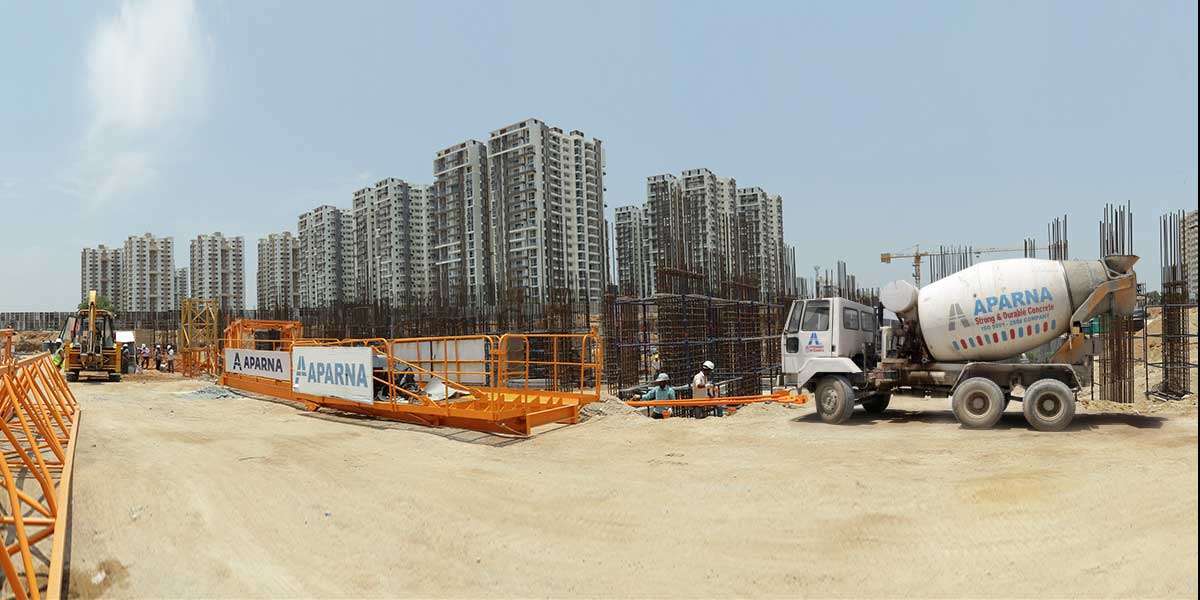
The construction industry is rapidly evolving, driven by the urgent need for sustainable solutions. With urbanization and infrastructure development on the rise, there’s a growing demand for concrete that meets structural requirements while minimizing environmental impact. Innovations in concrete technology are focused on sustainability, incorporating recycled materials, reducing carbon emissions, and optimizing production processes. Aparna Enterprises Ltd (AEL), known for its wide spectrum of building-material products, is at the forefront of this transformation.
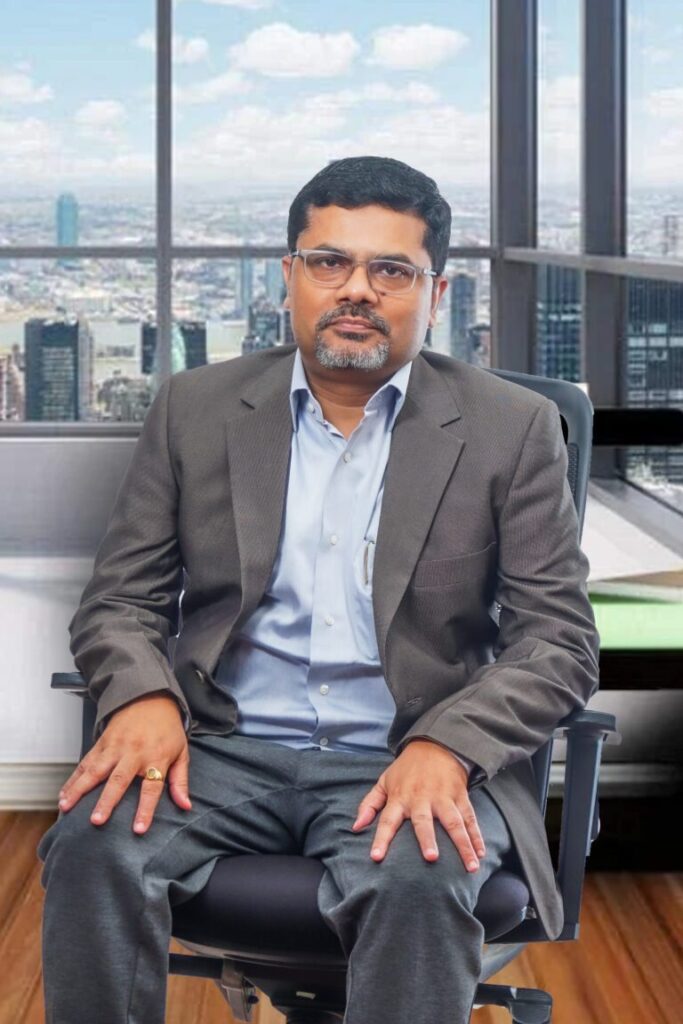
Constrofacilitator recently interviewed Mr. Gopal Krishna, the Business Head of Aparna RMC. With over 21 years of experience, he has been instrumental in driving sustainable and profitable growth in the construction segment, particularly in cement and ready-mix concrete (RMC). His expertise has led to significant business expansion and the successful implementation of advanced ERP/SAP projects.
Mr. Gopal Krishna, Business Head, Aparna RMC
Upcoming Trends and Innovations in Concrete Construction
Mr. Krishna foresees a dramatic transition in the concrete construction industry, driven by technological advancements, better materials, and modern construction methods. The future is focused on sustainability. Traditional concrete production is responsible for about 8% of global CO2 emissions, but the advent of ‘Green Concrete’ aims to reduce this impact by utilizing recyclable materials, producing less carbon dioxide, and consuming less energy. This results in more durable and economical concrete.
Another innovation is Smart Dynamic Concrete (SDC), which significantly reduces the carbon footprint of the construction process through lower cement content and reduced energy consumption. SDC offers faster concrete placement, higher durability, and better ecological performance.
Additionally, technologies like drones and 3D printing are transforming concrete construction. Drones are used for site inspections, progress monitoring, and data collection, while 3D printing allows for the creation of sophisticated concrete structures with a shorter turnaround time.
Making Cement Production Environmentally Sustainable
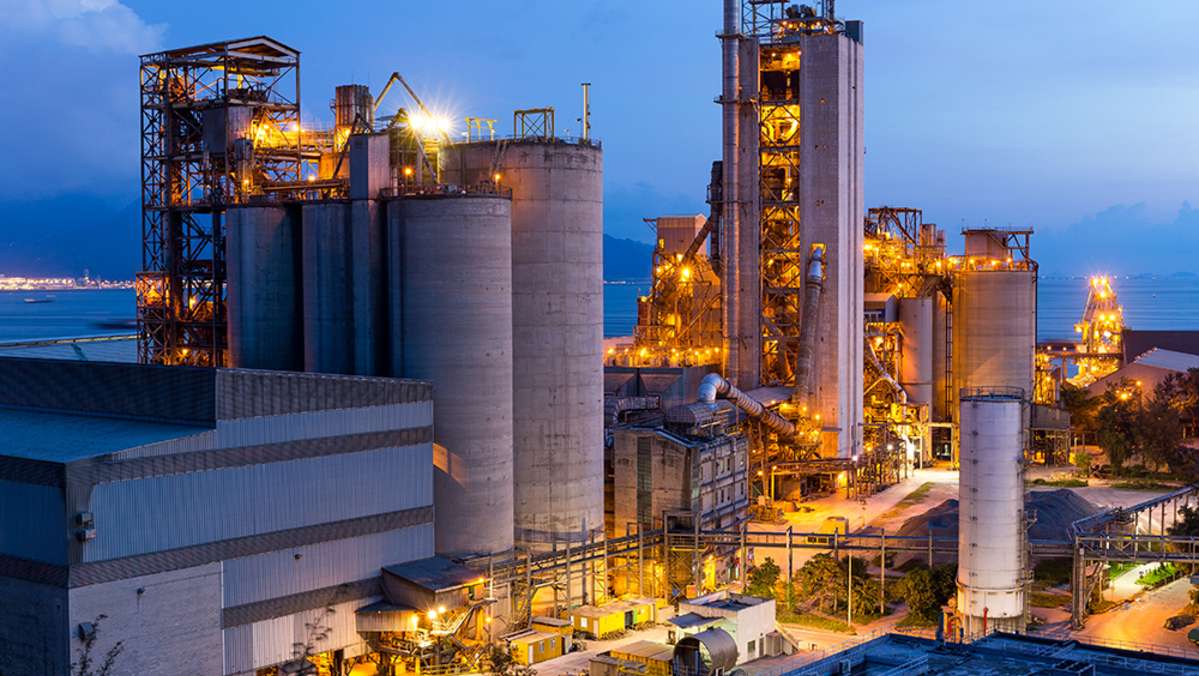
Several initiatives are enhancing the sustainability of cement production. Carbon Capture and Storage (CCS) technology is a key innovation, capturing CO2 emissions during cement production and repurposing it as a concrete additive. This approach significantly reduces greenhouse gas emissions.
Green concrete and smart dynamic cement are also gaining prominence. These materials incorporate recycled industrial by-products like fly ash and slag, improving concrete performance and reducing environmental impact. Furthermore, substituting traditional fuels with Refused Derived Fuels (RDFs) and increasing the use of Sewage Sludge (SS) in cement production have shown substantial reductions in CO2 emissions.
Quality Control in Concrete Production
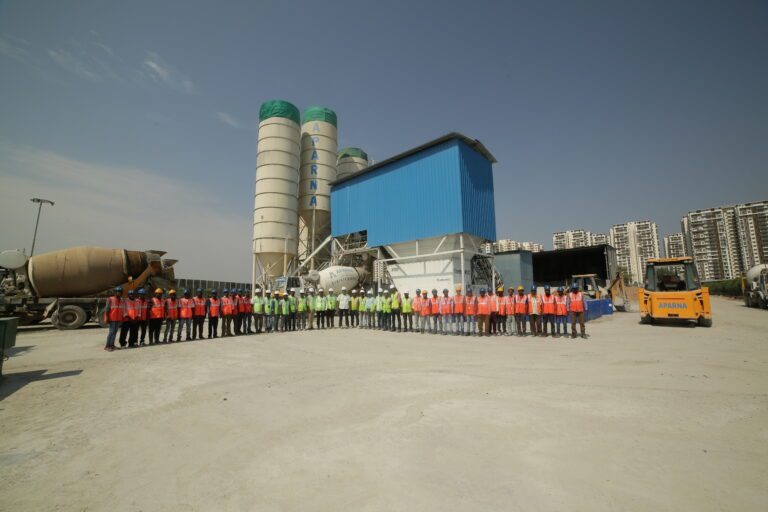
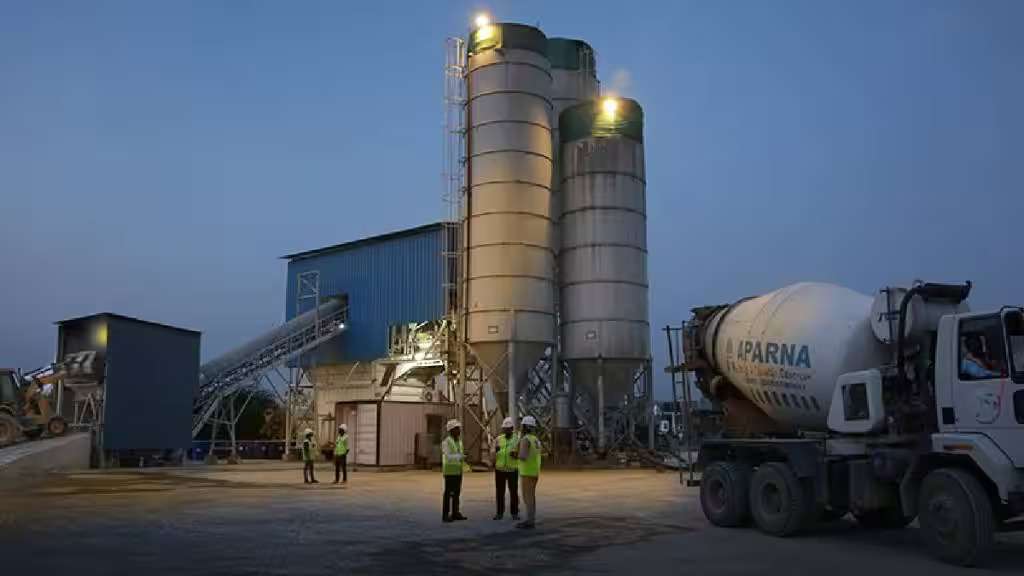
Aparna RMC ensures stringent quality control measures throughout the production process. Their 27 plants are computerized with MCI 360 and Siemens PLCs, guaranteeing accurate batching and continuous production. Custom mixes of aggregates, cement, and admixtures are created to meet specific project requirements. This meticulous approach ensures that the concrete supplied is of high quality and meets industry standards.
Innovations in cement technology are continuously improving concrete performance and reducing its environmental impact. Research shows that substituting coal with RDFs can save significant amounts of coal and reduce CO2 emissions. Using alternative cementitious materials like fly ash, slag, and other industrial by-products also helps mitigate the environmental effects of cement production.
Carbon capture technology is another significant innovation. Capturing CO2 emissions during cement production and using it in concrete production can drastically reduce greenhouse gas emissions. Recycled aggregates and other environmentally friendly additives are also being explored to enhance concrete performance and sustainability.
Incorporating Sustainable Practices
Aparna RMC is committed to sustainability. They incorporate recycled aggregates and supplementary cementitious materials (SCMs) like fly ash and slag into their concrete production. Their controlled batch process minimizes wastage and conserves resources. Additionally, their water management strategy involves reducing consumption and recycling water to limit environmental impact.
Ensuring Quality and Consistency in Ready-Mix Concrete
Maintaining high-quality concrete requires adherence to several key principles. Proper mixing ensures a homogeneous blend of cement, aggregates, water, and admixtures. The water-to-cement ratio must be consistent, as too much water weakens the concrete while too little makes it difficult to work with. The dimensions and quality of aggregates also impact the mix, with fine aggregates needing to absorb more water for better workability. Using only the highest quality cement and aggregates ensures the best outcomes. Sustainable approaches, such as using recycled aggregates and SCMs, not only reduce the environmental burden but also improve the quality of ready-mix concrete.
Conclusion
Aparna RMC is leading the way in sustainable concrete technology, driven by innovation and a commitment to quality. By incorporating advanced materials and cutting-edge technologies, they are setting new standards in the construction industry, ensuring that future developments are both environmentally friendly and structurally sound.
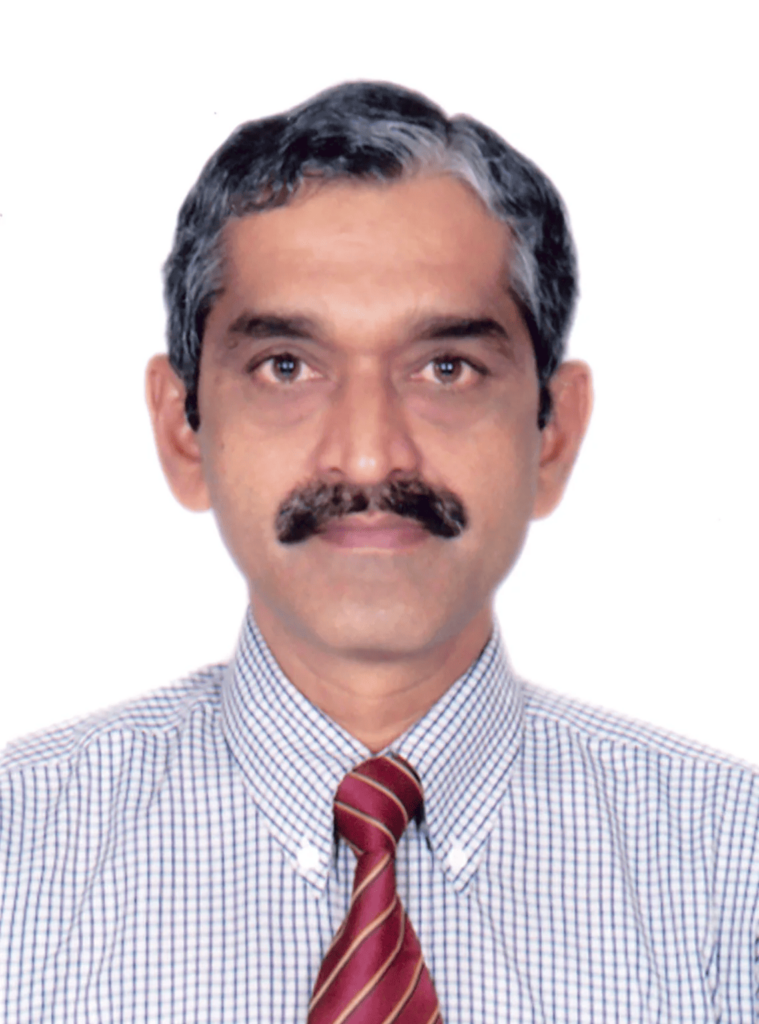
An exclusive interview with Mr. T. Chandra Sekhar, Technical Director, Aparna Enterprises Ltd.wherein he shared insights on emerging market trends, technological advancements, company product range etc.
Mr. T. Chandra Sekhar,Technical Director, Aparna Enterprises Ltd.
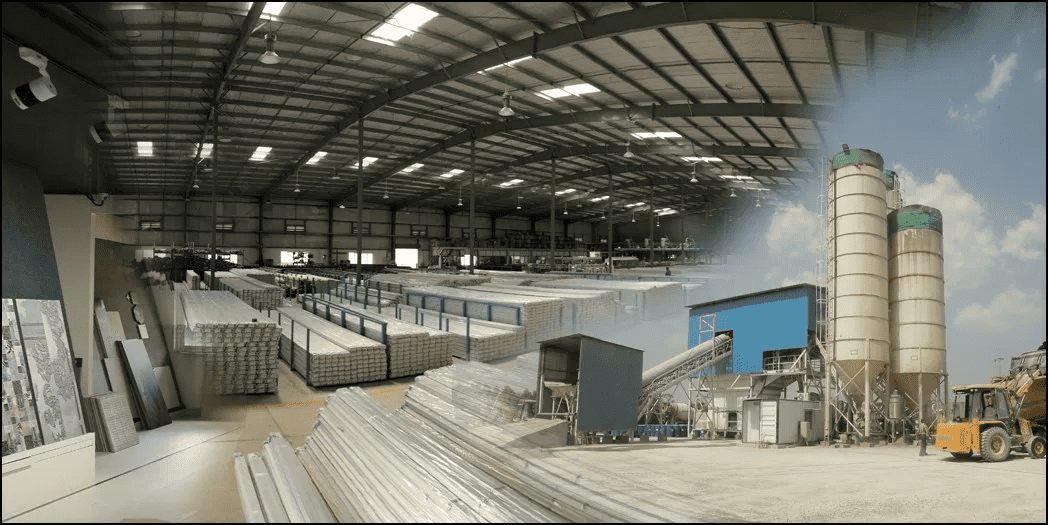
India is experiencing a surge in demand for diverse building materials driven by rapid urbanisation and the demand for residential and commercial projects. Selecting the right manufacturer is important to address this demand efficiently. Manufacturers with advanced technology, sustainable practices, and a reliable supply chain can meet the evolving needs of the market while ensuring quality and cost-effectiveness. Aparna Enterprises Ltd [AEL] is one such company manufacturing a wide spectrum of building-material products, such as RMC (ready-mix concrete), uPVC windows and doors, Floor and Wall tiles, Aluminium window and door systems and Exterior Facades, Cold Roll form products etc. Most of these products are available in pan India and international markets through an extensive dealer network which constitutes more than 350 vendor partners for different brands.
Constrofacilitator recently had an exclusive interview with Mr. T. Chandra Sekhar, Technical Director, Aparna Enterprises Ltd. He is an industry veteran with 41 years of experience in steel, ceramic, windows and other building materials. He has played an instrumental role in setting up the backward integration for AEL, planning and setting up of RMC plant, state-of-the-art uPVC window fabrication plant, uPVC profile extrusion plant, and Vitrified tiles production plant. With exposure to global practices in these industries, he looks after all the technical aspects of the company’s production facilities.
During the interview, he shared insights on emerging market trends, technological advancements, company product range and much more.
Here are the excerpts from the interview.
1. What are the emerging trends that might impact the market potential for building material products?
Today, the building materials industry is gravitating towards durable and intelligent solutions. The demand for modern, visually captivating, and eco-friendly materials is fundamentally reshaping the market for building material products. The rise in disposable income, coupled with shorter renovation cycles and a preference for better design and aesthetic value is driving consumer’s demand for technologically advanced solutions. From premium flooring materials and eco-friendly, aesthetically appealing sanitary ware to energy-efficient glass facades and sleek yet durable uPVC products, the emerging trends in building material products are undergoing a significant shift. In flooring options, the preference for lower carbon footprint and durability is leading to a shift from traditional ceramic tiles to alternatives like large formatted tiles and eco-friendly options.
Apart from this, an increased trend towards beautification has spurred demand for 3D printed tiles, designer tiles, and eco-friendly alternatives. In the sanitary space, there is a growing demand for designer sanitary ware, green plumbing solutions. Moreover, awareness about safe sanitation and complete bathroom solutions has led to a shift towards touchless, eco-friendly, and water conservation-based products. Consumers are adopting uPVC doors and windows for durability and thermal insulation, energy-efficient glass, and aluminum frames for sleek designs. Moreover, the industry is witnessing disruption with the emergence of tech-based distribution platforms and one-stop shops, catering to all sorts of evolving needs.
2. What are the primary factors influencing customer demand for building material products, and how the company aims to capitalise on these trends?
These days, most consumers are seeking low-maintenance and durable options along with aesthetically impactful solutions that enhance the appearance of their living spaces. In the realm of contemporary design, technological advancements are reshaping the traditional notions. Smart Living has gained the ground so the preferences are towards material that provides smarter solutions. Beyond this the need for sustainable development is continuously increasing due to the demand for reducing carbon emissions.
Aparna Enterprises Limited (AEL) stands at the forefront of construction material manufacturing and building solutions. The company earns and implements the changes in product features in its own construction projects. These insights are incorporated in the manufacturing process and thus shared with other players in the industry. With a legacy spanning over 30 years, we have consistently delivered innovative designs and superior functionality, setting new benchmarks in modern space construction. Our expertise in addressing diverse construction needs enables us to offer customized solutions to a wide range of consumers. Our product range is meticulously crafted to meet contemporary requirements, catering to multifaceted consumer demands. Engineered for precision, durability, noise resistance, and energy efficiency, our products impart a modern aesthetic to both residential and commercial interiors. What sets AEL apart is our ability to fully customize designs and specifications to suit both functional and aesthetic preferences.
3. Can you elaborate on the company’s key product offerings and how they contribute to the building materials industry?
Aparna Enterprises Ltd provides comprehensive one-stop solutions for all construction requirements, catering to both residential and commercial projects. Our diverse product range encompasses vitrified tiles, uPVC windows and doors, uPVC windows and doors, Ready Mix Concrete (RMC), stone aggregates, metal formed items such as steel reinforcements, gratings & cable trays, complete facade solutions, aluminium window and door systems, premium sanitary ware, and a wide array of kitchen and wardrobe solutions.
We are one of the leading tile manufacturers in India. Under its flagship brand, Vitero, the company also manufactures a wide range of vitrified tiles for walls and floors. With timeless designs and top-notch functionality, they can be customized based on the purpose and footfall of the area. AEL also manufactures 60+ uPVC profiles in partnership with Okotech. These products meet stringent European standards and have the power to withstand India’s extreme weather conditions. Beyond that, uPVC profiles manufactured at Okotech have low thermal conductivity which in turn helps save 30% on electricity bills.
Apart from this, the company manufactures high-quality aluminium windows and doors under its brand Alteza. Alteza windows and doors have slim profiles that add a contemporary touch to a building. When pursuing modernity, we are committed to the advancement of exterior facades offered by Aparna-Craft. The company’s facade design innovations, blend contemporary aesthetics with technological advancements.
Additionally we are a frontrunner manufacturer of ready-mix concrete. Equipped with state-of-the-art equipment and machinery, the company’s RMC has evolved to be the one of the largest ready-mix concrete suppliers with footprints across Telangana, Andhra Pradesh, Maharashtra, and Karnataka.
4. How does AEL ensure the quality and standardization of its products across different categories?
Built with the confluences of technology, innovation, design, research, resilience, and quality, AEL has a proven track record of delivering high-standard, customised, contemporary building materials and construction solutions. We follow a collaborative approach of treating every project as a partnership endeavor while offering integrated experience, multifaceted expertise, and seamless support to ensure a successful culmination.
The company abides by stringent quality control measures at every stage of the manufacturing process. From raw material sourcing to production and packaging, each step is carefully monitored to ensure adherence to quality standards. The company operates state-of-the-art manufacturing facilities equipped with advanced technology and machinery. These facilities are designed to meet international quality standards and ensure consistency in product quality. Our vitrified tiles and uPVC profiles are BIS certified.
For example, our aluminium windows and doors are built to withstand wind loads of 3kPA. Our aluminium façade solutions are tested to withstand wind and water pressure upto 5kPA. By staying abreast of technological advancements and market trends, AEL ensures that its products remain at the forefront of quality and innovation.
5. How does the company leverage technological advancements to stay ahead in the market and meet evolving customer expectations?
Through advanced technology integration, we are actively strategizing our focus and priority into catalysing a positive impact and crafting a compelling value by solving some of the emerging and key challenges in the construction sector with innovative products, iconic designs, and ingenious and eco-safe solutions. To begin with, our Vitero tiles are meticulously crafted using advanced technology, incorporating an innovative feeding system and nanotech coating to produce premium-grade double charged tiles, digital wall tiles, glazed vitrified tiles, and full body tiles. Our manufacturing facility boasts one of India’s largest and most sophisticated kilns, ensuring optimal production efficiency and product quality.
In addition to advanced manufacturing techniques, we harness the power of digital printing technology to offer our glazed vitrified tiles in a diverse range of textures and finishes, including wood, marble, slate, or bamboo. This level of customization distinguishes our tiles, making them both aesthetically pleasing and functionally superior, catering to a wide array of customer preferences.
We’ve adopted backward integration measures throughout our manufacturing processes, allowing us to produce essential raw materials in-house. Our tile and uPVC profile manufacturing plants generate 18,000 – 20,000 units & 4,000 – 5,000 units of electricity every day through 3.8 MW & 0.8 MW solar plants in respective manufacturing units. This not only ensures consistent quality but also guarantees the continuous availability of raw materials in their purest form, enhancing the reliability of our supply chain.
Furthermore, our machinery is meticulously engineered to surpass stringent European product standards, ensuring top-notch performance even in challenging weather conditions. This steadfast commitment to quality enables us to deliver products that not only meet but exceed customer expectations, solidifying our reputation for reliability and excellence.
We’ve also implemented fully computerized ready-mix concrete production plants, enabling us to provide consistent quality and tailor-made concrete mix solutions. Coupled with our round-the-clock customer service, these initiatives underscore our dedication to meeting the evolving needs of our customers while upholding the highest standards of quality and service.
6. How has the company contributed to landmark projects, and share some notable examples?
We have been associated with several landmark projects and prestigious establishments across both public and private sectors like leading brands in India, such as Godrej, Infosys, NCC, Mahindra LifeSpaces, Brigade, and Prestige to name a few. All our building materials are listed and approved by government organizations like DRDO, South Central Railways, PWD, CPWD etc.
We have been a proud partner in several landmark projects which include Telangana secretariat, Statue of equality, Hyderabad ORR, The Park Hyatt-Hyderabad, CBRE-Mumbai, Secunderabad railway station, My Home Nishadha, Infosys campus in Pocharam, IIT Dharwad, prestigious projects by Phoenix group – Sparkle one office- Bengaluru, Wakad towers- Pune & Phoenix market city mall-Chennai to name a few.
7. What expansion plans or strategies does AEL have, considering its operations both nationally and internationally?
We are strategically expanding our market presence to meet the robust demand for construction materials. Domestically, we recently extended our reach into North Indian markets with our renowned uPVC doors and windows brand, Ökotech. Furthermore, we have successfully entered international markets, including Vietnam, Bangladesh, Sri Lanka, and Nepal, with our innovative product range. Notably, we have inaugurated a state-of-the-art manufacturing unit in Rudraram, Hyderabad, representing a significant investment of Rs 100 crore in UPVC production. Very soon our powder coating plant will become operational, which will reduce our dependence on outside vendors. This plant will be Qualicoat certified by the end of this year. Qualicoat certification will allow us to powder coat products for exporting purposes.
In addition to geographical expansion, we are enhancing our retail footprint by introducing company-owned stores that offer a diverse range of solutions under one roof. Last year, we unveiled the ‘Unispace’ showroom in Bangalore, catering to the diverse needs of our customers. Furthermore, we are expanding our Vitero select stores in Mumbai and extending our retail network across key cities.
Our Ready-Mix Concrete (RMC) business has also witnessed remarkable growth, and we have established new units across Western and Southern regions of the country. Additionally, we are advancing our offerings under the Alteza brand and strategizing to penetrate new markets throughout India. With a strong focus on innovation, quality, and customer satisfaction, Aparna Enterprises Ltd remains committed to driving growth and delivering excellence in the construction materials sector.
8. How does the company ensure a consistent supply chain for its diverse range of products, especially considering the various industries it operates in?
We ensure a consistent supply chain for its diverse range of products by implementing robust strategies tailored to the specific requirements of each industry it operates in. Built with the confluence of technology, innovation, design, research, resilience, and quality, we have a proven track record of delivering high-standard, customised, contemporary building materials and construction solutions. The company establishes strategic partnerships with suppliers, distributors, and logistics providers to ensure a reliable supply chain network. These partnerships are built on trust, transparency, and mutual benefit, enabling Aparna Enterprises Ltd to optimize distribution channels for efficient delivery.
Furthermore, the company leverages technology solutions such as enterprise resource planning (ERP) systems, inventory management software, and supply chain analytics to monitor and manage its supply chain operations effectively. Real-time visibility into inventory levels, demand forecasts, and production schedules enables the company to respond promptly to changing market dynamics and customer demands. Senior management ensures deep involvement to make required strategic changes from time to time. A special team coordinates with production and sales teams to ensure a robust supply chain. By adopting a holistic approach to supply chain management, we are able to deliver superior products and services to customers.
The most important focus for us has been prioritizing our product quality and exceptional customer service, says APARNA REDDY, Executive Director, Aparna Enterprises
RMC will be a key contributor in India’s ambitious target of $5 trillion economy by 2025. What is your take on this?
The growing economy of India has generated significant demand for ambitious infrastructure projects, thereby creating a need for robust and sophisticated construction solutions. As the construction industry relies heavily on Ready Mix Concrete (RMC), it emerges as a crucial part for driving economic growth by enabling the delivery of highquality products and services. The significance of RMC in India’s economic trajectory stems from its unparalleled efficiency and effectiveness in construction projects. With its emphasis on quality control, consistency, and time efficiency, RMC revolutionizes project execution. Further by enabling heightened productivity and meeting stringent timelines, RMC accelerates infrastructure development. It has emerged as a game-changer in the industry, offering improved consistency, reduced wastage, and enhanced durability. In contemporary time, the widespread adoption of RMC aligns with the government’s emphasis on promoting sustainable development practices. Modern RMC production plants leverage advanced technologies to minimize environmental impact through efficient water usage, dust control measures, and the incorporation of recycled materials. This commitment to sustainability not only supports India’s environmental goals but also fosters economic progress.
India is taking a giant leap in infrastructure development. What is the role RMC is contributing in this development?
India’s infrastructure development is undergoing a monumental transformation, with RMC emerging as an integral part in this progress. RMC offers unparalleled flexibility to meet diverse end-user requirements, making it indispensable across commercial, infrastructure, and industrial sectors. From bridges and dams to roads and multi-story buildings, RMC plays a vital role in shaping India’s sturdy modern landscape. The new RMC plants nationwide present lucrative opportunities amidst this infrastructure boom. The construction industry’s shift towards complex architectural structures, including commercial buildings, high-rise driveways, and coastal highways, underscores the soaring demand for high-performance concrete. In order to fulfil these ambitious projects and housing demand, RMC plants have gained significant growth. Moreover, the expansion of the RMC industry to Tier II and III cities signifies its widespread adoption beyond metro projects. This expansion into smaller urban centers and rural areas highlights the growing demand for RMC products nationwide. RMC’s adaptability, efficiency, and ecofriendliness contribute significantly to India’s infrastructure development, aligning with the country’s ambitious construction goals and broader economic growth objectives.
How has your organization performed in the last three years?
Over the past three years, Aparna Enterprises (AEL) has made remarkable strides in the infrastructure sector, emerging as a leading provider of comprehensive building material solutions. Our commitment to innovation and customer satisfaction has been the reason driving consistent growth across all segments of our operations. In the recent past, AEL has witnessed exponential growth, propelled by strategic expansions and penetrating new markets. Last year, we expanded into the North Indian market, specifically the Delhi NCR region, with our uPVC business brand Okotech, which has swiftly established itself as a prominent player in the industry. We further ventured into South Asian markets such as Vietnam, Bangladesh, Sri Lanka, and Nepal, leveraging the robust demand for Okotech products. Additionally, our RMC business has experienced substantial growth, with new units being established in key regions, particularly in Maharashtra. Our performance over the past three years reflects our unwavering dedication to excellence and innovation. In FY23, AEL achieved a remarkable revenue of `1,650 crore, underscoring our strong growth trajectory. Looking ahead, we are poised to sustain this momentum and explore new avenues for expansion. Innovation, strategic investments, and a relentless pursuit of superiority are the driving forces behind AEL’s success. As we continue to push boundaries and set new benchmarks in the building materials industry, we remain committed to delivering unparalleled value to our customers and stakeholders, both domestically and internationally
RMC is largely considered as an unorganized market where these players corner a major chunk of revenue. In light of this, what would be your strategy to increase your market share?
In the largely fragmented and unorganized market of RMC, establishing a prominent presence requires a strategic approach focused on quality control, innovation, and collaborative partnerships. We implement a multifaceted strategy which is aimed at delivering superior products and expanding our reach across diverse regions. The most important focus for us has been prioritizing our product quality and exceptional customer service. We continuously innovate and enhance our product offerings. By introducing new products and improving existing ones, we aim to differentiate ourselves from competitors and attract customers seeking reliable solutions for infrastructure projects. Additionally, collaborating with trusted suppliers enables us to streamline product access and expand our distribution channels, thereby reaching a broader consumer base across various regions. Furthermore, by acquiring established leaders in the industry or pursuing mergers with compatible entities, we can consolidate resources, broaden our target audience, and enhance overall competitiveness in the market. Amidst the increasing demand for high-quality products in the Indian market, particularly from multinational companies, we remain steadfast in our focus on quality and innovation which enables us to capture larger market share and driving sustained growth.
For the benefit of our readers, please share the challenges RMC manufacturers face while executing realty projects in metros
Execution of real estate projects in metro cities is a formidable challenge for RMC manufacturers. The real estate sector downturn weakened by liquidity constraints impacts demand and revenue streams. In addition, the traffic regulations and congestion on the roads do not allow the delivery of cement, which is very important for maintaining the quality of the product and the timely completion of the project. Another challenge is ensuring a constant supply of raw materials such as aggregates, with logistical limitations and supplier dependencies posing the risk of the disruption of the supply chain. Additionally, the presence of smaller unorganised scale players in the RMC industry complicates the competitive scenario. Traffic regulations and city-space restrictions pose challenges for establishing commercial plants. These challenges call for the RMC manufacturers to come up with innovative ways such as diversifying the marketing efforts to semi-urban areas and improving the logistic operations. Collaboration with the stakeholders and advocacy for simple regulatory procedures are equally crucial for the smooth operationalisation of realty projects in metro cities.
What are the other challenges faced by RMC manufacturers while commissioning infrastructure projects in India?
Besides the mentioned issues, manufacturers of RMC also face multiple other impediments while deploying infrastructure projects in India. Throughout the whole process, from preparation to transportation and use of RMC, a large number of risks are present and some of them will lead to a lack of consumer confidence and diminished profits unless managed properly. Besides the internal factors, including the incorrect choice of admixture, machine breakdowns, and transportation accidents rank high among the external factors that call for sound management strategies for a streamlined flow of operations and effective completion of the projects. In addition, factors such as the wrong mix formula, unjustified specifications for quality standards, and the transportation lag time contributed by the road traffic introduce unforeseen inconveniences to infrastructure projects. Furthermore, environmental issues may add up to more complex problems. Adhering to the regulations for the environment and minimising the environmental impact of the production and utilisation of RMC should be prioritised. Resolving these problems should be done through a solution that consists of risk management techniques, quality control practices, logistical effectiveness, and environmental consciousness so as to achieve the successful outcomes of RMC projects in India
There is a paucity of skilled manpower in the RMC industry? What are the steps you are taking to increase skill manpower in the RMC sector?
The lack of skilled manpower in the RMC industry is a major problem in its growth and efficiency. Recognising this issue, we have implemented several steps to increase skilled manpower in the RMC sector. We have internal programs where extensive training are provided aimed at giving people the skills and the expertise needed for different positions in the RMC sector. We equip them with knowledge on concrete technology, quality control, operation of equipment, safety protocols, customer service, etc. Our skill development helps in skill improvement and career development of the workforce .We invest in the training of professionals with the aim of improving the productivity, efficiency, and sustainability of the RMC sector, and in so doing, fuelling its growth and success in the long run.
Your take on the government policies and regulations and the tweaks required to propel the RMC sector
Policies and regulations of the government are integral in determining the evolution and growth of the RMC sector in India. Efforts by the government such as advocating the use of RMC in infrastructure projects and pushing its benefits in smart city missions has greatly helped the industry to grow. Regarding the RMC sector, more amendments should be made. These include simplifying the regulatory framework in order to promote a friendly business environment for RMC manufacturers, financial and tax incentives to promote the use of RMCs, and improving infrastructure to stimulate construction activities that are the major drivers of demand for RMC. Furthermore, sustainability, research and technology investment towards increased longevity of RMC, and a continuous supply of high-quality aggregates are critical for the sustainable growth of the product in India. All in all, a coordinated approach among government, industry stakeholders, and regulatory bodies is needed to overcome challenges, implement applicable changes, and take the RMC sector to the next level towards sustainability
What are your expansion strategies for the fiscal year 2024-25? Are there plans to launch new products or is a Greenfield or Brownfield facility in the offing?
In the fiscal year 2024-25, our expansion strategies are twofold, to strengthen market presence in the North region of India and expand our reach beyond regional confines and actively engage in large and government infrastructure projects. Diversifying our market penetration in North India is a multiple strategic action process. In line with this, we intend to create a more viable sales and delivery network by placing new sales offices and distribution centres at strategic points across the region. Our reputation will enable us to develop alliances and distribution networks in these regions, ensuring that our products and services cater to the specific needs and preferences of different markets. Along with market expansion attempts, we also aim to be part of government ambitious infrastructure projects. We will keep on investing in modern production facilities and also upping the efficiency of our current units to remain steadfast and cater the burgeoning demand of the infra sector.
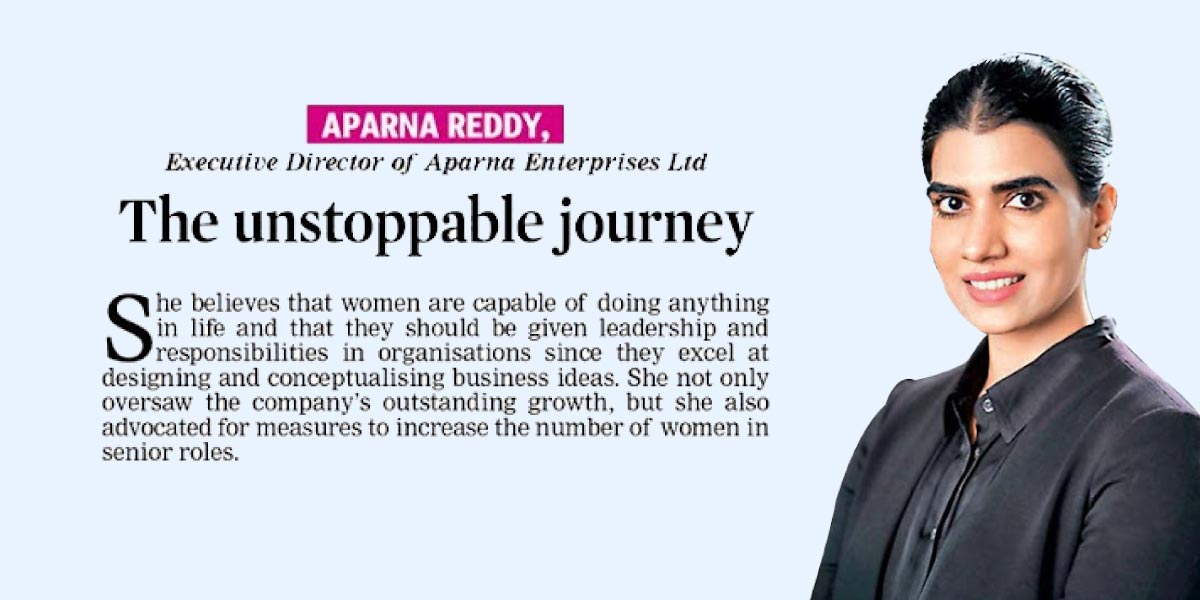
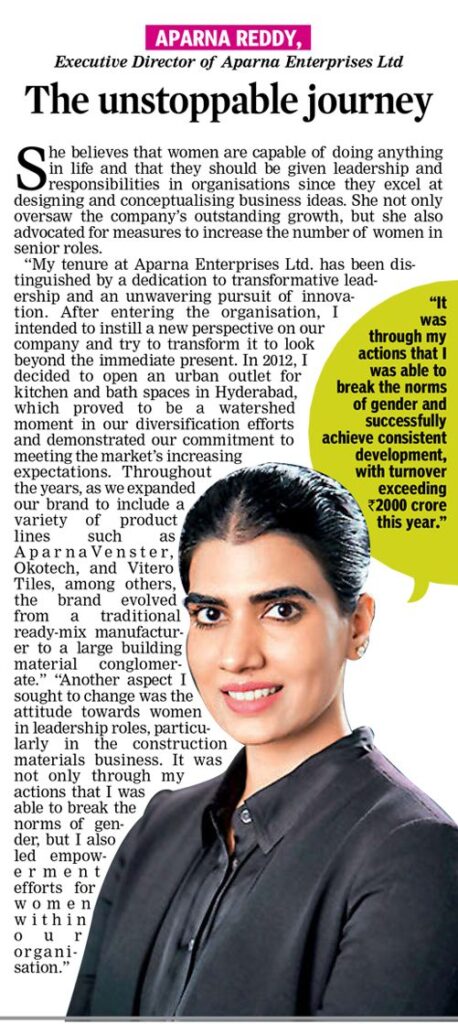
Aparna Enterprises Limited, of which Aparna RMC is a part is set to cross an impressive Rs.2000 Cr. turnover this year, said Ms.Aparna Reddy, Executive Director of Aparna Enterprises Limited.
Aparna Enterprises To Launch Concrete Plants In Mumbai
Sep 15, 2023
Leading building materials company Aparna Enterprises Limited announced its entry into the ready-mix concrete (RMC) market. Its new arm Aparna RMC would set up 7 RMC plants in the city to capture 5% of the total market share in Mumbai.
As of now, 2 plants have already been set up in Malad and Thane. Moreover, the firm plans to expand to other cities in Maharashtra, including Nagpur and Pune.
Aparna Enterprises Limited, a building materials manufacturing arm from Aparna Group, on Wednesday announced its entry into the burgeoning ready-mix concrete (RMC) market of Mumbai with Aparna RMC. The company plans to set up seven RMC plants in the city to capture five per cent of the total market share in Mumbai, with two plants already set up in Malad and Thane. Moreover, Aparna RMC plans to expand in Maharashtra by entering new cities, including Nagpur and Pune.
Aparna RMC Bets on Maharashtra’s Growing Infrastructure and Housing Construction Sector with New Plant in Mumbai
Sep 13, 2023
Aparna Enterprises Limited, India’s fastest growing building materials manufacturer, announced its entry into the burgeoning Mumbai ready-mix concrete (RMC) market with Aparna RMC today. The company plans to set up seven RMC plants in the city to capture 5% of the total market share in Mumbai, with two plants already set up in Malad and Thane. Moreover, Aparna RMC plans to expand to other cities in Maharashtra, including Nagpur and Pune.
Aparna RMC’s strategic foray into the city is driven by a rapidly growing infrastructure requirement and to tap into the gaps of the housing construction segment. As more development and re-development projects emerge in Mumbai and its suburbs, the company plans to set up more plants in a 20-kilometre radius to enable better logistics and reach. In the near-term, Aparna RMC is looking at setting up seven RMC plants in South Mumbai, Kalyan, Panvel, and Mira Road with a targeted production capacity of nearly 5 lakh cubic metres per year.
Speaking about the growth opportunity for the organisation, Mr. Ashwin Reddy, Managing Director of Aparna Enterprises Ltd., said, “We are excited to enter the Mumbai market as part of our aggressive growth plans to expand throughout India. Mumbai is an opportune market for us due to the rapidly expanding infrastructure and housing construction sectors. The city’s status as a financial hub, affordable housing initiatives, rising re-development projects, and growth of businesses offer a vital opportunity to chart our growth. We are confident that with Aparna Group’s strong legacy and Aparna RMC’s experience of close to two decades, we are well-prepared to tap the Mumbai market.”
At present, Aparna RMC has an annual concrete production capacity of 15 lakh cubic metres throughout India and is slated to increase its total capacity by 60% in FY 2025 to 24 lakh cubic metres. Its strategic foray and aggressive expansion plans in Maharashtra is expected to enhance this growth by targeting opportunities in residential, commercial, and infrastructure segments.
Elucidating on the opportunities for the RMC division in Mumbai, Mr. Ashwin Reddy added, “The RMC market in Mumbai has a capacity of 120 lakh cubic metres per year, and we plan to supply 5 lakh cubic metres annually with our efficient operational experience in the RMC industry. Importantly, we are equipped to offer up to M 100 grade concrete for our clients.”
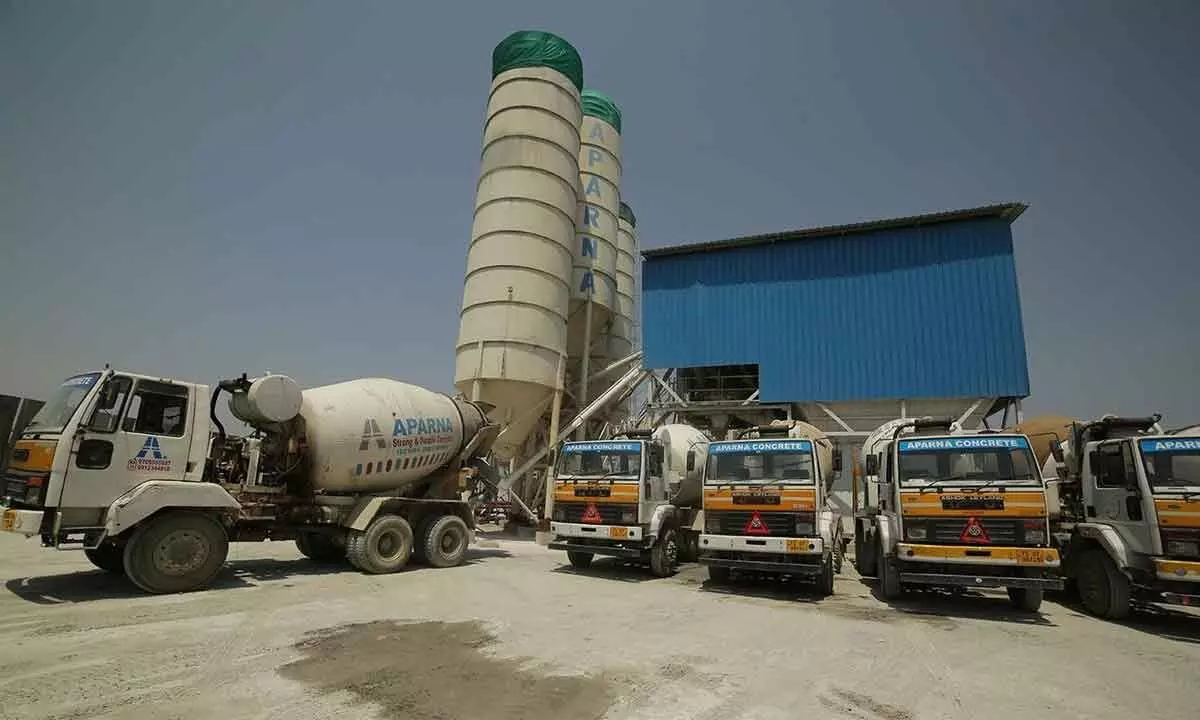
Aparna RMC uses Schwing Stetter concrete batching equipment at all its 27 plants that are equipped with large inline capacity of 60 cubic metres to ensure continuity of operations.
The division has an owned fleet of 300 Transit Mixers, 70 concrete pumping systems and five boom pumps capable of pumping concrete for high-rise structures.
About Aparna Enterprises Ltd:
Aparna Enterprises Limited (AEL) is a part of the highly successful Aparna Group. Founded in the year 1990, AEL operates through a range of businesses in building-material products, such as RMC (ready-mix concrete), uPVC windows and doors, Floor and Wall tiles, Aluminium window and door systems and Exterior Facades, Cold Roll form products (Steel reinforcements for uPVC windows and doors, Cable trays, False ceiling channels) and Elegant Bath spaces and Kitchens. Associated with several landmark projects for over 30 years, AEL is renowned for setting benchmarks in technology, research, design, and quality. Today, AEL is an acknowledged leader in providing specifiers, contractors, and stakeholders with a range of high-quality products manufactured to the highest standards. AEL can meet any specification criteria while ensuring full compliance with all protocols.
‘अपर्णा आरएमसी’ची मुंबईत नवीन प्लॅंट उभारण्याची योजना
Sep 14, 2023
अपर्णा एंटरप्रायझेस लि. या भारतातील सर्वात वेगाने वाढणाऱ्या बांधकाम साहित्य उत्पादक कंपनीने ‘अपर्णा आरएमसी’ या आपल्या ब्रॅंडच्या माध्यमातून, मुंबईतील रेडी-मिक्स कॉंक्रिटच्या (आरएमसी) वाढत्या बाजारपेठेत प्रवेश करीत असल्याची आज घोषणा केली.
मुंबईतील एकूण बाजारपेठेत ५ टक्के हिस्सा मिळवण्याचे कंपनीचे ध्येय असून त्याकरीता शहरात सात आरएमसी प्लॅंट उभारण्याची कंपनीची योजना आहे. मालाड आणि ठाणे येथे कंपनीने यापूर्वीच दोन प्लॅंट उभारलेले आहेत. या व्यतिरिक्त, ‘अपर्णा आरएमसी’ची नागपूर आणि पुण्यासह महाराष्ट्रातील इतर शहरांमध्ये विस्तार करण्याचीही योजना आहे.
मुंबई शहरात पायाभूत सुविधांच्या गरजा सातत्याने वाढत असताना, त्यांमधील गरजांची पूर्तता करण्याच्या दृष्टीने, तसेच घरबांधणी क्षेत्रात मागणी व पुरवठ्यातील तफावत भरून काढण्याच्या दृष्टीने ‘अपर्णा आरएमसी’ने या शहरात विस्तार करण्याचे ठरविले आहे. मुंबई व उपनगरात विकासाचे व पुनर्विकासाचे अनेक प्रकल्प उदयास येत असताना शहरापासूनच्या २० किलोमीटरच्या त्रिज्येच्या परिघात आणखी काही प्लॅंट्स उभारण्याची अपर्णाची योजना आहे, जेणेकरून या भागांत लॉजिस्टिक्स व पोहोच यांचे नियोजन अधिक चांगल्या प्रकारे करता यावे. त्या अनुषंगाने, नजीकच्या काळात, दक्षिण मुंबई, कल्याण, पनवेल व मीरा रोड येथे प्रतिवर्षी सुमारे ५ लाख घनमीटर लक्ष्यित उत्पादन क्षमता असलेले सात आरएमसी प्लॅंट्स उभारण्याचे ‘अपर्णा आरएमसी’ने ठरविले आहे.
कंपनीच्या या वाढीच्या संधींबद्दल बोलताना अपर्णा एंटरप्रायझेस लि.चे व्यवस्थापकीय संचालक अश्विन रेड्डी म्हणाले, “आम्ही संपूर्ण भारतामध्ये विस्तार करण्याच्या आमच्या आक्रमक वाढीच्या योजनांचा एक भाग म्हणून मुंबईच्या बाजारपेठेत प्रवेश करण्यास उत्सुक आहोत. झपाट्याने विस्तारत असलेल्या पायाभूत सुविधा आणि गृहनिर्माण क्षेत्र यांमुळे मुंबई ही आमच्यासाठी एक चांगली बाजारपेठ ठरते. आर्थिक केंद्र असा या शहराचा लौकिक, परवडणाऱ्या घरांचे येथील प्रकल्प, पुनर्विकासाचे वाढते प्रमाण आणि येथे होणारी व्यवसायांची वाढ या सर्व बाबींचा विचार करता, येथे आमच्या विकासाचा आराखडा तयार करण्यासाठी एक मोठी संधी आहे. अपर्णा समुहाचा मजबूत वारसा आणि अपर्णा आरएमसीचा जवळपास दोन दशकांचा अनुभव यांच्या माध्यमातून मुंबईच्या बाजारपेठेचा फायदा आम्हाला घेता येईल, असा आम्हाला विश्वास वाटतो.”
सध्या ‘अपर्णा आरएमसी’ची संपूर्ण भारतात वार्षिक १५ लाख घनमीटर इतक्या काँक्रीट उत्पादनाची क्षमता आहे. आपली ही एकूण क्षमता २०२५ मध्ये ६० टक्क्यांनी वाढवून २४ लाख घनमीटर इतकी करण्याचे ‘अपर्णा’चे उद्दिष्ट आहे. महाराष्ट्रातील निवासी, व्यावसायिक आणि पायाभूत सुविधा विभागांतील संधी मिळविण्यासाठी धोरणात्मक व्यूहरचना व आक्रमक स्वरुपाच्या विस्तार योजना राबविण्याचे कंपनीने ठरविले असून त्यामध्ये ही क्षमतावाढ उपयोगी पडणार आहे.
मुंबईतील आरएमसी क्षेत्रात असलेल्या संधींबद्दल माहिती देताना अश्विन रेड्डी पुढे म्हणाले, “मुंबईतील आरएमसी बाजारपेठेची क्षमता वर्षाकाठी १२० लाख घनमीटर आहे आणि आम्ही आमच्या कार्यक्षम कारभाराच्या अनुभवातून यातील ५ लाख घनमीटर पुरवठ्याची जबाबदारी पेलण्याचे उद्दिष्ट ठेवले आहे. महत्त्वाचे म्हणजे, आम्ही आमच्या ग्राहकांना ‘एम-१०० ग्रेड’चे कॉंक्रिट देण्यासाठी सज्ज आहोत.”
अपर्णा आरएमसी तिच्या सर्व २७ प्लॅंट्समध्ये श्विंग स्टेटर काँक्रीट बॅचिंग उपकरणे वापरते. ती ६० घनमीटरच्या मोठ्या इनलाइन क्षमतेने सुसज्ज आहेत. कंपनीच्या उत्पादनामध्ये सातत्य येण्यासाठी ही क्षमता उपयोगी पडते.
कंपनीच्या या विभागाकडे ३०० ट्रान्झिट मिक्सर, ७० काँक्रीट पंपिंग सिस्टीम आणि पाच बूम पंप आहेत. उंच इमारतींसाठी काँक्रीटचे पंपिंग करण्यास ही उपकरणे सक्षम आहेत.
‘अपर्णा एंटरप्रायझेस’ची देशात १५० कोटी गुंतवणुकीची योजना
Sep 14, 2023
अपर्णा एंटरप्रायझेस लिमिटेड या बांधकाम साहित्य उत्पादक कंपनीने ‘अपर्णा आरएमसी’ नाममुद्रेअंतर्गत, राज्य आणि मुंबईतील रेडी-मिक्स काँक्रीटच्या (आरएमसी) वाढत्या बाजारपेठेवर लक्ष केंद्रित करत विस्ताराची योजना आखली आहे. यासाठी राज्यात १५० कोटींची गुंतवणूक करण्यात येणार असून मुंबईत सात आरएमसी प्रकल्प उभारले जाणार आहेत. मालाड आणि ठाणे येथे कंपनीने यापूर्वीच प्रकल्प उभारले आहेत. याव्यतिरिक्त, ‘अपर्णा आरएमसी’ची नागपूर आणि पुण्यासह महाराष्ट्रातील इतर शहरांमध्ये विस्ताराचीही योजना आहे.
मुंबई शहरात पायाभूत सुविधांच्या गरजा सातत्याने वाढत असताना, त्यांमधील गरजांची पूर्तता करण्याच्या दृष्टीने, तसेच घरबांधणी क्षेत्रात मागणी व पुरवठ्यातील तफावत भरून काढण्याच्या दृष्टीने ‘अपर्णा आरएमसी’ने राज्यात विस्तार करण्याचे ठरविले आहे. मुंबई व उपनगरात विकासाचे व पुनर्विकासाचे अनेक प्रकल्प उदयास येत असताना शहरापासूनच्या २० किलोमीटरच्या त्रिज्येच्या परिघात आणखी काही प्रकल्प उभारण्याची अपर्णाची योजना आहे.
सध्या ‘अपर्णा आरएमसी’ची संपूर्ण भारतात वार्षिक १५ लाख घनमीटर इतक्या काँक्रीट उत्पादनाची क्षमता आहे. ही एकूण क्षमता २०२५ मध्ये ६० टक्क्यांनी वाढवून २४ लाख घनमीटर इतकी करण्याचे तिचे उद्दिष्ट आहे. कंपनीच्या या विभागाकडे ३०० ट्रान्झिट मिक्सर, ७० काँक्रीट पम्पिंग सिस्टीम आणि पाच बूम पंप आहेत. उंच इमारतींसाठी काँक्रीटचे पम्पिंग करण्यास ही उपकरणे सक्षम आहेत.
Aparna Enterprises to launch seven ready-to-mix concrete plants in Mumbai
Sep 13, 2023
Aparna Enterprises Limited, a building materials manufacturer, announced its entry into the burgeoning Mumbai ready-mix concrete (RMC) market with Aparna RMC today. The company plans to set up seven RMC plants in the city to capture 5% of the total market share in Mumbai, with two plants already set up in Malad and Thane. Moreover, Aparna RMC plans to expand to other cities in Maharashtra, including Nagpur and Pune.
Aparna RMC’s strategic foray into the city is driven by a rapidly growing infrastructure requirement and to tap into the gaps of the housing construction segment. As more development and re-development projects emerge in Mumbai and its suburbs, the company plans to set up more plants in a 20-kilometre radius to enable better logistics and reach.
In the near-term, Aparna RMC is looking at setting up seven RMC plants in South Mumbai, Kalyan, Panvel, and Mira Road with a targeted production capacity of nearly 5 lakh cubic metres per year.
Speaking about the growth opportunity for the organisation, Ashwin Reddy, managing director of Aparna Enterprises, said that Mumbai is an opportune market for the company due to the rapidly expanding infrastructure and housing construction sectors. “The city’s status as a financial hub, affordable housing initiatives, rising re-development projects, and growth of businesses offer a vital opportunity to chart our growth. We are confident that with Aparna Group’s strong legacy and Aparna RMC’s experience of close to two decades, we are well-prepared to tap the Mumbai market.”
At present, Aparna RMC has an annual concrete production capacity of 15 lakh cubic metres throughout India and is slated to increase its total capacity by 60% in FY 2025 to 24 lakh cubic metres. Its strategic foray and aggressive expansion plans in Maharashtra is expected to enhance this growth by targeting opportunities in residential, commercial, and infrastructure segments.
Elucidating on the opportunities for the RMC division in Mumbai, Reddy added, “The RMC market in Mumbai has a capacity of 120 lakh cubic metres per year, and we plan to supply 5 lakh cubic metres annually with our efficient operational experience in the RMC industry. Importantly, we are equipped to offer up to M 100 grade concrete for our clients.”
Aparna RMC uses Schwing Stetter concrete batching equipment at all its 27 plants that are equipped with large inline capacity of 60 cubic metres to ensure continuity of operations.
The division has an owned fleet of 300 Transit Mixers, 70 concrete pumping systems and five boom pumps capable of pumping concrete for high-rise structures.